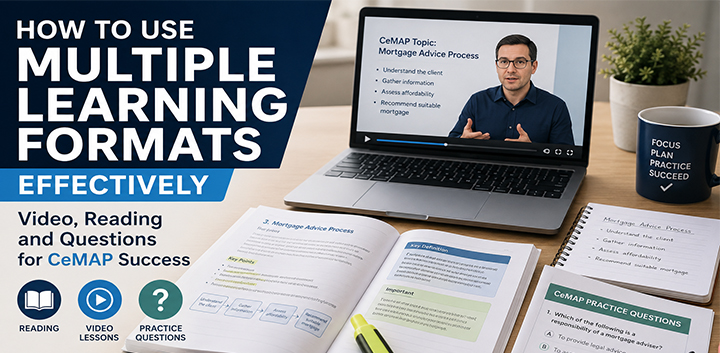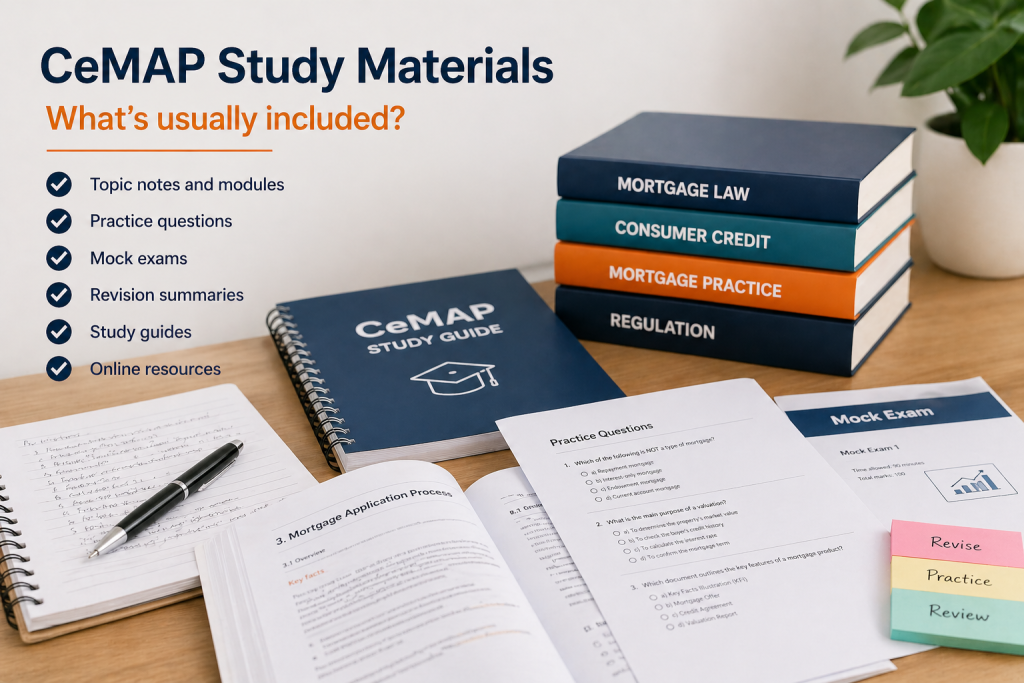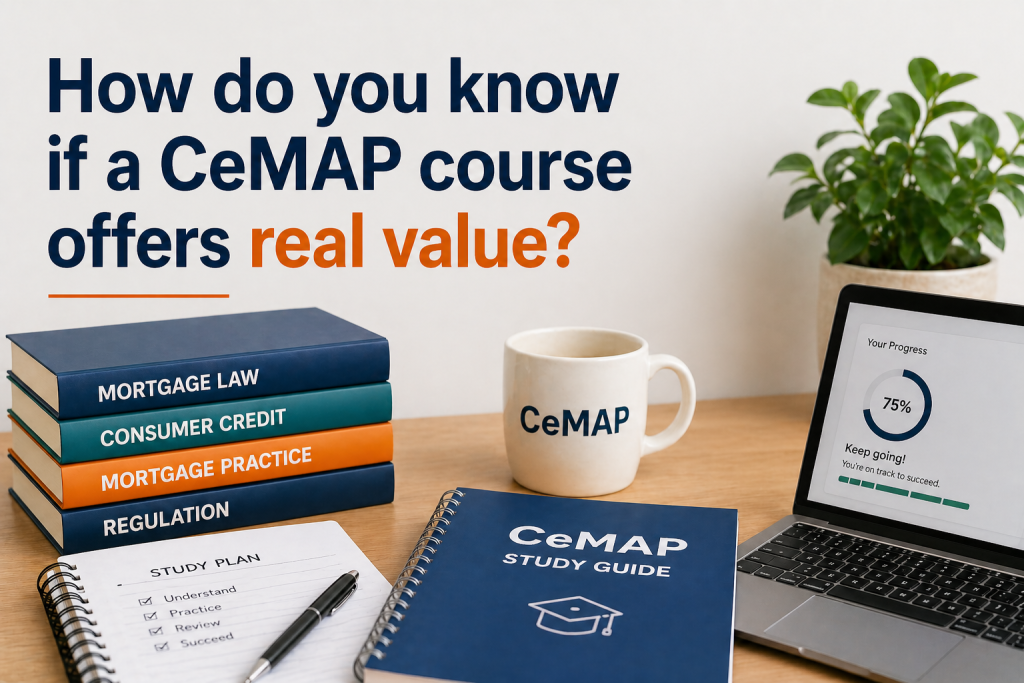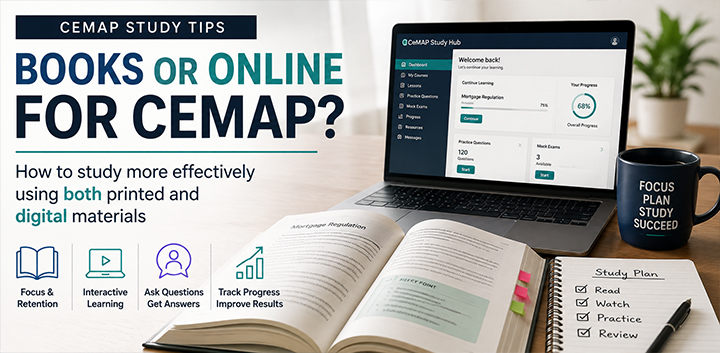
The best way to study for CeMAP is usually to combine both printed and digital learning materials rather than relying entirely on one format. Each offers different advantages, and using them together can help you understand complex topics, retain information more effectively and prepare confidently for your exams.
Printed study guides are often better for focused reading, note-taking and reducing distractions. Digital resources make it easier to watch explanations, complete practice questions, track your progress and revisit difficult topics whenever you need to.
The key is not deciding which format is better. It is understanding when each format works best and using them together as part of a structured study routine.
Why Different Study Formats Work in Different Ways
No two learners study in exactly the same way. Some absorb information more easily by reading from paper, while others prefer watching videos or completing interactive quizzes.
CeMAP covers a wide range of technical subjects, from mortgage regulation and products to property law and insurance. Because of this, studying through just one method can sometimes make learning feel repetitive or overwhelming.
Using multiple formats keeps your learning varied while reinforcing the same information in different ways.
For example, you might:
- Read a chapter in a printed study guide.
- Watch a video explaining the same topic.
- Complete online practice questions.
- Return to your printed notes to summarise what you’ve learnt.
Seeing the same concept presented in different ways often helps it become easier to understand and remember.
What Are the Benefits of Printed Study Materials?
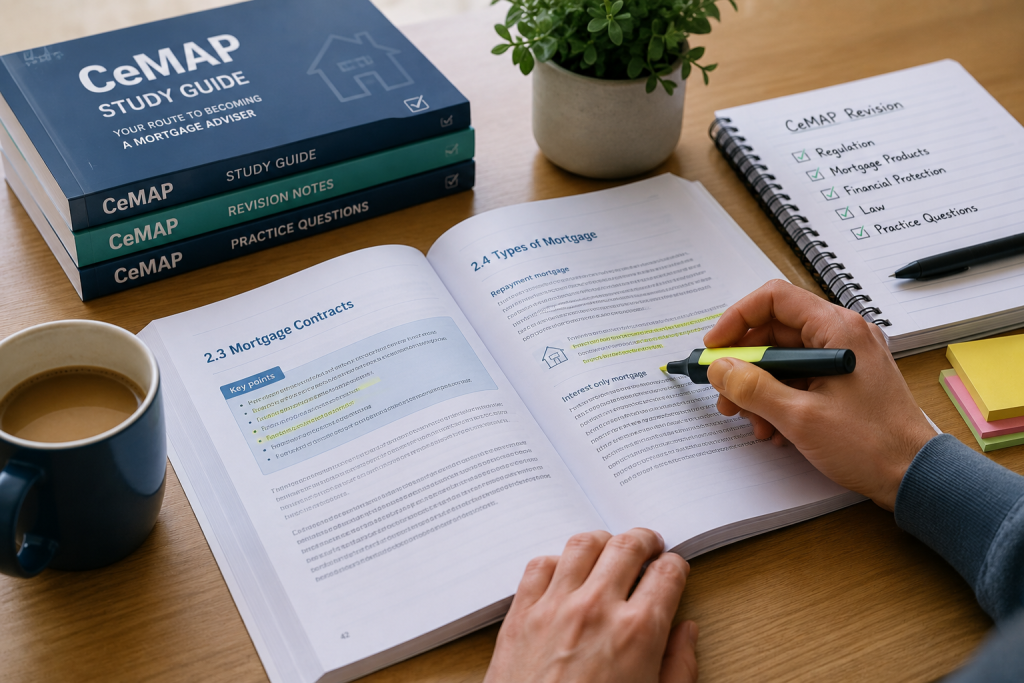
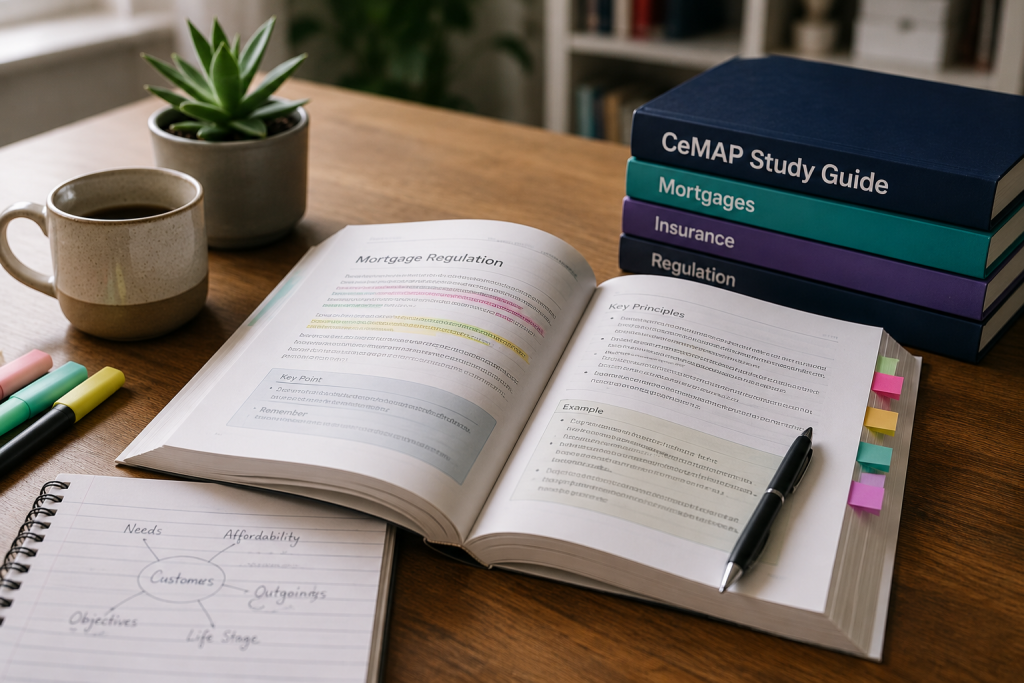
Printed books remain one of the most effective learning tools for many CeMAP learners.
Reading from paper often encourages slower, more focused study. Without notifications or open browser tabs competing for attention, it’s easier to concentrate on understanding new concepts.
Printed materials are particularly useful for:
- Reading new topics for the first time.
- Highlighting important definitions.
- Writing notes in the margins.
- Creating page markers for difficult areas.
- Revising away from a computer.
Many learners also find they remember where information appeared on a page, making it easier to recall during revision.
Another advantage is that printed study guides can be taken almost anywhere without needing internet access or worrying about battery life.
What Are the Benefits of Digital Learning Resources?
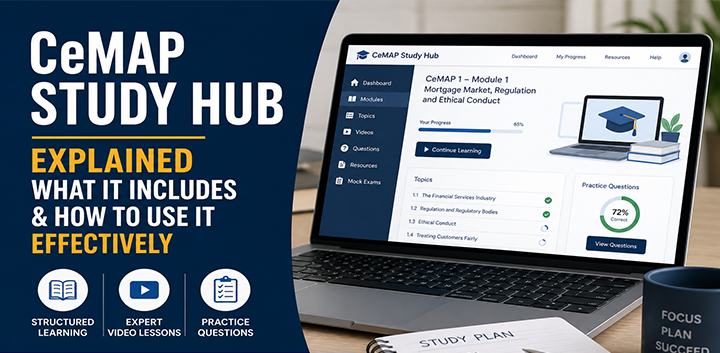
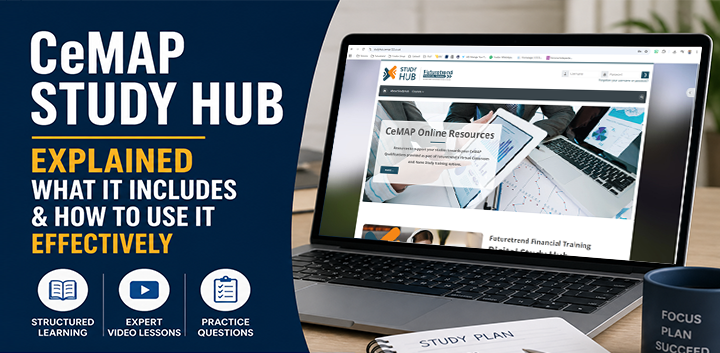
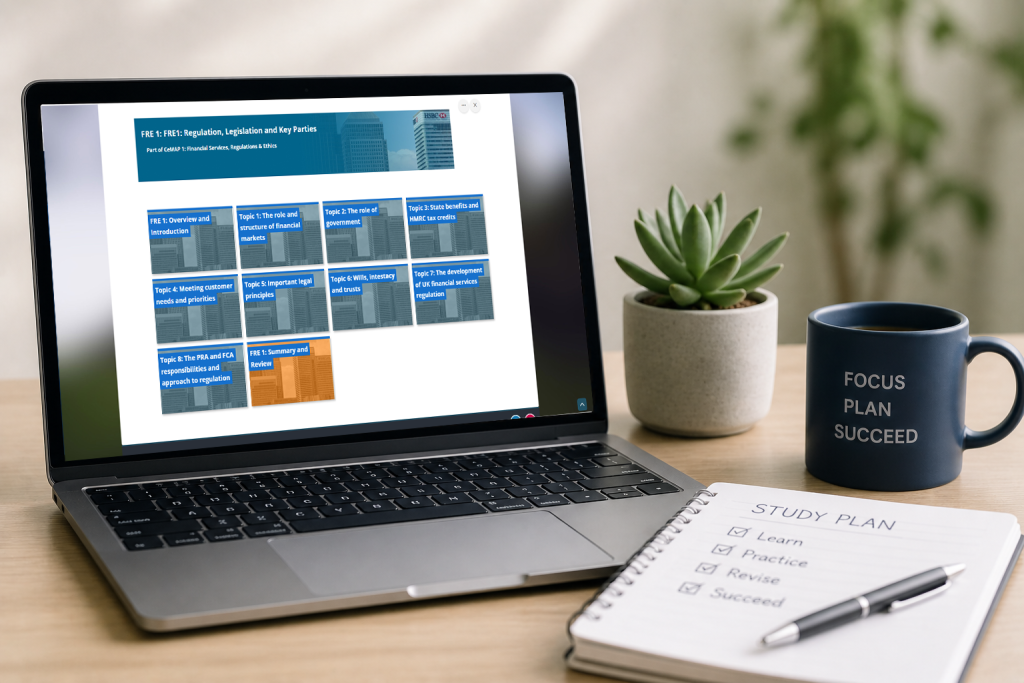
Digital CeMAP resources add flexibility and interaction that books cannot provide.
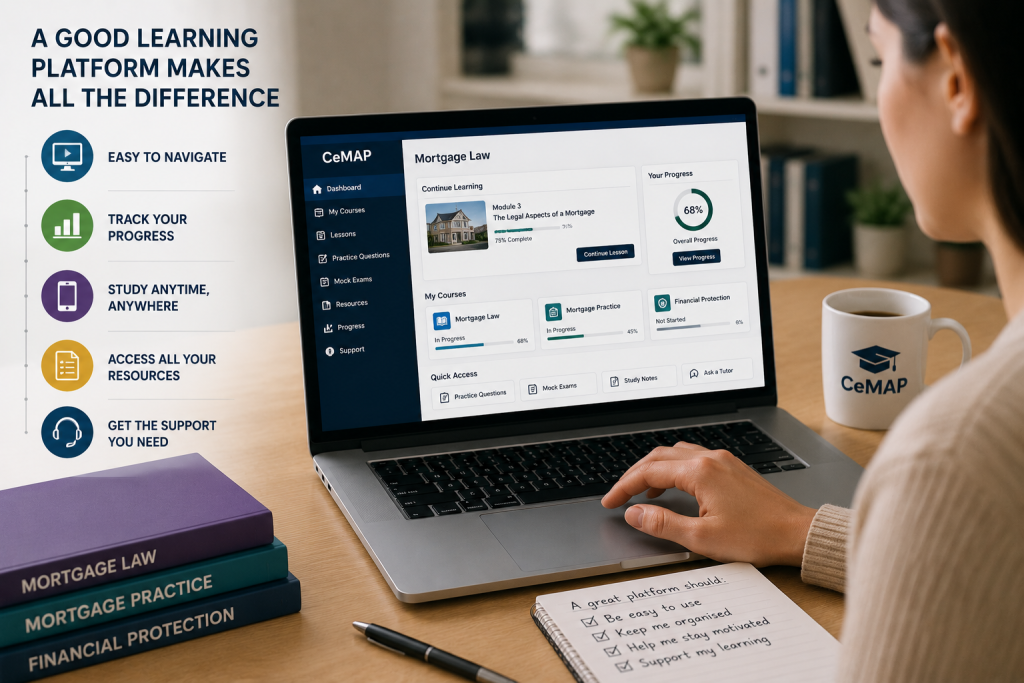
Instead of only reading about a topic, learners can often watch it explained, answer questions immediately and monitor their own progress.
Digital learning is particularly valuable for:
- Short revision sessions.
- Interactive practice questions.
- Mock exams.
- Progress tracking.
- Searching quickly for specific topics.
- Studying while travelling.
Many online platforms also allow you to revisit difficult subjects as often as needed without searching through hundreds of printed pages.
Perhaps most importantly, digital resources can adapt to the way you study. If you struggle with one area, you can often spend more time there before moving on.
Why Live Tutor Support Makes a Big Difference
One of the biggest differences between studying solely from books and using a structured digital learning platform is access to experienced CeMAP tutors.
Books are excellent at presenting information, but they cannot answer questions when something does not quite make sense.
A live tutor can:
- Explain difficult concepts in simpler language.
- Answer questions immediately.
- Provide additional examples.
- Share real-life mortgage scenarios that bring the theory to life.
- Help learners understand why a rule exists, rather than simply memorising it.
For many learners, these discussions are where topics truly begin to make sense.
Real-life examples can also make technical CeMAP content easier to remember because they show how regulations and mortgage products apply to genuine customer situations rather than existing only as textbook definitions.
While independent study can work well, having opportunities to ask questions often helps learners overcome obstacles much more quickly.
When Should You Use Printed Materials?
Printed resources are usually best when you’re learning something new.
For example, you might use your study guide when:
- Starting a new CeMAP module.
- Reading legislation or regulatory requirements.
- Making handwritten revision notes.
- Highlighting key definitions.
- Building your initial understanding.
Many learners find that reading a complete topic first provides a solid foundation before moving into more interactive revision.
When Should You Use Digital Resources?
Digital materials become especially useful once you’ve built your initial understanding.
They work well for:
- Reinforcing what you’ve already studied.
- Testing your knowledge.
- Identifying weaker topics.
- Watching explanations again.
- Completing timed mock exams.
- Studying in shorter sessions.
Digital learning also makes it much easier to revisit areas that need improvement without rereading an entire chapter.
How Can You Combine Both Formats Effectively?
The most effective study routines use each resource for what it does best.
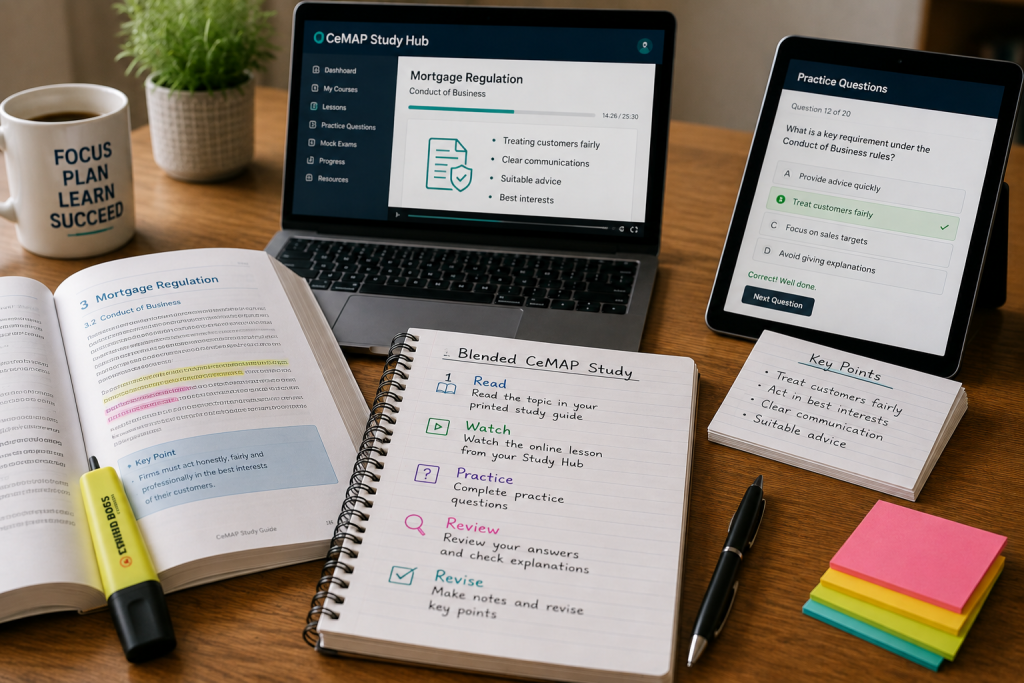
A simple approach could look like this:
Step 1: Read a chapter in your printed study guide.
Step 2: Highlight key points and write brief notes.
Step 3: Watch a digital lesson covering the same topic.
Step 4: Complete online practice questions.
Step 5: Review any questions you answered incorrectly.
Step 6: Return to your printed notes and add anything you’ve learnt.
This cycle allows you to read, hear, apply and review the same information, strengthening your understanding without making revision repetitive.
A Practical Example of Blended CeMAP Study
Imagine you’re studying mortgage regulation.
You might begin by reading the regulation chapter in your printed guide to understand the overall framework.
Next, you watch a tutor explain how those regulations apply during a real mortgage appointment.
Afterwards, you complete an online quiz to test your understanding.
Some questions highlight areas you’re unsure about, so you return to your printed notes and add extra explanations alongside the original content.
Finally, you attempt a mock exam to check whether you’re ready to move on.
Rather than studying the same material repeatedly in one format, you’ve reinforced it through reading, listening, practising and reviewing.
What Mistakes Should You Avoid?
One of the biggest mistakes is believing that simply owning lots of study resources will improve your chances of success.
Resources only become valuable when they’re used consistently.
Other common mistakes include:
- Reading without testing your understanding.
- Watching videos without taking notes.
- Completing practice questions without reviewing mistakes.
- Switching constantly between resources without finishing a topic.
- Ignoring weaker subjects because they’re more challenging.
Another common mistake is relying entirely on one format.
Reading only books may leave you with little exam practice.
Using only videos may mean you never develop detailed understanding of key concepts.
A balanced approach usually provides the strongest foundation.
Which Format Is Better for Revision?
As your exam approaches, digital resources often become increasingly useful because they allow frequent self-testing through practice questions and mock exams.
However, printed notes still have an important role.
Many learners create condensed revision summaries from their printed study guides that they can review quickly during the final days before the exam.
Using both together gives you detailed reference material alongside active recall practice, which is often far more effective than simply rereading chapters.
Final Thoughts
If you’re wondering whether you should use books or online resources for CeMAP, the answer is that both have an important place in an effective study plan.
Printed study guides provide structure, focus and a strong foundation for learning new topics. Digital resources bring those topics to life through interactive learning, practice questions and flexible revision opportunities. Where live tutor support is available, it adds another valuable layer by allowing learners to ask questions, receive immediate clarification and benefit from practical examples drawn from real mortgage advice.
Rather than choosing one format over the other, aim to use each where it offers the greatest benefit. A balanced approach helps reinforce learning, keeps revision engaging and supports a deeper understanding of the knowledge required for your CeMAP exams.
Looking for training support?
We offer CeMAP training for learners working towards a career in mortgage advice. Our courses follow the London Institute of Banking & Finance syllabus and are designed to support understanding of mortgage regulation and advice requirements.
Explore our accredited CeMAP training courses
> Futuretrend Financial Training