What skills do mortgage advisers need?

Mortgage adviser explaining options to clients showing communication, organisation, empathy and professionalism skills

Choosing a career in mortgage advice is not just about passing exams or gaining a qualification. It is about how you work with people, how you handle responsibility, and how you make decisions that affect real financial outcomes.

A mortgage adviser is someone who helps clients understand their borrowing options and make informed choices. In the UK, this typically involves meeting the qualification requirements set by the Financial Conduct Authority, often through qualifications like CeMAP awarded by the London Institute of Banking & Finance.

But qualifications alone do not define whether someone will feel comfortable or effective in the role. The day-to-day work relies heavily on practical skills and personal traits that develop over time.

This article looks at the key skills and traits that support success in mortgage advice, with a focus on development rather than natural ability.

Mortgage adviser explaining options to clients showing communication, organisation, empathy and professionalism skills

Do you need strong communication skills to be a mortgage adviser?

Yes. Communication is one of the most important skills in mortgage advice, but it is not about being a confident speaker or a “natural salesperson”.

It is about clarity.

Mortgage advisers deal with complex information, including interest rates, lending criteria, affordability assessments, and legal processes. Clients often come in with limited understanding or with assumptions that are not quite right. Your role is to explain things in a way that makes sense to them.

What good communication looks like in practice

Clear communication in this role usually means:

  • Explaining financial concepts in plain language
  • Checking understanding rather than assuming it
  • Listening carefully before offering solutions
  • Adjusting how you explain things depending on the client

For example, one client may want a detailed breakdown of options, while another may feel overwhelmed and prefer a simple comparison.

Listening matters as much as explaining

A common misconception is that communication is mostly about talking. In reality, listening is often more important.

Clients may not always explain their situation clearly at first. They might leave out key details or focus on the wrong concerns. Being able to pick up on what is not being said, and ask the right follow-up questions, is a skill that improves with experience.

This is especially important when discussing sensitive topics such as income, debt, or financial difficulties.

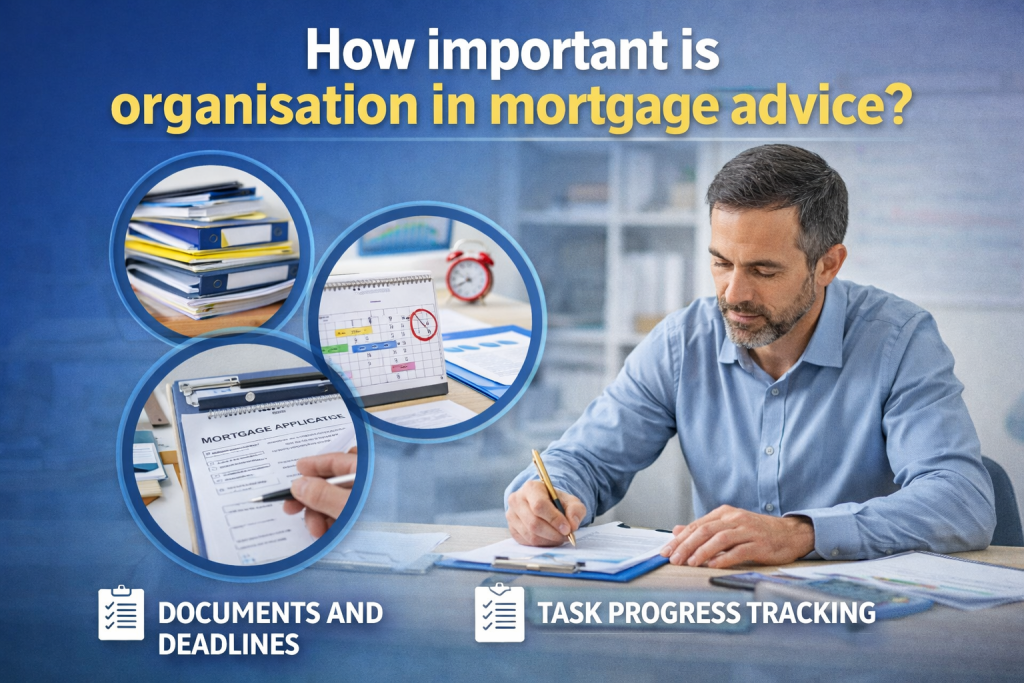
How important is organisation in mortgage advice?

Organisation is essential because mortgage advice involves managing multiple moving parts at once.

You are not just having conversations. You are also:

  • Handling documents and evidence
  • Tracking application progress
  • Meeting lender requirements
  • Managing deadlines and client expectations

Without a structured approach, it becomes easy to miss details or create delays.

Mortgage adviser organising documents and tracking tasks showing importance of organisation in mortgage advice

Why organisation affects client experience

From a client’s perspective, the mortgage process can already feel stressful. Delays, missing paperwork, or unclear updates can make that worse.

An organised adviser helps by:

  • Keeping processes moving smoothly
  • Providing timely updates
  • Reducing uncertainty

This does not mean you need to be naturally “ultra-organised”. Many advisers develop systems over time, using checklists, workflows, and CRM tools to stay on track.

Small habits make a big difference

Organisation in this role often comes down to consistent habits, such as:

  • Recording information accurately after meetings
  • Following up when you say you will
  • Keeping clear notes on each case

These are learnable behaviours rather than fixed traits.

What kind of judgement do mortgage advisers need?

Mortgage advisers regularly make judgement calls, even within structured rules and regulations.

This includes:

  • Assessing which mortgage products may suit a client’s situation
  • Deciding how to present options clearly
  • Identifying potential risks or complications

While lenders provide criteria, real client situations are not always straightforward.

Judgement is about applying knowledge, not guessing

Good judgement does not mean relying on instinct alone. It comes from:

  • Understanding how different lenders operate
  • Recognising patterns in client situations
  • Knowing when something needs further clarification

Over time, advisers build a sense of what is likely to work and what may cause issues later in the process.

Knowing when to slow down

An important part of judgement is recognising when not to rush.

If something does not seem clear or complete, taking time to check details can prevent larger problems later. This might mean going back to the client for more information or double-checking lender criteria.

Why does empathy matter in mortgage advice?

Empathy plays a central role because mortgages are not just financial transactions. They are tied to major life events.

Clients may be:

  • Buying their first home
  • Moving due to family changes
  • Dealing with financial pressure
  • Unsure about long-term commitments

Understanding how someone feels about their situation helps you communicate more effectively and provide appropriate support.

Mortgage adviser showing empathy to clients discussing financial situation and mortgage decisions

Empathy is about awareness, not emotion

You do not need to be overly emotional to be empathetic. It is more about recognising:

  • When a client feels uncertain or anxious
  • When they need reassurance or clarity
  • When to slow down and explain things more carefully

A calm and respectful approach often matters more than trying to be overly reassuring.

Building trust through understanding

Clients are more likely to trust advice when they feel understood. This trust is important because they are relying on you to guide them through decisions that may affect them for years.

Empathy supports that trust, but it develops naturally through experience and exposure to different client situations.

What does professionalism mean in this role?

Professionalism in mortgage advice is about consistency, responsibility, and clear boundaries.

It includes:

  • Being accurate and careful with information
  • Following regulatory requirements
  • Communicating clearly and honestly
  • Managing expectations appropriately

Why professionalism is critical

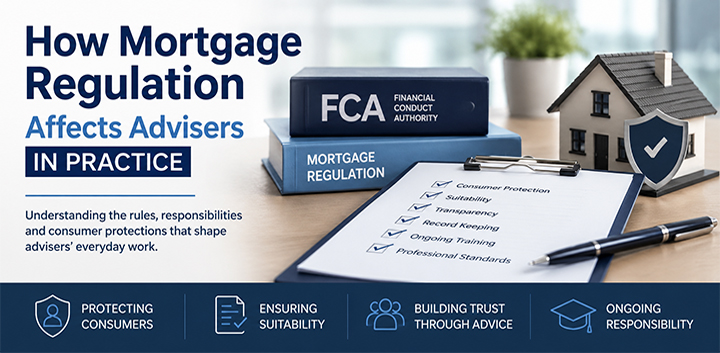
Mortgage advisers operate within a regulated environment. The standards set by the Financial Conduct Authority are there to protect clients.

This means professionalism is not optional. It is part of the role.

For example, this includes:

  • Avoiding misleading statements
  • Ensuring advice is suitable for the client
  • Keeping records of recommendations

Professional behaviour builds long-term credibility

Clients may not always understand the technical side of what you do, but they do notice how you behave.

Reliability, honesty, and clarity contribute to a professional reputation over time.

Can these skills be developed, or do you need them already?

These skills can be developed. They are not fixed traits that you either have or do not have.

This is an important point, especially for people considering whether mortgage advice is the right fit.

Development happens through experience

Most advisers improve their skills through:

  • Training and structured learning
  • Practical experience with real clients
  • Feedback from managers or mentors

For example:

  • Communication improves through repeated client conversations
  • Organisation improves through building systems and routines
  • Judgement improves through exposure to different cases

Confidence often follows competence

Many people assume they need confidence before starting. In reality, confidence tends to grow as skills improve.

Early on, it is normal to feel unsure or cautious. Over time, as processes become familiar, confidence develops naturally.

What skills do mortgage advisers need overall?

Mortgage advisers need a combination of communication, organisation, judgement, empathy, and professionalism.

No single skill defines success. Instead, it is how these areas work together.

In simple terms:

  • Communication helps clients understand
  • Organisation keeps the process on track
  • Judgement supports decision-making
  • Empathy builds trust
  • Professionalism ensures standards are met

These are practical, developable skills rather than fixed personality traits.

Mortgage adviser with icons showing communication, organisation, empathy, judgement and professionalism skills

Final thoughts

Mortgage advice is a people-focused role built on clear thinking and responsible communication.

It does not require a specific personality type or a perfect starting point. What matters more is a willingness to learn, adapt, and improve over time.

If you are assessing whether the role suits you, it is worth focusing less on whether you already have these skills and more on whether you are open to developing them.

That mindset tends to matter far more in the long run.

Looking for training support?

We offer CeMAP training for learners working towards a career in mortgage advice. Our courses follow the London Institute of Banking & Finance syllabus and are designed to support understanding of mortgage regulation and advice requirements.

Explore our accredited CeMAP training courses

> Futuretrend Financial Training 

How long does it take to become a mortgage adviser?

How long it takes to become a mortgage adviser in the UK with CeMAP study and career path illustration

Becoming a mortgage adviser does not follow a single fixed timeline. For most people, it involves three main stages: gaining the required qualification, becoming authorised through a firm, and building experience in the role. Each stage takes a different amount of time depending on your circumstances, pace of study, and the route you take into the industry.

This guide explains what actually happens at each stage and why the overall timeline can vary quite a lot from one person to another.

How long it takes to become a mortgage adviser in the UK with CeMAP study and career path illustration

How long does the qualification stage take?

The first step is gaining a recognised qualification that meets regulatory requirements. In the UK, this is typically CeMAP (Certificate in Mortgage Advice and Practice).

For many learners, the qualification stage takes several months, but this is not fixed.

Some key factors that affect how long this stage takes:

Study pace

If you are studying alongside a full-time job or other commitments, progress will usually be slower. Learners who study more intensively can move through the material more quickly, but that depends on availability and confidence with exams.

Previous knowledge

If you already have experience in financial services, you may find parts of the content more familiar. If you are completely new to the industry, you may need more time to understand the terminology and concepts.

Exam readiness

Passing the exams is not just about reading. Many learners need time to practise applying knowledge, not just recognising it. This often extends the timeline beyond what people expect at the start.

A realistic way to view this stage is not as a race, but as a period of building a solid foundation. Rushing through it can make later stages harder.

What happens after you pass CeMAP?

Passing the qualification does not mean you can immediately start advising clients.

You must work under an authorised firm, and that firm is responsible for ensuring you are competent before you advise customers independently.

This stage is often referred to as authorisation, onboarding, or competency sign-off.

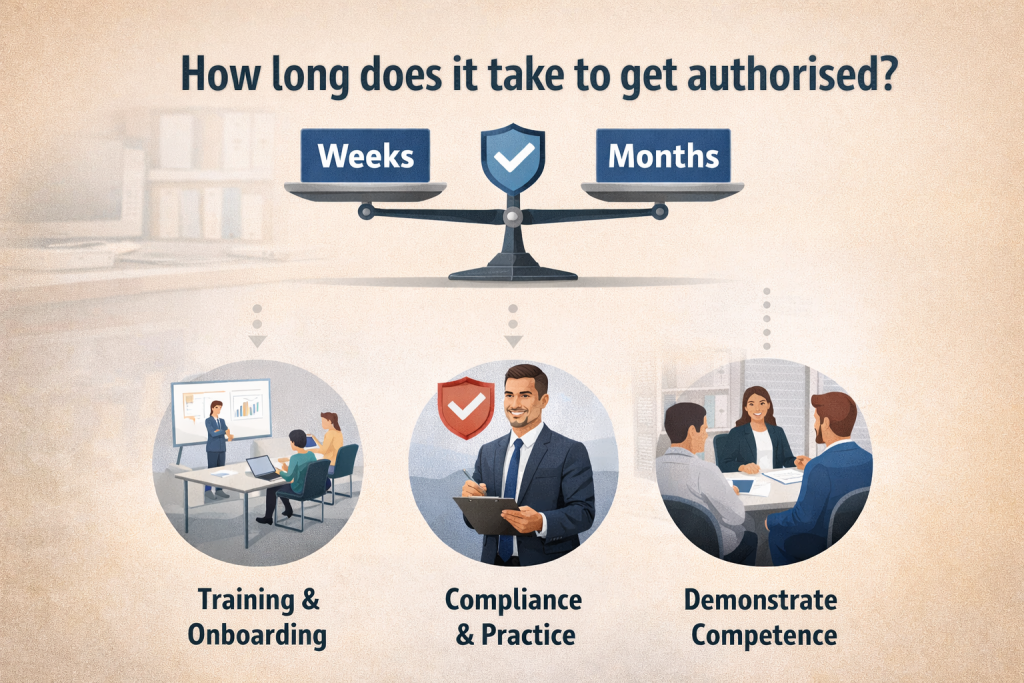
How long does it take to get authorised?

There is no single timeframe for authorisation because it depends heavily on the firm you join.

Most firms will require:

  • Initial training on their systems and processes
  • Understanding of compliance and regulation
  • Supervised practice before advising independently
  • Demonstration of competence

This process can take weeks to several months, depending on:

Mortgage adviser authorisation process showing weeks to months timeline with training, compliance and competency stages

The firm’s structure

Some firms have formal training academies with structured timelines. Others take a more gradual, on-the-job approach.

Your starting point

If you are new to financial services, there may be more to learn before you are ready to advise. If you already have relevant experience, progression may be quicker.

Your starting point

If you are new to financial services, there may be more to learn before you are ready to advise. If you already have relevant experience, progression may be quicker.

Compliance requirements

Mortgage advice is regulated, so firms must be confident you can give suitable advice. This is not something that can be rushed.

A key point here is that authorisation is not just a box to tick. It is about proving you can apply knowledge safely in real situations.

What does “competent adviser status” mean?

A mortgage adviser is usually considered fully operational once they are signed off as competent by their firm.

This means they can:

  • Advise clients without supervision
  • Recommend suitable mortgage products
  • Follow regulatory and compliance standards

Reaching this stage takes time because it involves real client interaction, not just theory.

Many new advisers underestimate how different real-world advice is compared to studying.

How long does it take to feel confident in the role?

Even after becoming authorised, there is still a learning curve.

In the early months, advisers are often:

  • Building confidence in client conversations
  • Learning how to gather accurate information
  • Understanding lender criteria in practice
  • Managing application processes

It is common for this stage to take several more months before things start to feel natural.

Confidence develops through repetition and experience, not just training.

What does a typical overall timeline look like?

While there is no fixed timeline, a broad structure often looks like this:

  • Qualification: several months
  • Authorisation and onboarding: a few months
  • Early experience and confidence building: ongoing

In total, becoming fully comfortable in the role can take many months to over a year.

That does not mean you are not working during that time. It means you are developing into the role gradually.

Why do timelines vary so much?

One of the most common questions people ask is why timelines differ so widely. The answer is that becoming a mortgage adviser depends on more than just passing exams.

Personal circumstances

Study time, work commitments, and learning pace all affect how quickly you move through the qualification stage.

Career background

Someone coming from a financial services role may progress differently to someone changing careers entirely.

Why mortgage adviser timelines vary showing factors like firm requirements, regulation, and experience level

Type of employer

Different firms have different onboarding processes. Some move quickly, others focus on longer development periods.

Learning style

Some people prefer to take time to fully understand topics, while others move faster but may need to revisit areas later.

Confidence and communication

Mortgage advice involves working with people, not just numbers. Developing communication skills can take time, especially if it is new to you.

Because of these factors, two people starting at the same point can reach the same role at very different speeds.

Can you speed up the process?

It is possible to move more quickly through certain stages, but there are limits.

You can:

  • Study more consistently
  • Use a mix of learning methods, not just reading
  • Practise exam-style questions
  • Prepare for interviews and job applications early


However, you cannot skip:

  • Regulatory requirements
  • Competency assessments
  • Real-world experience


Trying to rush through these areas can make the transition into the role more difficult later on.

Is there a “fast track” route?

Some training providers or employers describe fast-track routes into mortgage advice.

These usually mean:

While these can reduce downtime between stages, they do not remove the need for:

  • Passing exams
  • Demonstrating competence
  • Gaining experience

So while the structure may feel quicker, the core steps remain the same.

What should you focus on instead of time?

A better question than “How quickly can I become a mortgage adviser?” is:

“How well prepared will I be when I get there?”

Focusing only on speed can lead to:

  • Gaps in knowledge
  • Low confidence in client situations
  • Difficulty applying theory in practice


Focusing on preparation helps you:

  • Understand the material properly
  • Build confidence gradually
  • Transition more smoothly into the role


In the long run, this often leads to better outcomes than trying to move as quickly as possible.

What is the realistic expectation?

A realistic expectation is that becoming a mortgage adviser is a process, not a single step.

It includes:

  1. Learning the knowledge
  2. Proving competence
  3. Applying that knowledge in real situations

Each stage builds on the previous one.

Most people do not become fully confident advisers overnight. They develop into the role over time.

Final thoughts

So, how long does it take to become a mortgage adviser?

The honest answer is that it depends, but it is rarely immediate. For most people, it takes several months to gain the qualification, followed by further time to become authorised and confident in the role.

There is no standard timeline because the journey depends on your background, your pace, and the path you take into the industry.

What matters most is not how quickly you reach the role, but how prepared you are when you do. A steady, well-understood progression tends to lead to a stronger and more sustainable career.

Looking for training support?

We offer CeMAP training for learners working towards a career in mortgage advice. Our courses follow the London Institute of Banking & Finance syllabus and are designed to support understanding of mortgage regulation and advice requirements.

Explore our accredited CeMAP training courses

> Futuretrend Financial Training 

What does a mortgage adviser actually do day to day?

Mortgage adviser meeting clients while reviewing paperwork and mortgage options at a desk

Most people have a rough idea of what a mortgage adviser is, but the day-to-day reality is often quite different from the stereotype. It is not just about finding the “best deal” or talking to clients all day. The role combines client conversations, detailed research, strict compliance work, and a significant amount of administration.

A mortgage adviser’s day is structured around helping clients secure suitable mortgage solutions while meeting regulatory requirements set by the Financial Conduct Authority (FCA). That balance between advice, accuracy, and responsibility shapes everything they do.

Mortgage adviser meeting clients while reviewing paperwork and mortgage options at a desk

What are the core responsibilities of a mortgage adviser?

At its core, a mortgage adviser’s role is to assess a client’s financial situation and recommend appropriate mortgage products.

This involves several key responsibilities:

Understanding client circumstances

A mortgage adviser gathers detailed information about a client’s income, expenses, credit history, and future plans. This forms the foundation of any advice given.

Recommending suitable mortgage options

Based on that information, the adviser researches and recommends mortgage products that fit the client’s needs. This must be suitable, not just competitive on price.

Explaining options clearly

Clients are often unfamiliar with mortgage terms, so advisers must explain products, risks, and commitments in plain language.

Ensuring regulatory compliance

Every recommendation must meet FCA rules. Advisers must be able to justify why a product is suitable for that specific client.

Managing the application process

Once a client agrees to proceed, the adviser supports the application from start to finish, liaising with lenders and other parties.

In simple terms, a mortgage adviser is responsible for guiding a client from initial enquiry through to mortgage completion, while ensuring everything is accurate, compliant, and appropriate.

What does client-facing work involve?

A large part of the role involves direct interaction with clients, but it is more structured than many people expect.

Initial consultations

The day often begins with client meetings, either in person, over the phone, or via video. During this stage, the adviser gathers detailed information about the client’s situation.

This includes:

  • Income and employment details
  • Existing debts or financial commitments
  • Deposit size
  • Property goals

These conversations are not casual chats. They are structured fact-finds that must be recorded accurately.

Explaining mortgage options

Once research is completed, the adviser presents suitable options. This involves breaking down:

  • Interest rates
  • Fixed vs variable products
  • Monthly repayments
  • Fees and charges
  • Risks, such as rate changes

The goal is clarity, not persuasion. Clients need to understand what they are agreeing to.

Answering questions and concerns

Clients often have concerns about affordability, approval chances, or the process itself. Advisers spend time addressing these questions in a clear and balanced way.

Ongoing communication

Client interaction does not end after the recommendation. Advisers regularly update clients on application progress, lender responses, and next steps.

Client-facing work is a key part of the job, but it is only one part. Much of the work happens outside of these conversations.

What happens behind the scenes?

A significant portion of a mortgage adviser’s day is spent on tasks that clients rarely see.

Researching mortgage products

Advisers use sourcing systems and lender criteria to find suitable products. This involves:

  • Comparing rates and fees
  • Checking lender criteria
  • Assessing affordability models
  • Reviewing special conditions

This is not just about finding the lowest rate. The product must match the client’s circumstances and pass lender checks.

Mortgage adviser completing paperwork and compliance checks at desk during mortgage application process

Completing documentation

Mortgage advice requires detailed paperwork. Advisers must produce and maintain:

  • Fact-find documents
  • Suitability reports
  • Key Facts Illustrations (KFIs)
  • Compliance notes

These documents explain why a recommendation was made and must meet regulatory standards.

Submitting applications

Advisers complete and submit mortgage applications, ensuring all details are accurate. Errors can delay or even derail a case.

Liaising with third parties

A typical day may involve communication with:

  • Mortgage lenders
  • Estate agents
  • Solicitors
  • Underwriters

Each party plays a role in moving the application forward.

Monitoring progress

Applications do not move instantly. Advisers track progress, respond to lender queries, and provide additional information when required.

This behind-the-scenes work is essential. Without it, even the best advice cannot turn into a completed mortgage.

How important is compliance and regulation?

Compliance is a central part of a mortgage adviser’s daily work, not an occasional task.

Mortgage advice in the UK is regulated by the Financial Conduct Authority (FCA). This means advisers must follow strict rules to ensure clients are treated fairly.

Recording everything

Every interaction, recommendation, and decision must be documented. Advisers need to show:

  • What information was collected
  • What options were considered
  • Why a specific recommendation was made
Mortgage adviser reviewing compliance documents to meet FCA regulations during mortgage advice process

Providing suitable advice

Advice must be based on the client’s needs and circumstances, not convenience or preference.

Following processes carefully

There are defined steps for giving advice, issuing documents, and handling applications. Skipping or rushing these steps is not acceptable.

Staying up to date

Regulations, lender criteria, and market conditions change. Advisers must keep their knowledge current.

Compliance work can take up a large part of the day, especially for complex cases. It is one of the main reasons the role is more detailed than people assume.

How much admin is involved?

Administration is a major part of the job, often more than people expect.

A mortgage adviser does not spend the entire day speaking to clients. In many cases, admin tasks take up equal or greater time.

Typical admin work includes:

  • Updating client records
  • Chasing documents
  • Checking application details
  • Responding to emails
  • Preparing reports
  • Logging compliance notes

This work requires attention to detail. Small mistakes can cause delays or issues with lenders.

Admin is not separate from the advisory role. It supports it. Without accurate records and documentation, advice cannot be delivered properly.

Do all mortgage advisers have the same daily routine?

No, the day-to-day experience can vary significantly depending on the role and working environment.

Employed vs self-employed advisers

  • Employed advisers may have structured schedules, set appointments, and support from admin teams
  • Self-employed advisers often manage their own workload, including marketing and business development

Whole-of-market vs tied advisers

  • Whole-of-market advisers can access a wide range of lenders, which may increase research time
  • Tied advisers work with a limited panel, which can streamline product selection
Mortgage advisers working in different environments showing variation in daily routines and responsibilities

Office-based vs remote roles

Some advisers work in offices or estate agencies, while others work remotely. This affects how they interact with clients and manage their day.

Experience level

  • New advisers may spend more time on research and compliance checks
  • Experienced advisers may work more efficiently but often handle more complex cases

Despite these differences, the core elements of the role remain the same: client advice, research, compliance, and administration.

What does a typical day actually look like?

While no two days are identical, a typical day for a mortgage adviser might include:

  • Morning: reviewing emails, checking application updates, preparing for client meetings
  • Midday: conducting client consultations and follow-up calls
  • Afternoon: researching products, writing recommendations, submitting applications
  • Throughout the day: responding to lender queries, updating records, handling admin tasks

Some days are heavily client-focused, while others are more administrative, especially when managing multiple ongoing cases.

Is the role more complex than people think?

Yes, it usually is.

From the outside, the role can seem straightforward. In reality, it involves:

  • Detailed financial assessment
  • Careful product matching
  • Strict regulatory compliance
  • Ongoing case management

A mortgage adviser is not just a middle person between a client and a lender. They are responsible for ensuring the advice is suitable, accurate, and properly documented.

Final thoughts

A mortgage adviser’s day is a mix of client interaction, detailed research, compliance work, and administration. It is a structured and responsible role that requires accuracy, organisation, and clear communication.

While there is regular contact with clients, much of the work happens behind the scenes. Advisers must balance helping people make important financial decisions with meeting strict regulatory standards.

Understanding this gives a more realistic picture of the role. It is not about quick deals or simple recommendations. It is about careful, informed advice delivered in a consistent and compliant way.

Looking for training support?

We offer CeMAP training for learners working towards a career in mortgage advice. Our courses follow the London Institute of Banking & Finance syllabus and are designed to support understanding of mortgage regulation and advice requirements.

Explore our accredited CeMAP training courses

> Futuretrend Financial Training 

Is Becoming a Mortgage Adviser a Good Career Move?

Mortgage adviser career decision concept with house model, financial paperwork and balanced scales showing pros and cons.

Changing career is rarely a small decision. It affects income, routine, stress levels, and long-term plans. If you are considering becoming a mortgage adviser, you are likely asking a simple but important question:

Is being a mortgage adviser a good career?

The honest answer is that it can be a good career for the right person. It offers responsibility, client interaction, and professional status. It also brings pressure, regulation, and income variability.

This article sets out the role clearly, explains what attracts people to it, and outlines the challenges. The aim is not to persuade you, but to help you decide whether it suits you.

Mortgage adviser career decision concept with house model, financial paperwork and balanced scales showing pros and cons.

Why Do People Consider Becoming a Mortgage Adviser?

There are several common reasons people explore this career path.

Career change from estate agency or banking

Many advisers start in property, banking, or financial services. They may have worked as estate agents, mortgage administrators, or bank staff and want a role with more responsibility and autonomy.

Mortgage advice can feel like a natural progression because it builds on existing knowledge of property transactions and client communication.

Desire for a professional qualification

In the UK, mortgage advisers must hold an appropriate qualification that meets Financial Conduct Authority requirements. The most widely recognised is CeMAP, awarded by the London Institute of Banking & Finance.

CeMAP is the industry standard qualification for mortgage advisers in the UK. It is awarded by the London Institute of Banking & Finance and meets the Financial Conduct Authority’s education requirements for giving mortgage advice.

For some, gaining a regulated qualification adds structure and credibility to their career.

Interest in helping people make major financial decisions

Buying a home is one of the largest financial commitments most people will ever make. Advisers guide clients through mortgage options, explain risks, and help them understand affordability.

People who value one-to-one interaction and practical problem solving are often drawn to this aspect of the role.

Perception of flexible working

Some advisers work on an employed basis. Others are self-employed or work under an appointed representative firm. This can create more flexibility in how and when work is done.

However, flexibility depends on business structure, client demand, and employer expectations. It is not automatic.

What Does a Mortgage Adviser Actually Do?

Understanding the daily reality of the role is essential before deciding whether it is right for you.

A mortgage adviser assesses a client’s financial situation and recommends suitable mortgage products. They must ensure advice complies with Financial Conduct Authority rules and that recommendations are appropriate for the client’s needs and circumstances.

In practical terms, the role involves:

  • Conducting detailed fact-finds
  • Assessing income, expenditure, and credit history
  • Explaining mortgage types and features
  • Researching products across lenders
  • Making a formal recommendation
  • Managing the application process
  • Liaising with lenders, solicitors, and estate agents
  • Keeping detailed compliance records
Mortgage adviser explaining mortgage options to a client while reviewing financial documents and affordability calculations.

It is a regulated advisory role, not a sales role in the traditional sense. Suitability and documentation are central to the job.

The administrative and compliance side is often larger than people expect.

What Does the Role Offer?

When people ask whether being a mortgage adviser is a good career, they often mean: what does it give you in return for the responsibility?

Here are some of the main attractions.

Professional status

Mortgage advisers operate within a regulated environment overseen by the Financial Conduct Authority. This creates a clear professional framework.

You are not simply arranging products. You are providing regulated advice that clients rely on.

For some, this sense of responsibility and accountability is a positive.

Variety in daily work

No two client cases are identical. Different income structures, credit histories, property types, and lender criteria mean each recommendation requires thought.

If you prefer structured but varied work, this can be appealing.

Ongoing learning

Lender criteria change. Regulation evolves. The housing market shifts. Advisers must complete continuing professional development each year.

If you enjoy staying informed and learning continuously, this suits the role. If you prefer static tasks, it may feel demanding.

Potential for different working models

There are several ways to work as a mortgage adviser:

  • Employed within a firm
  • Self-employed under an authorised network
  • Directly authorised by the Financial Conduct Authority

Each structure brings different levels of independence, risk, and support. Some people value the option to shape their working model over time.

It is important not to assume that one model is automatically better than another. Suitability depends on your experience, risk tolerance, and long-term plans.

What Challenges Should You Be Aware Of?

Mortgage advice is not an easy or low-pressure job. A balanced view must include the difficulties.

Regulatory responsibility

Advice must be suitable. Records must be accurate. Processes must follow Financial Conduct Authority rules.

Mistakes can have serious consequences for clients and for you professionally.

Some people find the compliance element reassuring because it provides structure. Others find it restrictive.

Emotional pressure from clients

Property purchases are emotional. Clients may feel stressed, anxious, or frustrated. Delays with lenders or solicitors can create tension.

As the adviser, you often sit in the middle of that pressure.

If you are uncomfortable handling emotional situations, this may feel draining.

Income variability

Some advisers are paid partly or wholly by commission. This can mean income fluctuates depending on case volumes and completion rates.

There are no guarantees of earnings. Market conditions and personal performance both play a role.

If you prefer predictable, fixed income with little variation, you may prefer an employed role with a salary. Even then, performance expectations usually exist.

Administrative workload

Fact-finds, compliance checks, suitability letters, and file audits take time.

Many new entrants imagine the role is mostly client meetings. In reality, a significant portion of time is spent on documentation and system updates.

You need to be comfortable with detail.

Market dependency

The mortgage market is influenced by interest rates, economic conditions, and housing demand. Activity levels can rise and fall.

This does not make the career unstable, but it does mean external factors affect workload and business flow.

Who Does This Career Suit Best?

Rather than asking whether the career is good in general, it is more useful to ask whether it is good for you.

The role tends to suit people who:

  • Are comfortable with responsibility
  • Communicate clearly and patiently
  • Can explain complex information in simple terms
  • Are organised and methodical
  • Can work within regulatory rules without frustration
  • Cope well with occasional pressure

It may not suit people who:

  • Dislike paperwork
  • Avoid difficult conversations
  • Prefer highly predictable routines
  • Feel uncomfortable making recommendations that affect large financial decisions
Professionals representing qualities suited to a mortgage adviser career, including responsibility, organisation and clear communication.

Success is not only about technical knowledge. It is about temperament.

A technically capable person who struggles with client interaction may find the role uncomfortable. A confident communicator who dislikes regulation may also struggle.

The most sustainable careers tend to be built on alignment between personality and role demands.

Is Being a Mortgage Adviser a Good Career Long Term?

For many, it can be.

It offers:

However, it is not a quick route to easy money or automatic flexibility.

It requires:

  • Study and qualification
  • Supervised experience
  • Ongoing professional development
  • Consistent attention to compliance

Over time, some advisers build long-standing client relationships and referral networks. Others decide the responsibility and pressure are not what they want long term.

Both outcomes are valid.

How Should You Decide?

If you are considering this path, focus on suitability rather than income potential.

Ask yourself:

  • Do I enjoy detailed financial discussions?
  • Am I comfortable being accountable for advice?
  • Can I handle client stress without absorbing it?
  • Am I willing to complete a regulated qualification?
  • Do I prefer structured rules or informal working?

You may find it helpful to:

  • Speak to practising advisers
  • Understand the qualification process clearly
  • Consider whether you prefer employed or self-employed structures
  • Reflect on how you handle responsibility in your current role

Career decisions are rarely about a single factor. They are about alignment between skills, temperament, and expectations.

Career decision concept showing balanced scales, career options folder and checklist for deciding whether to become a mortgage adviser.

Final Thoughts

So, is becoming a mortgage adviser a good career move?

It can be, if your personality, expectations, and working style fit the demands of regulated advice.

It is a responsible, structured profession centred on helping people make significant financial decisions. It involves compliance, administration, and emotional resilience as much as client meetings.

For some, that balance feels rewarding and sustainable. For others, it feels restrictive or pressured.

The key is not whether the career sounds attractive in theory, but whether the daily reality matches how you prefer to work.

An informed decision, based on honest self-assessment, is far more valuable than any promise of opportunity.

Looking for training support?

We offer CeMAP training for learners working towards a career in mortgage advice. Our courses follow the London Institute of Banking & Finance syllabus and are designed to support understanding of mortgage regulation and advice requirements.

Explore our accredited CeMAP training courses

> Futuretrend Financial Training