Qualifications matter in mortgage advice. They provide the technical knowledge and recognised qualification needed to begin working towards giving mortgage advice professionally.
For most people entering the UK mortgage industry, the Certificate in Mortgage Advice and Practice (CeMAP) is the starting point. It gives learners an understanding of mortgages, financial services regulation and the principles that sit behind suitable mortgage advice.
However, passing CeMAP does not automatically make someone a good mortgage adviser.
Mortgage advice is a client-facing role. Advisers need to understand technical information, but they must also be able to communicate clearly, gather accurate information, manage clients, stay organised and pay close attention to detail.
The most important skills for a mortgage adviser include communication, listening, attention to detail, client handling, organisation, problem-solving and the ability to apply technical knowledge to real situations.
CeMAP gives you an essential foundation. Your practical skills determine how effectively you can use that knowledge when dealing with clients.
Is CeMAP Enough to Become a Good Mortgage Adviser?
No. CeMAP is an important qualification for someone pursuing a career in mortgage advice, but a qualification alone does not demonstrate every skill required to perform the role effectively.
CeMAP assesses your understanding of areas including mortgages, regulation and the mortgage advice process. These are essential foundations because an adviser needs to understand the rules and products involved before applying that knowledge.
The Financial Conduct Authority (FCA) sets requirements around competence for people carrying out regulated activities. Becoming competent therefore involves more than simply remembering information for an examination.
When you start working within mortgage advice, knowledge needs to become practical.
You may need to speak to a first-time buyer who does not understand mortgage terminology, identify important information from a lengthy conversation, manage several cases at different stages and maintain accurate records.
That requires skills an examination cannot fully replicate.
What Skills Do Mortgage Advisers Need?
Mortgage advisers need a combination of technical knowledge and practical people skills.
Four particularly important areas are:
- Communication: explaining mortgages and financial information clearly.
- Attention to detail: accurately gathering, checking and recording information.
- Client handling: understanding different clients and managing conversations professionally.
- Organisation: keeping cases, documents, appointments and follow-ups under control.
These skills work alongside CeMAP knowledge rather than replacing it.
A technically knowledgeable adviser who cannot communicate effectively may struggle to help a client understand their options. Equally, an excellent communicator without sufficient mortgage knowledge cannot provide suitable mortgage advice.
Good mortgage advice requires both.
Why Are Communication Skills Important for Mortgage Advisers?
Communication is one of the most important skills in mortgage advice because advisers regularly need to turn complicated information into something a client can understand.
Mortgage clients will have very different levels of financial knowledge. Some may already understand interest rates, loan-to-value ratios and different mortgage types. Others may be encountering these concepts for the first time.
An adviser needs to adjust accordingly.
Using technical terminology may demonstrate knowledge, but it is not useful if the client leaves the conversation confused.
Clear communication means being able to explain information accurately without unnecessarily complicating it.
Listening is equally important.
A mortgage conversation should not simply involve an adviser asking a list of questions and waiting for answers. Clients often reveal useful information while explaining their circumstances, priorities or concerns.
An effective adviser listens carefully, asks appropriate follow-up questions and checks their understanding rather than making assumptions.

Why Does Attention to Detail Matter in Mortgage Advice?
Attention to detail matters because mortgage advice involves significant amounts of personal, financial and property information.
Small details can make a substantial difference.
An adviser may need to consider a client’s income, expenditure, debts, deposit, employment, credit commitments, property details and future plans. Information also needs to be recorded accurately and supported by the appropriate documentation.
Missing or incorrectly recording something can create problems later in the mortgage process.
Attention to detail also means noticing when information does not quite fit.
For example, figures provided during an initial conversation may differ from supporting documents received later. A careful adviser should recognise the discrepancy and establish why it exists rather than simply continuing with the case.
This is where technical knowledge and practical skill begin to work together.
CeMAP can help you understand what information matters. Attention to detail helps you identify and handle that information correctly in practice.
What Does Good Client Handling Look Like in Mortgage Advice?
Good client handling means creating a professional conversation in which the adviser can gather the information needed while helping the client understand the process.
Clients do not all behave in the same way.
Some will arrive extremely organised with documents ready and a clear idea of what they want. Others may have very little understanding of mortgages. Some may be nervous about borrowing large amounts of money, while others may be frustrated because a previous application has encountered problems.
An adviser needs to work effectively with all of them.
That can require patience, empathy and the ability to keep a conversation focused without making the client feel rushed.
There may also be occasions when what a client wants is not necessarily appropriate or achievable based on their circumstances.
Handling those conversations professionally is an important skill. An adviser needs to explain issues clearly and manage expectations without becoming dismissive.
Good client handling is not about agreeing with everything a client says. It is about understanding their circumstances and communicating appropriately throughout the advice process.
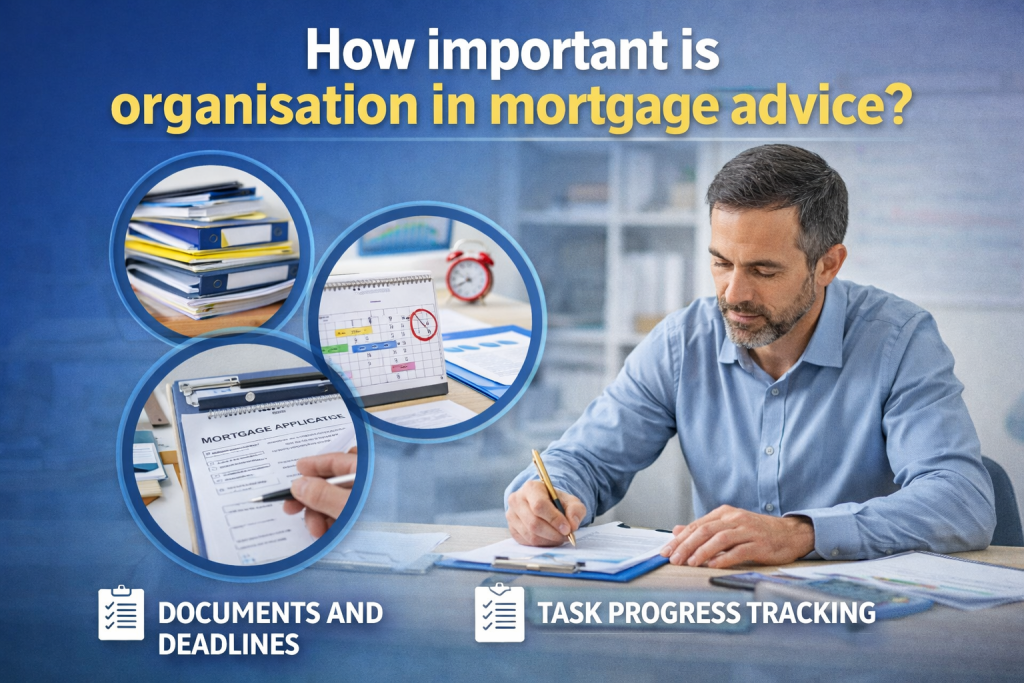
How Important Are Organisation Skills for a Mortgage Adviser?
Organisation is extremely important because mortgage advisers will often have multiple clients and cases progressing at the same time.
One client may be waiting for documents. Another may need a follow-up call. A lender may have requested additional information on another case, while a different client may have an appointment booked later that day.
Without an organised system, things can quickly become difficult to manage.
Good organisation includes keeping accurate records, managing appointments, prioritising tasks, following up outstanding information and knowing what stage each case has reached.
It also means managing your own time.
Not every task that appears urgent is equally important. Advisers need to become comfortable deciding what needs immediate attention and what can be scheduled appropriately.
These habits may not seem as important as learning mortgage products when you are studying CeMAP, but they can have a significant effect on how effectively you work once dealing with real cases.

Do Mortgage Advisers Need Problem-Solving Skills?
Yes. Mortgage cases do not always progress exactly as expected, so advisers benefit from being able to identify problems and consider appropriate next steps.
A client’s circumstances may change. Documents may reveal something that was not apparent during the initial conversation. A particular mortgage may no longer be available, or further information may be required before a case can progress.
Problem-solving does not mean finding a way around rules or forcing a case to work.
It means being able to assess what has happened, understand the relevant requirements and decide what legitimate options remain available.
This is another area where CeMAP knowledge becomes useful in practice.
The qualification helps provide the underlying knowledge. Practical experience helps develop the judgement needed to apply that knowledge to different situations.
Is Being Good With People More Important Than Mortgage Knowledge?
Neither should be treated as a replacement for the other.
Mortgage advisers need technical knowledge because they are dealing with regulated financial products and important financial decisions. They also need people skills because that knowledge has to be applied through conversations with real clients.
Someone can know a great deal about mortgages but struggle to explain that knowledge clearly.
Another person might be confident and personable but lack the technical understanding needed to give appropriate advice.
Neither combination is enough on its own.
A strong mortgage adviser develops both sides of the role: knowledge provides the foundation, while practical skills allow that knowledge to be used effectively.
Can You Develop Mortgage Adviser Skills Before Getting Your First Job?
Yes. You do not have to wait until your first mortgage adviser role to begin developing many of the skills used in the profession.
Experience from other jobs can be highly transferable.
Customer service can develop communication and client-handling skills. Administration can build organisation and attention to detail. Sales roles can provide experience of questioning, listening and building professional relationships. Roles involving deadlines or multiple workloads can strengthen time management.
When preparing for a mortgage adviser career, it is therefore worth looking beyond your qualifications.
Think about situations where you have:
- explained complicated information clearly;
- dealt with nervous or unhappy customers;
- spotted an error before it became a problem;
- managed several tasks or clients at once;
- gathered information by asking effective questions;
- maintained accurate records.
These examples can demonstrate capabilities that are relevant to mortgage advice even if they were developed outside financial services.

What Should You Focus on After Passing CeMAP?
After passing CeMAP, the focus should gradually move from learning information for an examination towards applying that knowledge accurately and professionally.
Your qualification remains important. It demonstrates that you have studied and passed assessments covering the knowledge required for mortgage advice.
The next stage is developing competence in a working environment.
That may include learning company procedures, becoming familiar with systems, observing experienced advisers, practising client conversations and receiving supervision and feedback.
Nobody should expect to know everything immediately after passing an examination.
CeMAP provides the technical foundation. Workplace learning and experience help turn that foundation into practical capability.
What Makes a Good Mortgage Adviser?
A good mortgage adviser combines appropriate qualifications and technical knowledge with strong practical skills.
They can listen carefully, ask useful questions, identify important details, explain complicated information clearly and keep accurate records. They can organise their workload, deal professionally with different clients and apply their mortgage knowledge to individual circumstances.
CeMAP is therefore not something to dismiss once the exams are over. It provides knowledge that advisers continue to draw upon throughout their work.
But passing CeMAP should be viewed as the beginning of developing professional competence rather than the end of the learning process.
If you are currently studying, passing your exams is understandably the immediate goal. At the same time, developing your communication, attention to detail, client handling and organisation skills can help prepare you for what a career in mortgage advice actually involves.
Qualifications help you meet the requirements to enter mortgage advice. Practical skills help you become effective at doing the job.
Looking for training support?
We offer CeMAP training for learners working towards a career in mortgage advice. Our courses follow the London Institute of Banking & Finance syllabus and are designed to support understanding of mortgage regulation and advice requirements.
Explore our accredited CeMAP training courses
> Futuretrend Financial Training