Feeling nervous before a CeMAP exam does not necessarily mean you are unprepared. In many cases, nerves appear because the exam matters and because there is uncertainty about what will happen once you start answering questions.
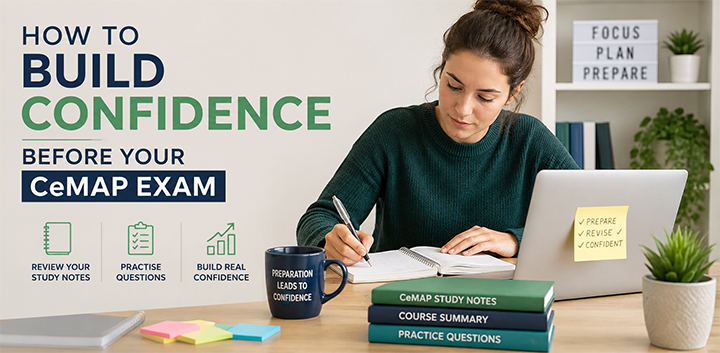
The best way to feel more confident for a CeMAP exam is not to try to convince yourself that you will pass. It is to build confidence from evidence. That means knowing you have covered the syllabus, reviewed your study notes, revisited the main course summaries, practised questions and identified areas where your knowledge still needs attention.
CeMAP exam confidence should come from preparation rather than reassurance. The more evidence you have that you can understand, recall and apply what you have studied, the less you need to rely on simply hoping that everything will be fine.
This approach also fits the wider principle that CeMAP preparation should be educational, clear and realistic rather than based on promises about outcomes.
How Can You Feel More Confident for Your CeMAP Exam?
A useful starting point is to separate feeling confident from being prepared.
You might feel nervous despite consistently performing well in practice questions. Equally, you might feel quite relaxed while still having gaps in your knowledge.
Neither feeling tells you very much on its own.
A better question is:
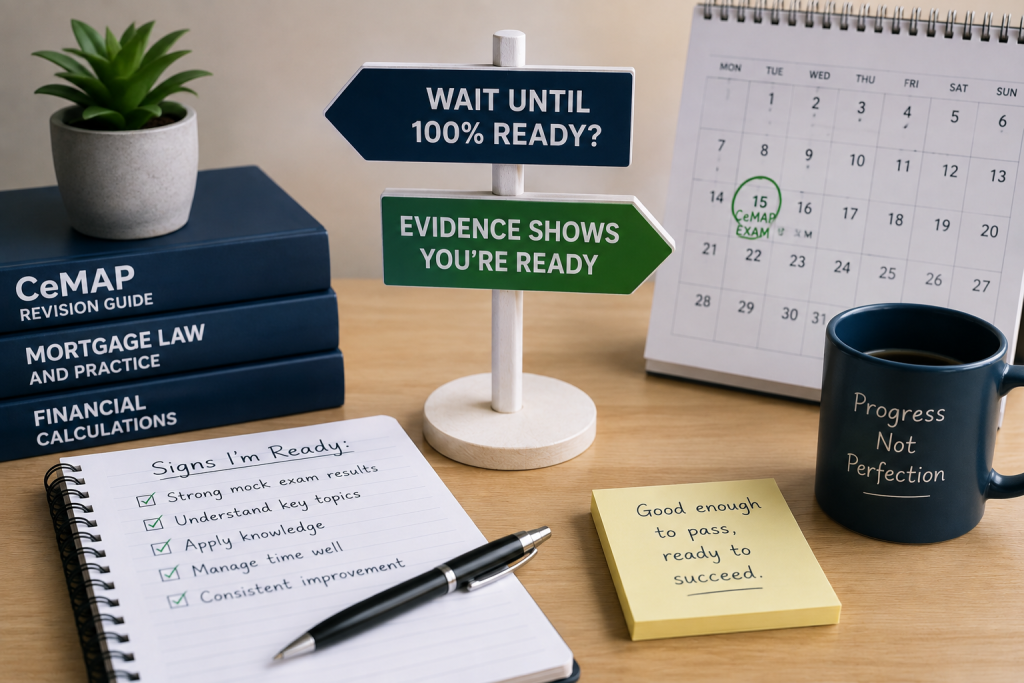
What evidence do I have that I am ready?
That evidence might include:
- You have worked through all the relevant learning topics.
- You can explain key concepts without constantly referring back to your materials.
- You have reviewed your study notes and course summaries.
- You understand why you got previous practice questions wrong.
- Your mock exam performance is becoming more consistent.
- You can work through questions carefully without rushing.
These are much stronger sources of confidence than simply telling yourself to think positively.
Why Do Learners Lose Confidence Before a CeMAP Exam?
CeMAP contains a considerable amount of information, and it is normal for some of it to feel less familiar than other areas.
As the exam gets closer, learners can also become increasingly aware of what they cannot immediately remember.
That can create a misleading impression.
You might spend ten minutes struggling to recall one particular rule and suddenly feel as though you have forgotten everything. In reality, that one difficult area does not erase everything else you have learnt.
Confidence can also fall when learners start jumping randomly between topics shortly before the exam. Moving rapidly from one subject to another can make your knowledge feel fragmented.
A structured review gives you a much clearer picture of where you actually stand.
How Does Reviewing Your CeMAP Study Notes Build Confidence?
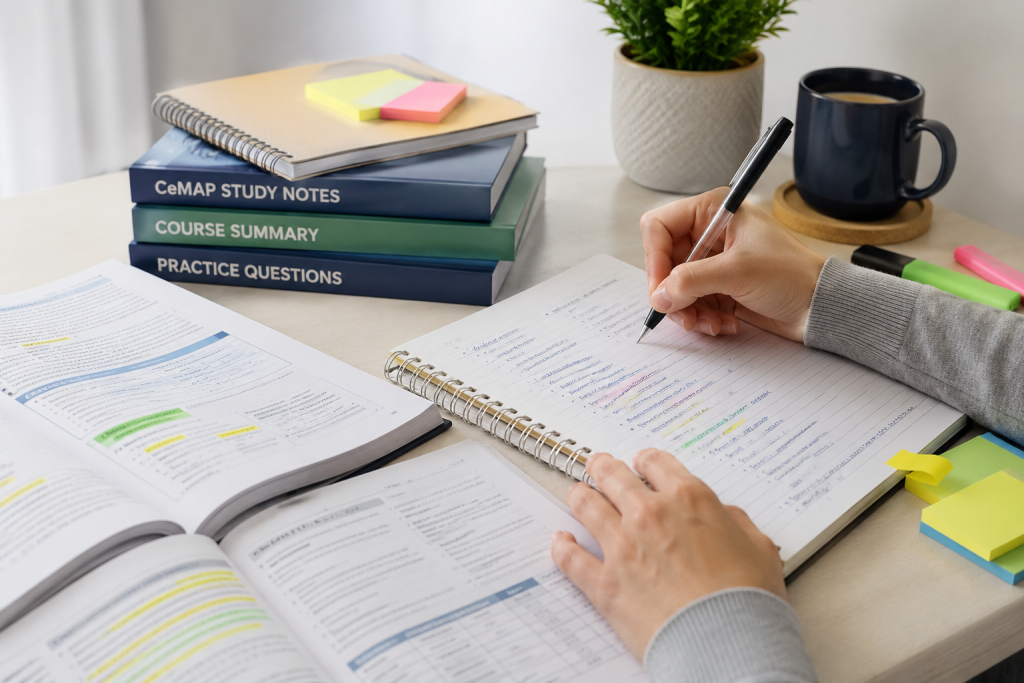
Your study notes should become particularly useful during the review stage of your CeMAP preparation.
You do not necessarily need to reread every page of every CeMAP learning resource from the beginning. Instead, use your notes to remind yourself of the main rules, concepts, definitions and areas that previously required more attention.
Try reviewing a topic and then putting your notes aside.
Ask yourself:
Could I explain the main points of this topic to somebody else?
You do not need a word-for-word explanation. You are testing whether the information makes sense in your own mind.
If you can explain something clearly without looking at your notes, that is useful evidence that your knowledge is becoming established.
If you cannot, you have identified something specific to revisit. That is much more useful than simply thinking, I don’t know enough.
Why Should You Review Your CeMAP Course Summaries?
Course summaries can help you move from detailed learning into broader exam preparation.
During your main studies, you may have covered individual concepts in considerable detail. As you get closer to your exam, summaries, study cards, revision materials and other condensed resources can help you reconnect those individual areas.
Think of your full study materials as the detailed map and your course summaries as the overview.
Use summaries to ask yourself:
Do I recognise this? Do I understand it? Could I answer a question about it?
If the answer is yes, move on.
If something feels unfamiliar, return to the more detailed learning materials for that particular area.
This is usually more productive than repeatedly reading material you already understand simply because it feels comfortable.
Can CeMAP Practice Questions Improve Your Confidence?
Yes, but only when you use them as a learning tool rather than simply chasing a score.
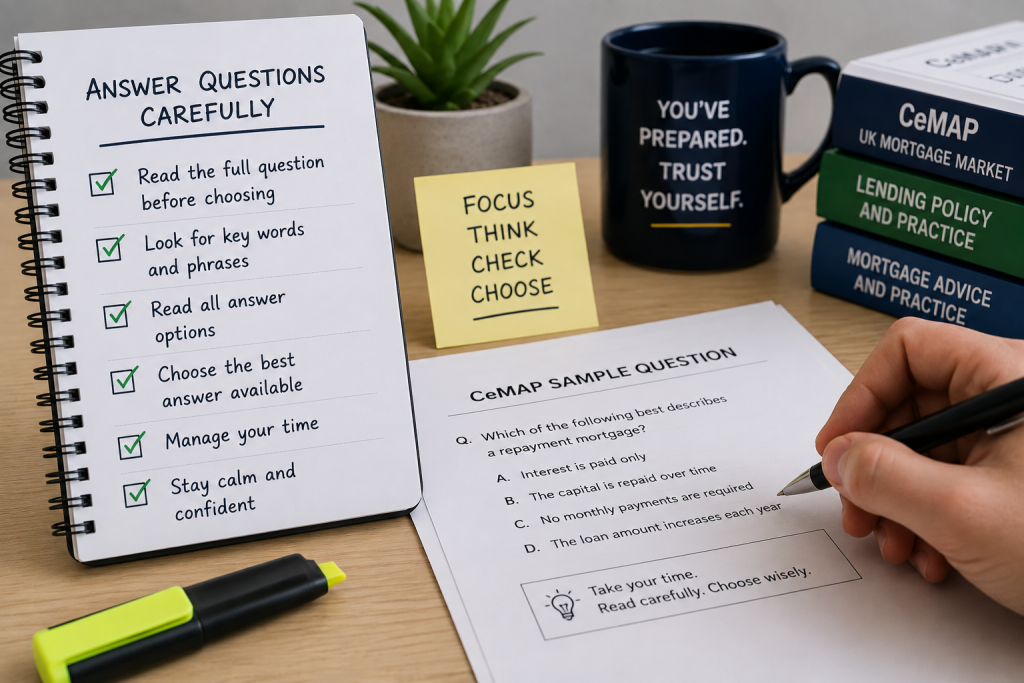
Practice questions allow you to test whether you can recognise what a question is asking and apply your knowledge to the available answers.
When you get something wrong, investigate it.
Ask:
Why did I choose that answer?
Perhaps you misunderstood the topic. Perhaps two answers looked similar. Maybe you missed an important word in the question or changed an answer unnecessarily.
Different mistakes need different solutions.
If the problem is knowledge, return to your study materials. If it is question technique, concentrate on reading more carefully. If you rushed, practise slowing down.
Understanding your mistakes turns them into part of your preparation rather than a reason to lose confidence.
What Practical Techniques Can Help Before a CeMAP Exam?
Confidence tends to improve when your final preparation becomes more focused.
One useful technique is to create three simple categories for the areas you have studied:
Secure: topics you understand and can answer questions on consistently.
Review: topics you broadly understand but still need to revisit.
Priority: topics where you regularly struggle or make mistakes.
Spend more of your remaining study time on the second and third groups rather than endlessly revisiting the first.
You can also use short recall sessions. Choose a subject, close your learning materials and write down everything important you can remember. Then compare your notes against the course material.
This quickly reveals what has stuck and what has not.
Another technique is to mix topics during practice. CeMAP exam questions will not always arrive in the comfortable order in which you originally learnt the material. Moving between different subjects during revision can therefore help you become more comfortable retrieving information when required.
What Are the Limitations of Studying CeMAP Completely on Your Own?
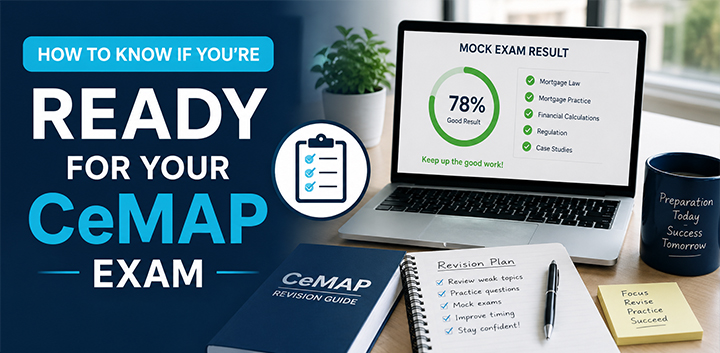
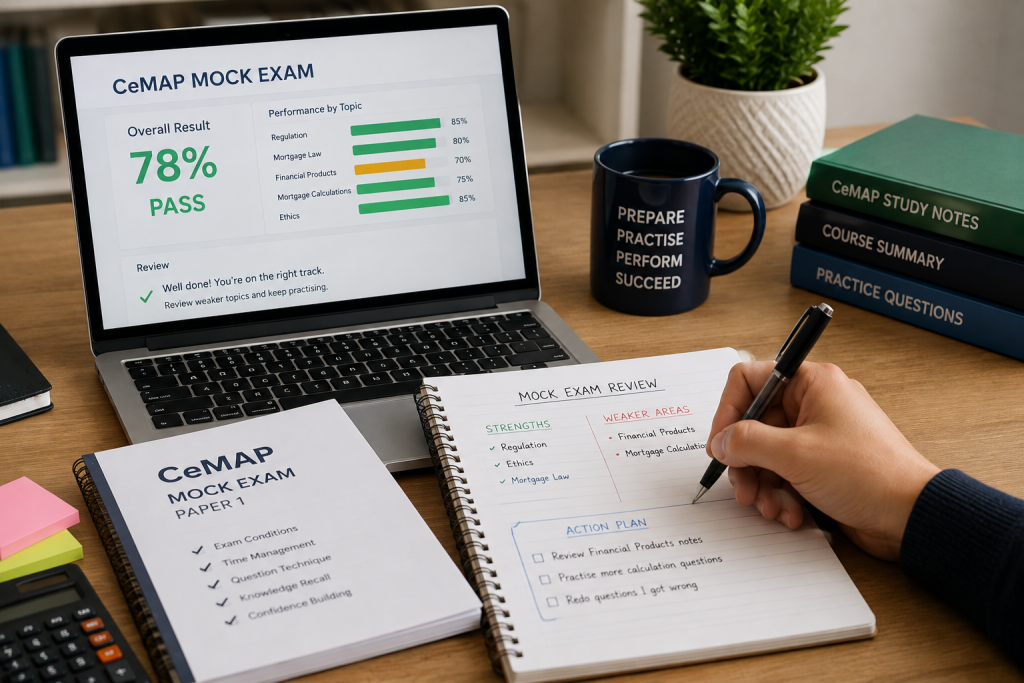
CeMAP Mock exams provide something that ordinary revision cannot: an opportunity to practise bringing your knowledge together under exam-style conditions.
Their value is not simply the final percentage.
Look at your performance across several attempts. Are you consistently understanding the questions? Are particular subjects repeatedly causing difficulty? Are careless errors reducing? Are your results becoming more stable?
A single strong mock result can feel encouraging, but consistent performance is more useful evidence of preparation than one unusually high score.
The same applies to a disappointing result. One weaker mock does not automatically mean you are not ready. Review what went wrong and determine whether it reveals a genuine knowledge gap or simply a handful of avoidable mistakes.
What Is False Confidence in CeMAP Exam Preparation?
False confidence happens when your sense of readiness is not supported by evidence.
For example, rereading familiar notes can make information seem obvious because you recognise it. Recognition, however, is different from being able to recall and apply that information independently.
The same problem can occur if you repeatedly attempt questions you have already seen. Eventually, you may remember the answers rather than genuinely working them out.
A better test is unfamiliar practice material, active recall and questions that require you to decide between plausible answers.
Be careful with the opposite problem too.
You do not need to know absolutely everything perfectly before sitting an exam. Trying to reach a point where you never feel uncertain can become another source of anxiety.
The aim is well-tested preparation, not perfect confidence.
What Should You Do When Exam Nerves Start Affecting Your Confidence?
Bring your attention back to things you can actually measure.
Instead of thinking:
What if I fail?
Ask:
Which areas do I still need to review?
Instead of:
I can’t remember everything.
Ask:
Which specific things am I struggling to recall?
This turns a vague worry into something you can act on.
If you identify a weak topic, review it. If practice questions expose a misunderstanding, clarify it. If you are making mistakes because you rush, practise your question technique.
Specific problems are much easier to deal with than general anxiety.
How Do You Know When Your CeMAP Confidence Is Based on Real Preparation?
You are looking for a pattern rather than one particular feeling.
You have covered the required learning, reviewed your notes and course summaries, tested yourself without relying heavily on your materials and used practice questions or mock exams to identify weaknesses.
There may still be questions you find difficult. You may still feel nervous on the day.
That does not cancel out the work you have done.
The most useful CeMAP exam confidence comes from being able to look back at your preparation and see evidence that you have learnt, reviewed, practised and corrected your mistakes.
You cannot control exactly which questions appear in your exam. You can control how thoroughly you prepare for them.
Looking for training support?
We offer CeMAP training for learners working towards a career in mortgage advice. Our courses follow the London Institute of Banking & Finance syllabus and are designed to support understanding of mortgage regulation and advice requirements.
Explore our accredited CeMAP training courses
> Futuretrend Financial Training