What skills do mortgage advisers need?

Mortgage adviser explaining options to clients showing communication, organisation, empathy and professionalism skills

Choosing a career in mortgage advice is not just about passing exams or gaining a qualification. It is about how you work with people, how you handle responsibility, and how you make decisions that affect real financial outcomes.

A mortgage adviser is someone who helps clients understand their borrowing options and make informed choices. In the UK, this typically involves meeting the qualification requirements set by the Financial Conduct Authority, often through qualifications like CeMAP awarded by the London Institute of Banking & Finance.

But qualifications alone do not define whether someone will feel comfortable or effective in the role. The day-to-day work relies heavily on practical skills and personal traits that develop over time.

This article looks at the key skills and traits that support success in mortgage advice, with a focus on development rather than natural ability.

Mortgage adviser explaining options to clients showing communication, organisation, empathy and professionalism skills

Do you need strong communication skills to be a mortgage adviser?

Yes. Communication is one of the most important skills in mortgage advice, but it is not about being a confident speaker or a “natural salesperson”.

It is about clarity.

Mortgage advisers deal with complex information, including interest rates, lending criteria, affordability assessments, and legal processes. Clients often come in with limited understanding or with assumptions that are not quite right. Your role is to explain things in a way that makes sense to them.

What good communication looks like in practice

Clear communication in this role usually means:

  • Explaining financial concepts in plain language
  • Checking understanding rather than assuming it
  • Listening carefully before offering solutions
  • Adjusting how you explain things depending on the client

For example, one client may want a detailed breakdown of options, while another may feel overwhelmed and prefer a simple comparison.

Listening matters as much as explaining

A common misconception is that communication is mostly about talking. In reality, listening is often more important.

Clients may not always explain their situation clearly at first. They might leave out key details or focus on the wrong concerns. Being able to pick up on what is not being said, and ask the right follow-up questions, is a skill that improves with experience.

This is especially important when discussing sensitive topics such as income, debt, or financial difficulties.

How important is organisation in mortgage advice?

Organisation is essential because mortgage advice involves managing multiple moving parts at once.

You are not just having conversations. You are also:

  • Handling documents and evidence
  • Tracking application progress
  • Meeting lender requirements
  • Managing deadlines and client expectations

Without a structured approach, it becomes easy to miss details or create delays.

Mortgage adviser organising documents and tracking tasks showing importance of organisation in mortgage advice

Why organisation affects client experience

From a client’s perspective, the mortgage process can already feel stressful. Delays, missing paperwork, or unclear updates can make that worse.

An organised adviser helps by:

  • Keeping processes moving smoothly
  • Providing timely updates
  • Reducing uncertainty

This does not mean you need to be naturally “ultra-organised”. Many advisers develop systems over time, using checklists, workflows, and CRM tools to stay on track.

Small habits make a big difference

Organisation in this role often comes down to consistent habits, such as:

  • Recording information accurately after meetings
  • Following up when you say you will
  • Keeping clear notes on each case

These are learnable behaviours rather than fixed traits.

What kind of judgement do mortgage advisers need?

Mortgage advisers regularly make judgement calls, even within structured rules and regulations.

This includes:

  • Assessing which mortgage products may suit a client’s situation
  • Deciding how to present options clearly
  • Identifying potential risks or complications

While lenders provide criteria, real client situations are not always straightforward.

Judgement is about applying knowledge, not guessing

Good judgement does not mean relying on instinct alone. It comes from:

  • Understanding how different lenders operate
  • Recognising patterns in client situations
  • Knowing when something needs further clarification

Over time, advisers build a sense of what is likely to work and what may cause issues later in the process.

Knowing when to slow down

An important part of judgement is recognising when not to rush.

If something does not seem clear or complete, taking time to check details can prevent larger problems later. This might mean going back to the client for more information or double-checking lender criteria.

Why does empathy matter in mortgage advice?

Empathy plays a central role because mortgages are not just financial transactions. They are tied to major life events.

Clients may be:

  • Buying their first home
  • Moving due to family changes
  • Dealing with financial pressure
  • Unsure about long-term commitments

Understanding how someone feels about their situation helps you communicate more effectively and provide appropriate support.

Mortgage adviser showing empathy to clients discussing financial situation and mortgage decisions

Empathy is about awareness, not emotion

You do not need to be overly emotional to be empathetic. It is more about recognising:

  • When a client feels uncertain or anxious
  • When they need reassurance or clarity
  • When to slow down and explain things more carefully

A calm and respectful approach often matters more than trying to be overly reassuring.

Building trust through understanding

Clients are more likely to trust advice when they feel understood. This trust is important because they are relying on you to guide them through decisions that may affect them for years.

Empathy supports that trust, but it develops naturally through experience and exposure to different client situations.

What does professionalism mean in this role?

Professionalism in mortgage advice is about consistency, responsibility, and clear boundaries.

It includes:

  • Being accurate and careful with information
  • Following regulatory requirements
  • Communicating clearly and honestly
  • Managing expectations appropriately

Why professionalism is critical

Mortgage advisers operate within a regulated environment. The standards set by the Financial Conduct Authority are there to protect clients.

This means professionalism is not optional. It is part of the role.

For example, this includes:

  • Avoiding misleading statements
  • Ensuring advice is suitable for the client
  • Keeping records of recommendations

Professional behaviour builds long-term credibility

Clients may not always understand the technical side of what you do, but they do notice how you behave.

Reliability, honesty, and clarity contribute to a professional reputation over time.

Can these skills be developed, or do you need them already?

These skills can be developed. They are not fixed traits that you either have or do not have.

This is an important point, especially for people considering whether mortgage advice is the right fit.

Development happens through experience

Most advisers improve their skills through:

  • Training and structured learning
  • Practical experience with real clients
  • Feedback from managers or mentors

For example:

  • Communication improves through repeated client conversations
  • Organisation improves through building systems and routines
  • Judgement improves through exposure to different cases

Confidence often follows competence

Many people assume they need confidence before starting. In reality, confidence tends to grow as skills improve.

Early on, it is normal to feel unsure or cautious. Over time, as processes become familiar, confidence develops naturally.

What skills do mortgage advisers need overall?

Mortgage advisers need a combination of communication, organisation, judgement, empathy, and professionalism.

No single skill defines success. Instead, it is how these areas work together.

In simple terms:

  • Communication helps clients understand
  • Organisation keeps the process on track
  • Judgement supports decision-making
  • Empathy builds trust
  • Professionalism ensures standards are met

These are practical, developable skills rather than fixed personality traits.

Mortgage adviser with icons showing communication, organisation, empathy, judgement and professionalism skills

Final thoughts

Mortgage advice is a people-focused role built on clear thinking and responsible communication.

It does not require a specific personality type or a perfect starting point. What matters more is a willingness to learn, adapt, and improve over time.

If you are assessing whether the role suits you, it is worth focusing less on whether you already have these skills and more on whether you are open to developing them.

That mindset tends to matter far more in the long run.

Looking for training support?

We offer CeMAP training for learners working towards a career in mortgage advice. Our courses follow the London Institute of Banking & Finance syllabus and are designed to support understanding of mortgage regulation and advice requirements.

Explore our accredited CeMAP training courses

> Futuretrend Financial Training 
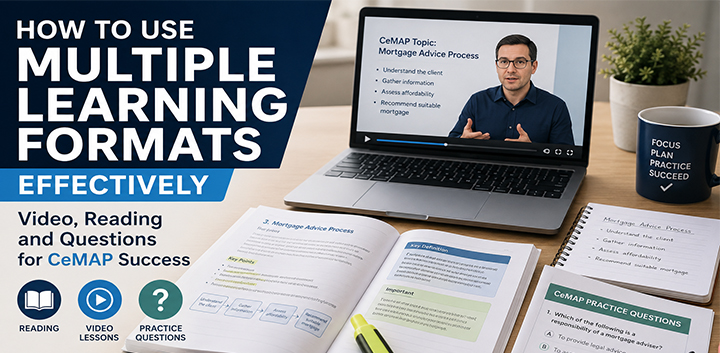
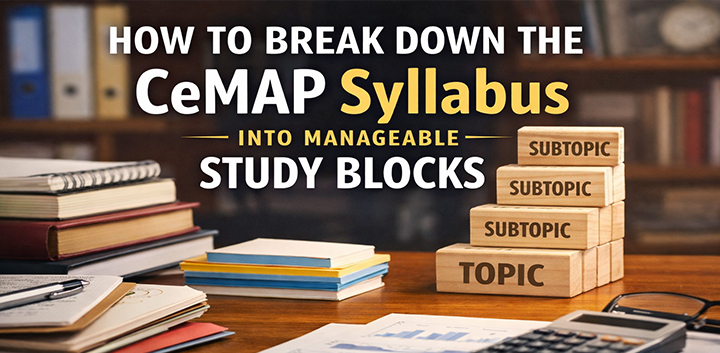
How to break down the CeMAP syllabus into manageable study blocks

CeMAP syllabus broken into manageable study blocks with topics and subtopics visualised using stacked blocks

How big is the CeMAP syllabus?

The CeMAP syllabus is often described as large because it covers a wide range of knowledge needed for mortgage advice. It is split across three modules and includes topics such as regulation, mortgage law, products, and financial protection.

In simple terms, it is not just one subject. It is a collection of related subjects that build towards a single professional understanding. That is why it can feel overwhelming at first.

The size of the syllabus is not just about length. It is about variety. Learners are expected to understand rules, apply knowledge, and recognise real-world scenarios. This mix makes the content feel heavier than it might look on paper.

CeMAP syllabus broken into manageable study blocks with topics and subtopics visualised using stacked blocks

Why does the CeMAP syllabus feel overwhelming?

For many learners, the challenge is not ability. It is how the content is presented.

The syllabus is structured in a formal way because it is designed to meet industry requirements set by the London Institute of Banking & Finance and aligned with expectations from the Financial Conduct Authority. This means it is written for completeness, not ease of learning.

That creates a few common problems:

It feels like one continuous block of information

When you first look at the syllabus, it can appear as one long list. Without clear mental separation, everything blends together.

Different types of knowledge sit side by side

You might move from legal rules to product features to calculations in a short space of time. That shift can feel disjointed.

There is no obvious starting point

Because everything is important, it can be hard to know where to begin or how to group things.

This is why many learners feel stuck before they even properly start. The issue is not the content itself, but how it is mentally organised.

What does “breaking the syllabus into study blocks” actually mean?

Breaking the syllabus into study blocks means turning a large, complex structure into smaller, clearly defined parts that make sense on their own.

A study block is not a timetable or a schedule. It is simply a way of grouping related ideas together so they are easier to understand.

Each block should:

  • Focus on one clear topic
  • Contain closely related sub-topics
  • Feel complete when studied on its own

This approach mirrors how people naturally learn. We understand things better when they are grouped logically, rather than presented all at once.

Visual showing CeMAP syllabus broken into topics and sub-topics using stacked blocks and arrows from study material

How can you break the CeMAP syllabus into topics?

The most effective way to organise the CeMAP syllabus is to think in layers.

Start with broad topics, then break those down into smaller parts.

Layer 1: Core topic areas

At the highest level, the syllabus can be grouped into a few key themes:

  • Regulation and the role of the adviser
  • Mortgage law and the house buying process
  • Mortgage products and repayment types
  • Financial protection

These are not official labels, but they reflect how the content naturally clusters.

Seeing the syllabus this way helps reduce the feeling that everything is separate. Instead, you begin to see patterns.

Layer 2: Topic groups within each area

Each core area can then be divided into smaller topic groups.

For example, within regulation you might have:

  • The role of the Financial Conduct Authority
  • Conduct of business rules
  • Consumer protection principles

Within mortgage products:

  • Types of mortgages
  • Interest rate structures
  • Repayment methods

These groupings start to make the content feel more manageable because they reflect real themes rather than a long list.

Layer 3: Sub-topics for deeper sections

Some parts of the syllabus are naturally larger and need further breakdown.

For example, a topic like mortgage types can be split into:

  • Fixed rate mortgages
  • Variable rate mortgages
  • Discounted products
  • Offset mortgages

Each of these becomes a small, focused unit of learning.

This is where the real benefit comes in. Instead of trying to understand “mortgages” as a whole, you deal with one type at a time.

Why does this approach make learning easier?

Breaking the syllabus into structured blocks changes how your brain processes the information.

It reduces cognitive overload

When too much information is presented at once, it becomes harder to retain anything. Smaller blocks are easier to absorb.

It creates a sense of progress

Working through clearly defined sections gives you visible progress. That matters for motivation, especially with a larger qualification.

It improves understanding, not just memory

When topics are grouped logically, it becomes easier to see how ideas connect. This leads to deeper understanding rather than surface memorisation.

How detailed should your study blocks be?

There is a balance to get right.

If your blocks are too large, you are back to feeling overwhelmed. If they are too small, you lose the bigger picture.

A good rule is this:

A study block should feel like something you can understand in one sitting, but still meaningful enough to connect to the wider topic.

For example:

  • “Mortgage regulation” is too broad
  • “FCA rules on disclosure” is more focused
  • “What must be disclosed to a client before recommendation” is even clearer

You are aiming for clarity, not perfection.

CeMAP study blocks shown in levels from broad topics to detailed sub-topics illustrating how much detail is needed

What should you do with longer or more complex sections?

Some areas of the CeMAP syllabus are naturally more detailed. These often include regulation and mortgage products.

Instead of trying to simplify them too quickly, break them down further.

Example: Regulation

Rather than treating regulation as one topic, you can divide it into:

  • Who regulates the market
  • Why regulation exists
  • Key rules advisers must follow
  • How those rules apply in practice

Each of these becomes its own learning unit.

Example: Mortgage products

This can be broken into:

  • How interest is applied
  • How repayments are structured
  • How products differ in risk and flexibility

Then each of those can be split again if needed.

This layered approach allows you to go deeper without feeling lost.

Does this mean you should ignore the official syllabus structure?

No. The official structure is still important because it reflects how the exams are designed.

However, there is a difference between how content is structured for assessment and how it is best understood by a learner.

The syllabus is designed for completeness and accuracy.

Your study blocks are designed for clarity and understanding.

You are not replacing the syllabus. You are reorganising it in a way that works better for learning.

How do you know if your breakdown is working?

A simple way to check is to ask yourself:

  • Can I explain this topic in simple terms?
  • Do I understand how this connects to other topics?
  • Does this feel like a complete piece of knowledge?

If the answer is no, the block may still be too large or unclear.

If the answer is yes, you have likely found the right level of detail.

Why do some learners still feel stuck even after breaking things down?

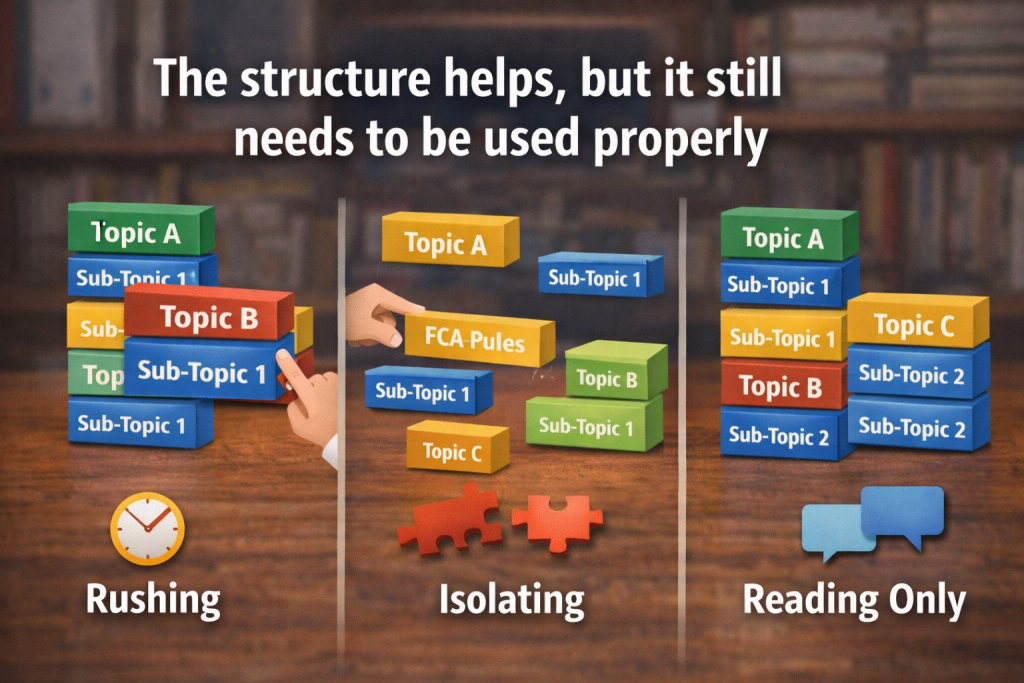
Breaking the syllabus into blocks helps, but it does not solve everything.

Some learners still struggle because:

They try to rush through blocks

Understanding takes time. Smaller sections do not mean

They treat blocks as isolated

Each topic connects to others. If you ignore those links, knowledge can feel fragmented.

They focus only on reading

Understanding often comes from thinking about how knowledge applies, not just seeing it written down.

The structure helps, but it still needs to be used properly.

How does this approach reflect real-world learning?

In practice, mortgage advisers do not think in terms of exam modules. They think in terms of situations.

For example:

  • What does the client need?
  • What rules apply here?
  • Which product fits best?

These decisions rely on grouped knowledge, not isolated facts.

By breaking the syllabus into logical blocks, you are closer to how the knowledge is actually used in real life.

CeMAP study blocks showing common mistakes like rushing, isolating topics, and only reading without applying knowledge

Final thoughts: making a large syllabus feel manageable

The CeMAP syllabus is not small, and it is not meant to be. It reflects the level of knowledge required to give responsible mortgage advice.

What makes it manageable is not reducing the content, but organising it in a way that makes sense.

Breaking the syllabus into topics and sub-topics helps you:

  • See structure instead of volume
  • Focus on one thing at a time
  • Build understanding step by step

Many learners find that once the structure becomes clear, the sense of overwhelm starts to reduce.

The key idea is simple.

You are not trying to tackle the whole syllabus at once.

You are working through one clear, connected piece at a time.

Looking for training support?

We offer CeMAP training for learners working towards a career in mortgage advice. Our courses follow the London Institute of Banking & Finance syllabus and are designed to support understanding of mortgage regulation and advice requirements.

Explore our accredited CeMAP training courses

> Futuretrend Financial Training 

Why experience matters in professional training

Does trainer experience matter for CeMAP training with tutor explaining concepts to adult learners

When choosing a training provider, one question often sits quietly in the background: does the experience of the trainer actually matter?

The short answer is yes. Experience shapes how content is taught, how clearly it is explained, and how well it prepares you for real situations rather than just exams.

For learners working towards qualifications like CeMAP, this can make a noticeable difference to both confidence and understanding.

Does trainer experience matter for CeMAP training with tutor explaining concepts to adult learners

Does trainer experience matter for CeMAP?

Yes, trainer experience matters for CeMAP because it affects how well complex topics are explained and how easily learners can apply what they study in real-world scenarios.

CeMAP, awarded by the London Institute of Banking & Finance, meets the education requirements set by the Financial Conduct Authority. That means the content is not just academic. It reflects real regulatory expectations and client-facing responsibilities.

An experienced trainer understands this balance. They are more likely to:

  • Explain why rules exist, not just what they are
  • Link theory to real client situations
  • Highlight common misunderstandings before they become problems

Without that depth, learning can become a process of memorising facts rather than building usable knowledge.

What is the difference between theory-based teaching and applied teaching?

Theory-based teaching focuses on delivering information. Applied teaching focuses on helping you use it.

Both have a place, but they feel very different as a learner.

Theory-based teaching

This approach usually follows the syllabus closely. It explains definitions, rules, and structures in a clear but often rigid way.

You might learn:

  • What a repayment mortgage is
  • The definition of affordability
  • The structure of regulation

This is important, especially for exams. But on its own, it can feel disconnected from real life.

Applied teaching

Applied teaching takes those same topics and places them into context.

For example:

  • How affordability changes based on a client’s situation
  • Why certain products suit different borrowers
  • What can go wrong if advice is not suitable

Instead of just knowing the answer, you understand the reasoning behind it.

That difference becomes critical when moving from study into practice.

How does trainer experience affect how things are explained?

Experience often shows in how clearly something is broken down.

A trainer who has worked with real scenarios tends to:

  • Use simpler language for complex topics
  • Give examples that make sense immediately
  • Anticipate where learners might struggle

For instance, regulation can feel abstract when taught purely from a textbook. An experienced trainer may explain it through everyday situations, making it easier to understand and remember.

This is not about making things easier. It is about making them clearer.

Trainer explaining complex CeMAP concepts to learners showing how experience improves understanding

How does this impact your learning as a student?

The impact is practical rather than theoretical.

Learners studying under experienced trainers often find that:

  • Topics “click” sooner
  • Less time is spent re-learning the same material
  • Confidence builds earlier in the process

This matters because CeMAP is not just about passing exams. It is about preparing for a role where decisions affect real people and their finances.

If learning is too surface-level, it can lead to:

  • Memorising without understanding
  • Difficulty applying knowledge later
  • Lower confidence when facing unfamiliar questions

A more experienced approach helps bridge that gap.

Why do real-world examples make such a difference?

Examples act as a bridge between knowledge and application.

Without them, information can feel isolated. With them, it becomes easier to connect ideas.

For example:

  • A definition explains what a concept is
  • An example shows how it works in practice

Experienced trainers tend to have a wider range of examples to draw from. They can adjust explanations depending on the learner, rather than relying on one fixed way of teaching.

This flexibility can be especially helpful when topics feel repetitive or difficult.

Trainer using real world examples to explain CeMAP concepts to learners in a classroom setting

Does experience influence the quality of learning materials?

Yes, and often more than people expect.

Learning materials are not just about covering the syllabus. They shape how you interact with the content.

Materials created with experience behind them are more likely to:

  • Break topics into manageable sections
  • Focus on clarity rather than volume
  • Include questions that reflect real exam style
  • Reinforce key ideas without unnecessary complexity

In contrast, less refined materials can feel:

  • Overly dense
  • Poorly structured
  • Focused on information rather than understanding

The difference is not always obvious at first, but it becomes clear as you progress.

What role does structure play in professional training?

Structure is where experience quietly does a lot of work.

A well-structured course:

  • Builds knowledge in a logical order
  • Revisits key ideas at the right time
  • Balances theory with application

An experienced trainer or content creator understands how learners typically progress. They know where confusion tends to happen and design the learning journey to reduce it.

Without that structure, even good content can feel difficult to follow.

Can less experienced trainers still be effective?

Yes, but there is a distinction.

A less experienced trainer can still deliver accurate information and support learners. The difference is usually in depth rather than correctness.

You may notice:

  • Fewer real-world insights
  • More reliance on scripted explanations
  • Less flexibility when questions go beyond the basics

This does not make the training ineffective. It simply means learners may need to do more work themselves to connect theory with practice.

How can you recognise experience in a training provider?

It is not always about years alone. It is about how that experience shows up in the learning process.

You might notice:

  • Clear, confident explanations without overcomplication
  • Examples that feel realistic and relevant
  • Materials that guide you, not overwhelm you
  • A focus on understanding, not just exam preparation

These are often signs that the content has been shaped by real teaching experience rather than just assembled from a syllabus.

How to recognise experience in a training provider with trainer and learning quality indicators shown

Why does this matter beyond the exam?

Passing CeMAP is one milestone. Applying the knowledge is another.

In practice, mortgage advisers need to:

  • Understand client needs
  • Apply regulation correctly
  • Explain options clearly

Training that includes applied understanding makes this transition smoother.

Without it, there can be a gap between:

  • Knowing the answer in an exam
  • Knowing what to do in a real situation

That gap is where experience in training becomes most valuable.

Final thoughts

Experience in professional training is not about prestige. It is about clarity, relevance, and depth.

For learners, the difference is often felt in small ways:

  • How quickly something makes sense
  • How confident you feel moving forward
  • How well you can apply what you have learned

Good training should help you understand, not just remember.

Looking for training support?

We offer CeMAP training for learners working towards a career in mortgage advice. Our courses follow the London Institute of Banking & Finance syllabus and are designed to support understanding of mortgage regulation and advice requirements.

Explore our accredited CeMAP training courses

> Futuretrend Financial Training 

Different learning approaches and how they affect CeMAP study

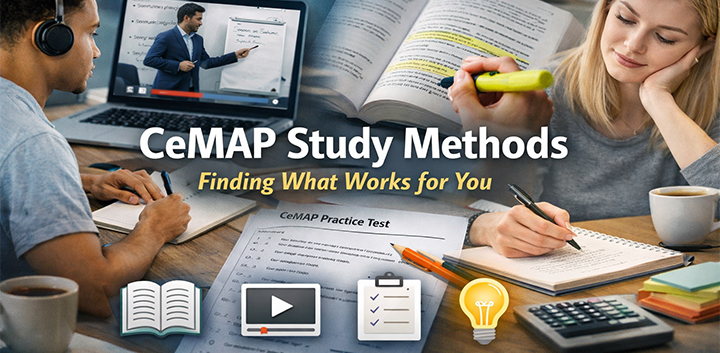
CeMAP study methods showing different learning approaches including reading, video learning and practice questions

Why does CeMAP feel harder for some learners?

CeMAP can feel harder for some learners because the way it is studied does not match how the learner processes and retains information.

CeMAP is the industry standard qualification for mortgage advisers in the UK. It is awarded by the London Institute of Banking & Finance and meets the Financial Conduct Authority’s education requirements for giving mortgage advice. It is knowledge-heavy, exam-focused, and requires both understanding and recall.

CeMAP study methods showing different learning approaches including reading, video learning and practice questions

Some learners approach it by reading large amounts of material and hoping it sticks. Others rely on videos but do not test themselves. Some focus only on practice questions without fully understanding the content. None of these approaches are wrong in isolation, but each can become ineffective if used on its own.

What often feels like “difficulty” is actually a mismatch between method and outcome.

CeMAP is not designed to suit one type of learner. It requires a mix of understanding, application, and exam technique. If your current approach only covers one of these, progress can feel slow or frustrating.

Why does one-size-fits-all learning not work for CeMAP?

One-size-fits-all learning does not work because adult learners bring different habits, experiences, and expectations into their study.

Some learners are returning to study after years away from education. Others are used to structured environments with tutors and deadlines. Some prefer independent learning, while others need regular guidance to stay consistent.

CeMAP does not adapt itself to the learner. The learner has to adapt their approach to the structure of the qualification.

A fixed method, such as “just read the book” or “just watch videos”, assumes that all learners absorb and apply knowledge in the same way. In reality, most people need a combination of:

  • Exposure to new information
  • Time to process and understand it
  • Opportunities to apply it
  • Feedback on mistakes

If one of these steps is missing, gaps appear. Those gaps usually show up during practice questions or exams.

What study approaches do learners typically use?

Most CeMAP learners fall into a few broad study patterns. These are not strict categories, but they help explain why some methods feel more effective than others.

Reading-heavy approach

Some learners rely mainly on textbooks or written materials. This can work well for building a strong base of knowledge, especially for detailed topics.

However, reading alone often creates a false sense of understanding. It is easy to recognise information when you see it again, but harder to recall it in an exam.

Without active recall or testing, this approach can feel productive but lead to weak exam performance.

Video-led learning

Video content can make complex topics easier to understand, especially when concepts are explained step by step.

Many learners find this more engaging than reading. It can help with initial understanding, particularly for topics like regulation or mortgage products.

The limitation is that passive watching does not guarantee retention. If learners do not pause, reflect, or test themselves, much of the content is quickly forgotten.

Practice question focus

Some learners prefer to learn by doing. They use topic questions and specimen papers to guide their study.

This approach is useful for understanding how questions are structured and how knowledge is applied in exams.

However, relying only on questions can lead to shallow understanding. If a learner does not fully grasp why an answer is correct, they may struggle when questions are phrased differently.

Structured programme approach

A structured approach combines multiple elements:

  • Guided content
  • Regular checkpoints
  • Practice questions
  • Recaps and revision tools

This tends to support consistency and reduce gaps in knowledge.

It does not remove the need for effort, but it helps learners cover the full syllabus in a balanced way.

How does your approach affect your progress?

Your study approach directly affects how well you understand, retain, and apply information.

If your method focuses only on input, such as reading or watching, you may feel comfortable but struggle to recall information under pressure.

If your method focuses only on testing, you may improve exam technique but lack depth of understanding.

Progress in CeMAP usually comes from combining:

  • Learning new content
  • Revisiting it regularly
  • Testing your understanding
  • Identifying weak areas

When one of these is missing, progress becomes uneven. You may do well in some topics and struggle in others without a clear reason.

CeMAP structured learning plan with study schedule checklist and organised modules

What does effective CeMAP study actually involve?

Effective CeMAP study is not about finding the “best” method. It is about using a mix of approaches that support both understanding and exam performance.

Most learners benefit from a structure that includes:

Breaking down the syllabus

CeMAP covers a wide range of topics. Trying to study large sections at once can feel overwhelming.

Breaking content into smaller topics makes it easier to focus and track progress.

Active learning

Active learning means doing something with the information, not just consuming it.

This includes:

  • Answering topic questions
  • Writing short notes in your own words
  • Explaining concepts aloud

These actions strengthen understanding and memory.

Regular testing

Testing is not just about checking what you know. It helps reinforce learning.

Practice questions and specimen papers from the London Institute of Banking & Finance are particularly useful because they reflect the structure of the real exams.

Revisiting weak areas

It is normal to struggle with certain topics. Effective learners identify these early and revisit them.

Ignoring weaker areas often leads to repeated mistakes.

Why do some learners feel stuck even when they are studying regularly?

Feeling stuck is usually a sign that effort is not translating into effective learning.

This often happens when:

  • Study sessions are too passive
  • There is no clear structure or plan
  • Progress is not being measured
  • Weak areas are avoided rather than addressed

For example, a learner might spend hours reading but never test themselves. Another might complete questions but not review mistakes properly.

In both cases, time is being spent, but learning is limited.

CeMAP requires deliberate practice. This means focusing on areas that are difficult, not just repeating what feels comfortable.

CeMAP learner feeling stuck despite regular studying with notes, textbooks and practice questions

How can you identify what is not working?

study approach starts with honest reflection.

Ask yourself:

  • Can I explain key topics without looking at notes?
  • Do I understand why answers are correct, or am I guessing?
  • Am I improving in practice questions over time?
  • Do I avoid certain topics because they feel difficult?

If the answer to any of these is no, your approach may need adjusting.

This is not a sign of failure. It is part of the learning process.

CeMAP learner reviewing progress and identifying knowledge gaps using notes and practice results

How can you adapt your study approach effectively?

Adapting your approach does not mean starting again. Small changes can make a significant difference.

Combine different methods

If you mainly read, add practice questions.
If you rely on videos, add note-taking and recall.
If you focus on questions, revisit the theory behind them.

A balanced approach covers more of what CeMAP requires.

Use structured resources

Resources such as topic-based videos, breakdown guides, and recap materials can help organise your study.

Many learners benefit from having:

  • Clear explanations of each topic
  • Questions at the end of each section
  • Recaps to reinforce learning

This creates a more complete learning cycle.

Focus on understanding, not speed

Trying to move quickly through the syllabus can lead to gaps.

It is more effective to understand a topic properly before moving on, even if it takes longer.

Build exam familiarity

CeMAP exams are multiple choice, and CeMAP 3 includes case study elements.

Practising with official-style questions helps you understand how knowledge is tested, not just what you need to know.

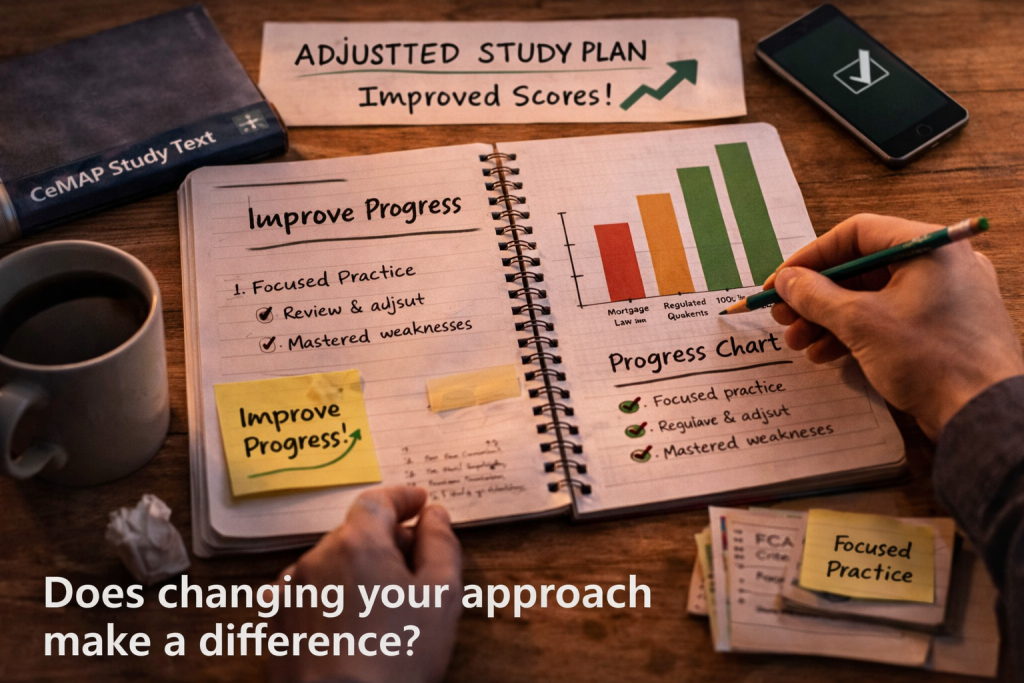
Does changing your approach really make a difference?

Yes, but it is not immediate.

Changing how you study can feel uncomfortable at first. Active learning requires more effort than passive methods. Testing yourself can highlight gaps you did not notice before.

However, this is where real progress happens.

Over time, learners who adapt their approach tend to:

  • Retain information more effectively
  • Feel more confident in exams
  • Reduce repeated mistakes

The goal is not to make CeMAP easy. It is to make your effort more effective.

CeMAP learner improving results by changing study approach and reviewing progress notes

What if you are not sure which study approach suits you?

If you are unsure how you learn best, you are not alone. Many CeMAP learners only figure this out after trying a few different approaches.

Futuretrend’s Home Study option on the Study Hub was built with this in mind. Rather than assuming one way of learning works for everyone, it combines different methods to support a wider range of learners.

This includes:

  • Structured topic-by-topic learning to break down the syllabus
  • Video content to support understanding of key areas
  • Written materials that explain concepts clearly
  • Topic questions to test knowledge as you progress
  • Recaps and revision tools to reinforce learning
  • Access to official-style specimen papers to prepare for exam format

The aim is not to force a single way of studying, but to give you the tools to find what works for you and build a consistent approach around it.

If you are still unsure which study method suits you, it can help to talk it through. Futuretrend’s Learning and Development team can help you review your current approach and suggest a structure that better supports your progress.

Sometimes a short conversation is enough to identify what is missing and help you move forward with more confidence.

Final thoughts: focus on awareness, not labels

There is no single “type” of learner that succeeds in CeMAP.

What matters is understanding how you are currently studying and whether it is helping you make progress. If something is not working, it is usually a sign that your approach needs adjusting, not that you are unable to succeed.

CeMAP is designed to test understanding, not just effort. That is why some learners find it harder at first. Once your study method starts to match what the exams require, progress often becomes more consistent.

A balanced approach that includes learning, testing, and revisiting weaker areas will usually lead to better results over time.

The more aware you are of how you learn, the easier it becomes to improve your approach and move forward with confidence.

Looking for training support?

We offer CeMAP training for learners working towards a career in mortgage advice. Our courses follow the London Institute of Banking & Finance syllabus and are designed to support understanding of mortgage regulation and advice requirements.

Explore our accredited CeMAP training courses

> Futuretrend Financial Training