What the CeMAP Study Hub actually includes (and how to use it properly)

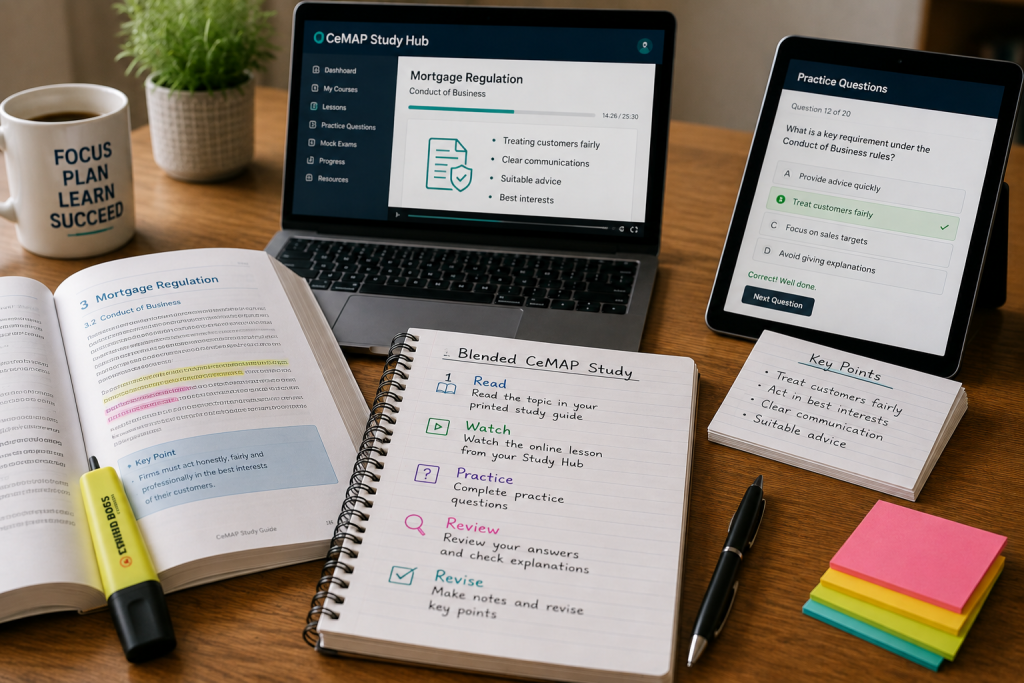
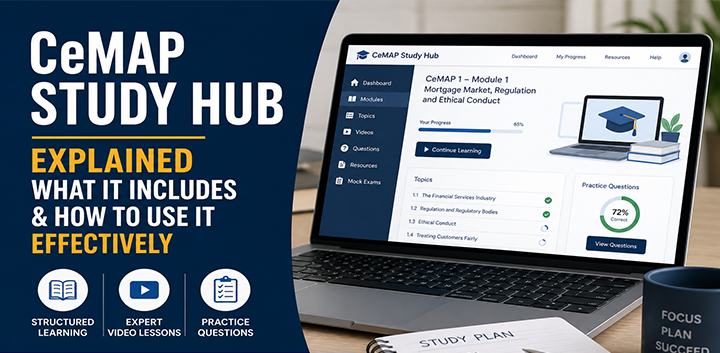
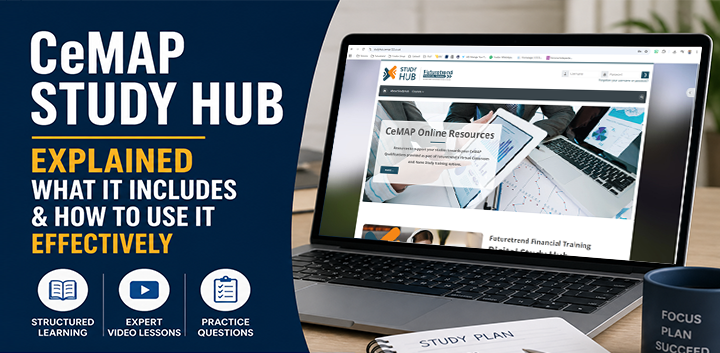
CeMAP Study Hub online learning platform showing structured modules, video lessons and practice questions

What is a CeMAP Study Hub?

A CeMAP Study Hub is an online learning platform designed to organise and deliver structured study for the CeMAP qualification.

It brings together learning materials, topics, and practice tools in one place, arranged in a logical order so learners can progress step by step rather than trying to piece everything together themselves.

Most Study Hubs are built around the official syllabus set by the London Institute of Banking & Finance, which means the content follows the same structure as the actual exams.

In simple terms, a Study Hub is not just a collection of resources. It is a guided framework that shows you:

  • What to study
  • In what order
  • How to check your understanding
  • When you are ready to move on
CeMAP Study Hub online learning platform displayed on laptop with study notes and workspace

What does a CeMAP Study Hub typically include?

A good Study Hub is made up of several core elements. These work together to support both learning and revision.

Structured topic content

At the heart of any Study Hub are the syllabus topics.

Each CeMAP module is broken down into smaller sections, covering areas such as:

  • Regulation
  • Mortgage law
  • Products and processes
  • Ethics and conduct

These are not random chunks of content. They follow the same order you would see in the official syllabus, which helps avoid gaps in knowledge.

Video lessons

Most Study Hubs include video presentation lessons or walkthroughs.

These are used to:

  • Explain complex topics in plain language
  • Add context to written material
  • Highlight key points that often come up in exams

Video content can be especially useful for topics that feel dry or technical when read on their own.

Revision resources

Alongside learning content, most Study Hubs include supporting materials such as:

  • Summary notes
  • Key fact sheets
  • Revision guides
  • Audio guides
  • Exam tips

These are designed to help with revision rather than first-time learning.

Practice questions

CeMAP Practice questions are a key part of structured learning.

They allow you to:

  • Check your understanding as you go
  • Get used to the way exam questions are written
  • Identify weak areas early

Some platforms include topic-based questions, while others also provide mock exams that reflect the real assessment format.

Progress tracking

Many platforms include a way to track your progress through the course.

This might show:

  • Which topics you have completed
  • Your scores on practice questions
  • Areas that need more attention

While not essential, this can help keep your study organised and consistent.

How is a Study Hub structured?

One of the main strengths of a CeMAP Study Hub is how clearly everything is organised.

Most platforms follow a simple hierarchy:

Module → Topic → Resource

This structure is what makes the platform effective.

Module level

CeMAP is split into separate modules (for example, CeMAP 1, 2, and 3).

Each module covers a broad area of knowledge and is assessed separately.

CeMAP Study Hub structure shown on laptop with module topic and resource layout

Topic level

Within each module, the content is broken down into smaller topics.

For example:

  • A module might include regulation
  • Regulation might be split into specific rules, bodies, and principles

This makes large sections of content easier to manage.

Resource level

Within each topic, you will find the actual learning materials:

  • Videos
  • Written explanations
  • Audio explanation
  • Practice questions
  • Downloads

This is where the learning happens day to day.

How should you use a Study Hub effectively?

Knowing what is inside a Study Hub is one thing. Using it properly is what actually makes a difference.

Here is a simple way to approach it.

1. Follow the structure from start to finish

The biggest advantage of a Study Hub is the order it provides.

It is tempting to jump straight into areas that feel easier or more interesting, but this often leads to gaps later on.

Working through topics in sequence helps build understanding step by step.

2. Engage actively with each topic

Passive learning does not work well for CeMAP.

Instead of just watching videos or reading notes:

  • Pause and think about what you have learned
  • Make short notes in your own words
  • Try to explain the topic out loud

This helps move information from short-term to long-term memory.

3. Use practice questions early and often

Do not wait until the end to start testing yourself.

After each topic:

  • Complete the related questions
  • Review both correct and incorrect answers
  • Go back to the content if something is unclear

This approach reinforces learning and highlights problems early.

4. Revisit weak areas

A Study Hub makes it easy to go back to specific topics.

If you struggle with something:

  • Rewatch the video
  • Reread the notes
  • Attempt the questions again

Progress is not about getting everything right first time. It is about improving understanding over time.

5. Use revision resources closer to the exam

Summary materials are useful, but they are not a replacement for learning.

Use them:

  • After completing the full module
  • When preparing for mock exams
  • In the final stages before the real exam

They are best used for reinforcement, not first exposure.

Common mistakes when using online learning platforms

Even with a well-structured Study Hub, it is easy to fall into habits that slow progress.

Jumping between topics

Skipping around the platform might feel productive, but it often leads to:

  • Missing key foundations
  • Confusion between related topics
  • Weaker overall understanding

Structure only works if you follow it.

Passive consumption

Watching videos without thinking or taking notes can give a false sense of progress.

It may feel like you understand the material, but this often disappears when you try to answer questions.

Avoiding difficult areas

Everyone has topics they find harder.

Avoiding them does not make them go away. In fact, these are often the areas that matter most for exam performance.

Leaving practice too late

Some learners focus only on learning content and delay testing themselves.

This can lead to:

  • Poor exam technique
  • Lack of familiarity with question style
  • Surprises in the actual exam

Practice is part of learning, not something separate from it.

How structure improves understanding

A structured platform is not just about organisation. It directly affects how well you learn.

It builds knowledge in layers

Each topic builds on the previous one.

For example:

  • Understanding regulation helps make sense of mortgage advice rules
  • Knowing products helps with case study questions

Without this order, learning can feel disconnected.

It reduces overwhelm

CeMAP covers a wide range of content.

Breaking it into smaller, manageable sections makes it easier to:

  • Stay focused
  • Track progress
  • Maintain motivation
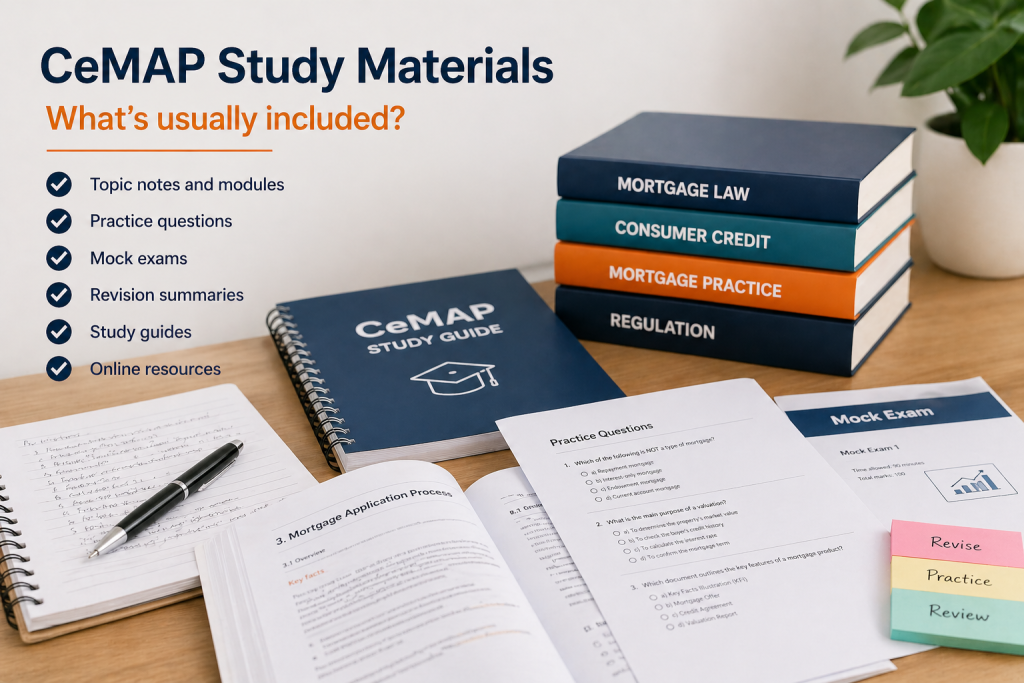
CeMAP study materials including notes practice questions mock exams and study guides

It supports consistent study

A clear structure removes the need to decide what to study next.

This helps build a routine, which is often more important than study intensity.

It mirrors the exam structure

Because Study Hubs are based on the official syllabus, they align closely with how exams are written.

This means:

  • You are less likely to encounter unfamiliar topics
  • Your preparation is more targeted
  • Your confidence improves over time

How to use online learning platforms effectively

Using a Study Hub well comes down to a few simple principles:

  • Follow the intended order
  • Stay actively engaged
  • Test yourself regularly
  • Review and revisit weak areas
  • Use summaries for revision, not learning

These apply to most online learning platforms, not just CeMAP.

The platform provides the structure, but the results depend on how you use it.

Final thoughts

A CeMAP Study Hub is best understood as a structured guide rather than just a collection of materials.

It brings together:

  • Clear topic organisation
  • Multiple ways to learn
  • Opportunities to test understanding

When used properly, it helps turn a large and sometimes complex syllabus into something manageable and logical.

It does not replace effort or guarantee outcomes, but it does remove a lot of the uncertainty around what to study and how to approach it.

That clarity is often what learners need most.

Looking for training support?

We offer CeMAP training for learners working towards a career in mortgage advice. Our courses follow the London Institute of Banking & Finance syllabus and are designed to support understanding of mortgage regulation and advice requirements.

Explore our accredited CeMAP training courses

> Futuretrend Financial Training 
What do you actually get with a CeMAP course?

What you get with a CeMAP course including study materials structured learning and support

If you are looking at CeMAP training, one of the most common questions is simple: what am I actually paying for?

A CeMAP course is not just a bundle of revision notes. It is a structured learning experience designed to help you understand the syllabus, apply it, and prepare for assessment in a supported way.

Understanding what is included helps you compare providers properly and avoid choosing based on price alone.

What you get with a CeMAP course including study materials structured learning and support

What is included in a CeMAP course?

A CeMAP course usually includes three core elements:

  • Teaching or guided learning
  • Study materials and resources
  • Ongoing learner support

At its most basic, the course is designed to help you move through the CeMAP syllabus in a structured way, rather than trying to work everything out on your own.

CeMAP, awarded by the London Institute of Banking & Finance, is the industry standard qualification for mortgage advisers and meets the education requirements set by the Financial Conduct Authority. Because of that, the syllabus is detailed and quite broad.

A course exists to organise that complexity into something manageable.

What does “teaching” actually mean in a CeMAP course?

Teaching in a CeMAP course can take different forms depending on the provider, but the purpose is the same: to explain the syllabus in a way that builds understanding, not just memorisation.

This might include:

  • Tutor-led sessions (online or in person)
  • Recorded lessons or walkthroughs
  • Topic-by-topic explanations
  • Worked examples and discussions

The key difference between teaching and self-study is guidance.

Instead of reading a section and trying to interpret it yourself, the content is explained in a way that highlights what matters, how topics connect, and where learners often struggle.

Good teaching does not just repeat the textbook. It translates it.

What study materials are usually included?

Most CeMAP courses come with a set of structured study materials designed to support different stages of learning.

These often include:

  • Core learning content aligned to the syllabus
  • Topic-based notes or modules
  • Practice questions or knowledge checks
  • Mock exams or assessment-style tests
  • Revision summaries

The important point is not just what materials are included, but how they are organised.

A well-structured course breaks the syllabus into manageable sections, often by topic or sub-topic, so you are not faced with everything at once. This makes it easier to track progress and stay consistent.

CeMAP study materials including notes practice questions mock exams and study guides

What is a Study Hub and why does it matter?

Many modern CeMAP providers offer a Study Hub or online learning platform.

This is where the course comes together.

A Study Hub typically includes:

  • All learning materials in one place
  • Progress tracking
  • Structured topic navigation
  • Integrated quizzes or tests
  • Access to support or tutors

Rather than jumping between PDFs, emails, and notes, everything is centralised.

The value here is structure.

Instead of deciding what to study next, the course guides you through the process step by step. For many learners, this reduces overwhelm and makes it easier to stay on track.

What is the difference between content and guided learning?

This is one of the most important distinctions when comparing CeMAP courses.

Content-only learning means you are given materials and left to work through them yourself.

Guided learning means the course actively helps you understand how to use those materials.

Guided learning often includes:

  • Clear study pathways
  • Explanations of difficult areas
  • Direction on what to focus on
  • Reinforcement through questions and feedback

Two courses might both include the same syllabus content, but the experience can feel very different.

Content gives you information.
Guided learning helps you make sense of it.

How important is support in a CeMAP course?

Support is often one of the least visible but most valuable parts of a course.

This can include:

  • Access to tutors for questions
  • Help with difficult topics
  • Clarification on confusing areas
  • Guidance when you feel stuck

CeMAP can feel straightforward at first, but some areas require careful understanding. When you hit those points, having support available can make a noticeable difference.

It is not just about getting answers. It is about reducing uncertainty and keeping momentum.

What does structure add that self-study does not?

You can study CeMAP without a course, so it is fair to ask what extra value a structured course provides.

The main difference is organisation and direction.

A structured course:

  • Breaks the syllabus into logical sections
  • Presents topics in a sensible order
  • Reinforces learning as you go
  • Helps you avoid missing key areas

Without that structure, learners often:

  • Jump between topics
  • Spend too long on some areas and not enough on others
  • Struggle to judge their progress
  • Feel unsure about exam readiness

Structure does not replace effort, but it makes that effort more focused.

Do all CeMAP courses include the same things?

No, and this is where comparisons become important.

Most courses include the core elements, but the depth and quality can vary.

Differences might include:

  • Level of tutor involvement
  • Quality and clarity of materials
  • How detailed the Study Hub is
  • Availability of support
  • Range of practice questions and mock exams

Two providers might both say they offer “full course materials”, but that could mean very different things in practice.

This is why it is worth looking beyond simple descriptions and understanding what the learning experience actually looks like.

What is an accredited CeMAP learning support provider?

Not all CeMAP training providers are recognised in the same way. Some are listed as accredited learning support providers by the London Institute of Banking & Finance.

An accredited provider has been reviewed by the awarding body and is approved to offer structured learning support for the qualification.

This does not mean the provider delivers the qualification itself. CeMAP is still awarded by the London Institute of Banking & Finance. It means the training provider meets certain standards in how they support learners through the syllabus.

Accredited CeMAP Learning Support Provider by The London Institute of Banking & Finance

Why does provider approval matter?

Choosing a provider that is approved or accredited adds a layer of reassurance about how the course is structured and delivered.

It suggests that:

  • The materials are aligned to the official syllabus
  • The course is designed to support understanding, not just content delivery
  • The learning experience has been reviewed against recognised standards

That said, accreditation is not a guarantee of outcomes. It does not mean a learner will pass automatically or find the course easy.

What it does offer is confidence that the course has been built with a clear understanding of what the qualification requires.

How does this differ from general training providers?

Some providers offer CeMAP courses without formal accreditation or recognition.

This does not automatically mean the course is poor. However, it does mean:

  • The structure and materials have not been reviewed by the awarding body
  • The quality can vary more between providers
  • You may need to look more closely at what is actually included

In contrast, accredited providers have an additional level of oversight, which can help when comparing options.

What should you look for alongside accreditation?

Accreditation is one factor, but it should not be the only one you rely on.

It is still important to look at:

  • How the course is structured
  • Whether support is available
  • The clarity of the materials
  • How the Study Hub or platform works

A strong course combines recognised standards with clear, practical delivery.

How do you know if a course offers real value?

Value in a CeMAP course is not just about how much content is included.

It is about how well that content is delivered and supported.

Signs of a well-developed course include:

  • Clear explanations rather than dense text
  • Materials broken into manageable topics
  • A mix of formats (not just written content)
  • Structured progression through the syllabus
  • Access to help when needed

Some providers also offer previews, walkthroughs, or sample materials. These can give a clearer idea of what you are actually getting before committing.

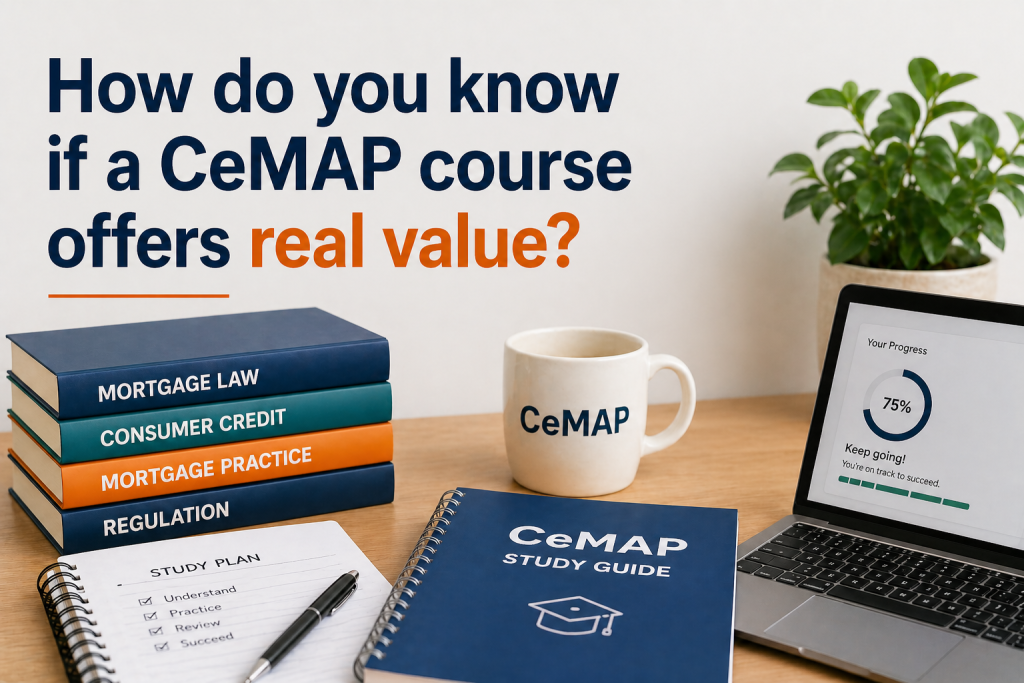
How to know if a CeMAP course offers real value with structured learning materials and support

Is a CeMAP course just about passing the exam?

A CeMAP course is designed to support exam preparation, but its purpose is broader than that.

The qualification itself is about understanding how mortgage advice works, including regulation, products, and client needs.

A good course helps you:

  • Understand concepts, not just memorise facts
  • See how topics connect
  • Build confidence in applying knowledge

This matters because the exam is testing understanding as well as knowledge.

Simply reading information is not always enough.

Why do some courses feel easier to follow than others?

This usually comes down to how the course is designed, not how “hard” the content is.

Courses that feel easier to follow tend to:

  • Use plain, clear explanations
  • Avoid unnecessary complexity
  • Build topics gradually
  • Reinforce learning consistently

Courses that feel difficult often:

  • Present too much information at once
  • Lack clear structure
  • Assume prior knowledge
  • Offer limited guidance

The syllabus is the same either way. The difference is how it is delivered.

What should you focus on when comparing CeMAP courses?

When comparing options, it helps to look beyond surface-level features.

Instead of asking “what do I get?”, consider:

  • How is the learning structured?
  • Is there guidance, or just content?
  • What support is available if I struggle?
  • How are materials presented and organised?

These questions give a clearer picture of the learning experience.

A simple way to think about it

At its core, a CeMAP course is a combination of:

  • Information (the syllabus)
  • Explanation (teaching)
  • Organisation (structure)
  • Reinforcement (practice)
  • Support (guidance)

All courses include these in some form, but the balance and quality can vary.

Understanding that helps you make a more informed choice.

A simple way to think about it

A CeMAP course is not just a set of materials. It is a framework for learning a detailed and regulated subject in a manageable way.

The real value comes from how well that framework supports you.

If it provides clear structure, useful explanations, and access to support, it can make the process feel far more straightforward.

If it does not, even good content can feel difficult to use.

That is why understanding what is included matters just as much as deciding to take the qualification in the first place.

Looking for training support?

We offer CeMAP training for learners working towards a career in mortgage advice. Our courses follow the London Institute of Banking & Finance syllabus and are designed to support understanding of mortgage regulation and advice requirements.

Explore our accredited CeMAP training courses

> Futuretrend Financial Training 
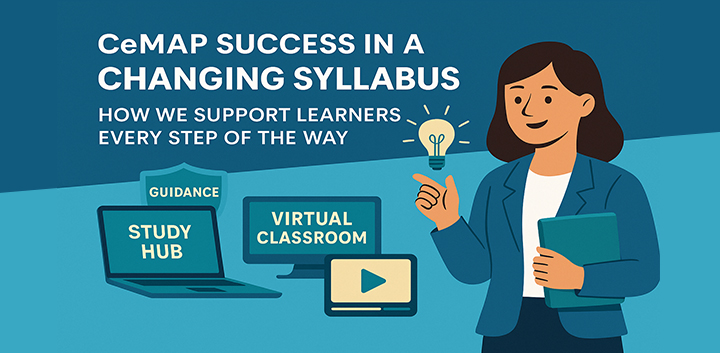
CeMAP Success in a Changing Syllabus: How We Support Learners Every Step of the Way

CeMAP Success in a Changing Syllabus

With the new LIBF CeMAP syllabus launching in September 2025, learners face an exciting but challenging transition. Whether you’re completing the current structure or starting fresh with the new modules, one thing is certain: the right support makes all the difference.

At CeMAP123, we’ve been helping aspiring mortgage advisers succeed for over 16 years. Thousands of learners have trusted us to not only pass their CeMAP exams but also build rewarding careers in financial services.

Here’s how we support you at every stage of your CeMAP journey — from first study session through to your first role as a qualified adviser.

CeMAP Success in a Changing Syllabus

Support During Your CeMAP Studies

The CeMAP Study Hub

Our Study Hub is at the heart of learner support. Designed to suit all learning styles, it provides:

  • Tutor-led topic videos to break down complex areas.
  • Made Easy Revision Notes in both digital and optional hard copy.
  • Audio books and podcasts for learning on the go.
  • Key Point Tutorials, FAQs and Glossary for quick reference.
  • Topic Reviews and Quizzes to check your progress.

At the end of each unit, you’ll find Unit Reviews with exam preparation, guidance on specimen papers, and practice under exam-style conditions. For CeMAP 1 and 3, we also include special guidance on case studies — a key exam area many learners struggle with.

CeMAP study hub learning support

👉 Learners can choose digital-only access or upgrade to Home Study Packages with printed revision guides and specimen papers.

Live Virtual Classroom

For those who thrive in an interactive setting, we run Live Virtual Classrooms via Zoom. These are:

  • Fully interactive (ask questions live by mic or chat).
  • Delivered by experienced mortgage advisers and accredited tutors.
  • Recorded and available for 3 months via the Study Hub.

This means you get the structure of classroom teaching with the flexibility of online learning.

Tailored Tutor Support

We know learners need reassurance and quick answers. That’s why we provide:

  • A Learner Forum in the Study Hub where tutors and L&D Managers respond directly to questions.
  • Email training support and guidance from our team education experts.
  • Guidance on how to read exam questions, approach case studies, and use official LIBF Specimen Papers to maximise your readiness.

Life After CeMAP – Career Support

Passing your CeMAP exam is only the beginning. We continue to support learners with:

  • Career guidance – CV writing, interview preparation, and job-hunting strategies.

  • Introductions to mortgage networks and independent broker firms – through our trusted partnerships, learners can access consultancy and advice, with no obligation.

  • Industry insights – understanding different career paths, from working in established brokerages to setting up your own practice.
Life After CeMAP – Career Support

💡 One of our past learners recently became a finalist in the British Mortgage Awards 2025 (Buy-to-Let category).

👉 Others have gone on to launch their own successful firms and even hired some of our new CeMAP graduates into their teams.

Why Choose CeMAP123 Over LIBF’s Standard Resources?

LIBF provides the syllabus, reading material, and an exam attempt. While valuable, it’s a one-size-fits-all approach.

At Futuretrend Financial Training, we go further by offering:

  • A wide range of learning formats (video, audio, notes, podcasts, quizzes).

  • Tutor-led guidance for every unit and topic.

  • Ongoing support and interaction through forums and classrooms.

  • Resources that save learners money — for example, our packages include LIBF specimen papers (normally purchased separately).

  • Over 25 years of training experience in training services and 16 years in financial training in which time we became one of the first LIBF Accredited Learning and Support providers in CeMAP.


Simply put: we don’t just give you the content. We guide you, test you, and support you until you’re ready to succeed.

Frequently Asked Questions About CeMAP Support

What kind of study support does Futuretrend Financial Training provide for CeMAP learners?

At www.CeMAP123.co.uk, we provide structured, tutor-led support that goes beyond LIBF’s core syllabus. Our Study Hub includes revision notes, tutor videos, podcasts, quizzes, and specimen exam practice to match different learning styles. Learners also get access to live virtual classrooms every 6 weeks, and our dedicated tutor forum where qualified advisers answer questions. This blend of resources and human support has helped thousands of learners pass CeMAP over the last 16 years.

Can I choose between online CeMAP study or printed learning materials?

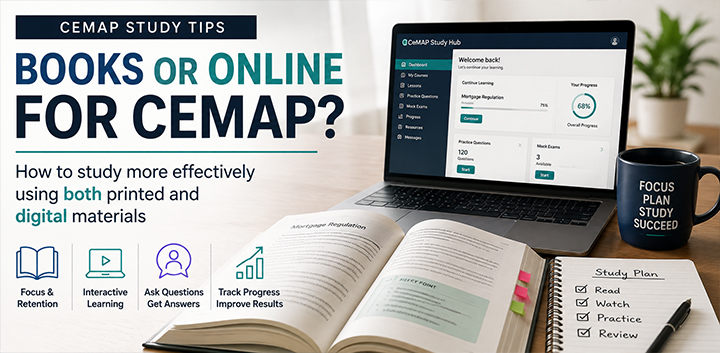
Yes. All learners get access to our digital Study Hub, but you can also choose a Home Study Package that includes printed revision guides and specimen papers. These hard copy materials are popular with learners who prefer to highlight, annotate, and revise offline. Both formats are fully aligned with LIBF’s syllabus, but the hard copy gives extra flexibility for learners who want to reduce screen time.

What is included in my LIBF CeMAP registration, and how is CeMAP123 different?

When you register with LIBF, you receive access to the syllabus, digital reading materials, and one exam attempt. However, LIBF’s resources are limited to self-study. At CeMAP123, we provide enhanced training: tutor-led videos, structured revision guides, interactive quizzes, live classes, and guidance on specimen papers. Because we are an accredited LIBF Learning Support Provider, learners can trust that our resources meet LIBF standards while providing much more support.

Do you provide help after I complete my CeMAP exams?

Yes — our support doesn’t end when you pass. We provide career guidance, including CV advice, interview preparation, and introductions to mortgage networks and broker firms through our partnerships. Many of our learners have gone on to secure roles quickly, with some even launching their own businesses. In fact, some of our graduates have been shortlisted for national awards such as the British Mortgage Awards 2025. This ongoing support ensures learners are not only exam-ready but also career-ready for a bright future.

Is CeMAP123 a trusted provider of CeMAP support?

Yes. We have over 25 years of experience in  education towards careers and have been supporting learners through CeMAP for over 16 years. As an LIBF-accredited training provider, we follow their standards while adding extra resources that make studying easier and more effective. Thousands of learners have trained with us, many of whom are now established mortgage advisers, brokers, or business owners — proof that our support delivers long-term results.

Do CeMAP123 resources include practice exams and exam-style preparation?

Yes. Our Study Hub includes access to official LIBF specimen papers, with tutor guidance on how to approach the questions. Learners also practise under timed conditions and receive feedback on their answers, which builds exam confidence. For CeMAP 1 and 3, we also include special sessions on how to analyse case studies, since this is a key skill for success.

Conclusion

The CeMAP syllabus may be changing in 2025, but one thing hasn’t changed: learners succeed when they’re supported. At Futuretrend Financial Training, we’re proud to guide students from their very first study session to launching successful mortgage advice careers.

👉 Whether you’re completing CeMAP under the current structure or starting fresh with the new syllabus, our Study Hub, Live Virtual Classrooms, and career support network will help you achieve your goals.

Ready for additional training support?

Book our CeMAP Home Study course or visit our website for full training resources:
https://cemap123.co.uk/home-study-training/

Explore our accredited CeMAP training courses

Images Designed by AI

CeMAP Study Hub case study: Mia’s journey to CeMAP qualification

Study Hub Learning Portal

Mortgage advice in the UK starts with the CeMAP exam, a tough certification that 80% of mortgage advisers hold. Mia L wanted to join their ranks and knew she needed a clear study plan. She chose the Futuretrend CeMAP Study Hub, an accredited online learning portal with one year’s access. By using the portal’s structured guides, audio tutorials and practice tests, Mia passed all three CeMAP modules in just three months – matching the average completion time noted by Futuretrend.

This case study follows Mia’s journey: her background, how she used the Study Hub resources and mock exams, and the strategies that helped her pass. It also highlights how passing CeMAP opened new career doors for her. The tips here can help anyone asking how to pass CeMAP? with a focused plan and the right tools.

Study Hub Learning Portal

Learner Background & Motivation

Mia’s profile

Mia was working in a bank’s front office but wanted to specialise in mortgages. She had no formal mortgage qualification yet. CeMAP® (Certificate in Mortgage Advice and Practice) is a Level 3 qualification – the industry benchmark for mortgage advisers. Passing CeMAP would let Mia legally advise clients and advance her career.

Why she chose CeMAP

Mia knew that to become a mortgage adviser she must pass CeMAP; 80% of UK advisers already have it. She wanted flexible study because she worked full-time and had family commitments. Futuretrend’s CeMAP Study Hub appealed to her because it offers online materials and mock exams she could use anywhere, fitting around her schedule.

Getting Started with the Study Hub

Registration and setup

Mia signed up for the Futuretrend Home Study training, which gave her a login for the Study Hub portal. Within a day she had access to all CeMAP study materials. The portal works on any device – desktop, tablet or phone – so she could study at home or on her commute. The ease of login and device support meant Mia could start learning without technical problems.

First study steps

On her first day, Mia logged into the portal and explored the resources. She saw digital “Made Easy” revision guides, videos, audio lectures and podcasts for each topic. Mia started with CeMAP Module 1 (UK Financial Regulation). She read the first revision unit and watched a short intro video for an overview. Then she tried a “test yourself” quiz on that topic. By using these digital topic reviews and quizzes immediately, Mia got a sense of the portal layout and content quality before moving on.

CeMAP Study Hub Portal dashboard showing user overview and navigation menu

Crafting a Flexible Study Plan

Setting study goals

Mia wanted to finish all three CeMAP modules in three months. Futuretrend notes that committed students often complete CeMAP in about 150 hours (roughly 3 months). Mia divided her time into a 12-week plan. In Weeks 1–4 she would focus on core reading and notes. Weeks 5–8 would be topic review and practice drills. Weeks 9–12 would be full mock exams and timed practice. She used this recommended structure to guide her pacing.

Mia scheduled about 12–13 study hours per week. Each weekday she aimed for one focused hour of theory study and 30 minutes of quiz questions. On weekends she allotted a longer session to catch up or review difficult sections. This consistent routine helped Mia progress steadily without burnout.

Revision Techniques for Different CeMAP Topics

Balancing study and life

To fit study around work and family, Mia spread short study sessions across the week. She set a weekly timetable and stuck to it. For example, she might study after dinner on weekdays and longer sessions on Sunday mornings. Following a routine (for example, 1 hour theory and 30 minutes Q&A each weekday) kept her on track. Mia also booked her exam dates two months in advance, as advised by LIBF – this gave her fixed targets and motivation for each study phase. Having a clear plan made it possible to balance CeMAP study with her other commitments.

Maximising Study Hub Resources

Using revision guides and audios

The Study Hub’s “Made Easy” revision books were central to Mia’s learning. These guides break down the LIBF syllabus into clear, plain-English sections written by industry tutors. Mia found the language easy to follow, which helped her understand complex rules quickly. She read each chapter and listened to the corresponding audio lectures on her commute. In total, the portal offers over 16 hours of audio covering all topics. Hearing the content reinforced her reading. For instance, she often read a section then replayed the audio while making notes.

The portal also had podcasts where experts discuss each topic. Mia listened to podcast episodes after studying to reinforce key points. These resources meant she learned the same material in different ways (reading, listening, discussing), which boosted her retention.

Hard Copies of Made Easy Revision Guide and Official LIBF Specimen Papers

Interactive learning tools

Beyond text and audio, Mia used many interactive tools on the Study Hub. She watched explainer videos for each topic (for example a video on the financial services industry for Module 1). Visual learners and those who like demonstrations benefit from these digital presentations. The portal also included digital slides and topic summaries.

To test understanding, Mia did the built-in topic quizzes. After reading each unit, she attempted the online “Test Yourself” questions. The quizzes are auto-marked and give instant feedback, so Mia could see right away if she needed to review a topic. Futuretrend notes that its Study Hub portal provides structured guidance with videos, audio tutorials, podcasts and specimen questions. By using every type of resource (audio, video, slides, quizzes), Mia ensured she covered the syllabus thoroughly from all angles.

Diagram of CeMAP 3 multiple-choice exam tactics: elimination of wrong answers, flagging uncertain items, and timed review

Tracking Progress & Mock Exams

Monitoring progress

As Mia studied, she kept track of her progress to identify weak spots. The Study Hub’s online quizzes and tests have tracking tools, which show scores over time. Mia checked her quiz results regularly. When she saw a low score in any topic, she added extra review time for that area. She also marked her calendar when she finished a certain number of chapters. This gave her confidence that she was on schedule.

Mia also maintained her own log of study hours. Writing down how many hours she studied each week helped ensure she met her 150-hour target. If one week fell behind, she made up hours the next week. This combination of portal tracking and personal logging kept her accountable and motivated.

Taking official mock papers

The key to Mia’s exam success was regular practice with mock exams. Futuretrend is licensed to provide official LIBF mock papers. The Study Hub included timed, auto-marked versions of 3 mock papers for each of CeMAP 1 and 2 (each 100 questions) and 2 mock papers for CeMAP 3 (60 questions). Mia took these practice exams under realistic conditions.

Early on, she did shorter quizzes, but in week 10 she started full mock tests every weekend. Each mock was timed according to the real exam (2 hours for Modules 1 and 2, and 2 hours for Module 3). After each mock, Mia reviewed her answers. The portal’s auto-mark feature showed which questions she missed and provided answers. This feedback loop was vital. By the time of her real exams, Mia had done many mock exams and was familiar with the format. She adjusted study to focus on any topics where her mock scores were weakest.

For example, after a CeMAP 1 mock, she found she needed more practice on unit trust regulations, so she re-read that chapter and retook the quiz. This structured use of mock exams meant Mia improved each time. The combination of progress tracking and mock testing showed her exactly where to focus before the real exam.

The Importance of Using Mock Exam Questions for Your CeMAP Qualification

Exam Day Experience & Results

Preparing for exam day

When exam day came, Mia felt prepared and confident. Each CeMAP module exam is a two-hour computer-based test at a Pearson VUE centre. Modules 1 and 2 have 100 multiple-choice questions each, and Module 3 has 60 questions based on case studies. Mia booked her exams in advance and used her final study weeks to do last-minute revision.

On the day, Mia arrived early to the test centre. She remembered tips she’d read: for CeMAP 3’s case studies, for example, she would spend about 5 minutes reading each case, then use the remaining time to answer the questions. During all exams, she used the “flag” tool in the exam software to mark tough questions. Once through the paper, she went back to any flagged items. This strategy ensured no question was left blank and she could manage her time well.

Passing the exams

Mia’s preparation paid off. She passed Modules 1 and 2 handily, with scores well above the 70% pass mark. In Module 3 (the case-study exam), she also scored above the required 42 out of 60. Thanks to her thorough revision and repeated mock exams, Mia found that all questions were familiar. When she got the email result, she had passed all three modules on her first attempts.

According to official CeMAP rules, 70% is needed to pass each module. Mia had slightly higher marks, reflecting her strong preparation. By staying calm and methodical on exam day – reading carefully, flagging, and revisiting questions – she gave herself the best chance of success. Her achievement demonstrated that a focused study plan combined with the Study Hub resources can help students pass CeMAP efficiently.

Career Impact & Next Steps

New career opportunities

With her CeMAP qualification in hand, Mia could officially call herself a “CeMAP-qualified mortgage adviser”. This opened career doors. Many banks and brokerages require CeMAP for advisory roles. Mia updated her CV and LinkedIn profile to highlight her qualification prominently. She soon found opportunities for a mortgage adviser role that were closed to her before CeMAP.

CeMAP is widely recognised in the UK finance industry. By passing, Mia not only gained knowledge, but also credibility. She now has the right to advise clients on regulated mortgage products. Her confidence grew knowing she met the industry benchmark. In interviews, she mentioned her disciplined study approach and success with the Study Hub. Employers appreciated that she completed all modules in a relatively short time, which showed commitment.

How Advisers Can Build Client Trust Amid Budget Shifts

Continued professional growth

CeMAP is just the start of Mia’s professional development. As a new mortgage adviser, she must complete at least 35 hours of Continuing Professional Development (CPD) each year under FCA rules. Mia plans to attend industry workshops and webinars to meet this requirement. She also looks forward to potentially taking further qualifications, such as the CeRER certificate for equity release, to broaden her expertise.

The Study Hub case study of Mia shows that with dedication and the right resources, passing CeMAP is achievable. Mia’s next steps include building her client base and using the real-world questions she learned in CeMAP as practical knowledge. In the long term, her CeMAP qualification will be a foundation for career growth in mortgage advice or wider financial services.

Frequently Asked Questions

How long does it typically take to complete CeMAP?

Most dedicated students can finish all three modules in about three months of study. Futuretrend notes that the average CeMAP learner needs roughly 150 study hours, which works out to about 3 months full-time. Mia’s three-month timeline matches this average.

What is included in the CeMAP Study Hub?

The Study Hub is an online portal packed with resources for each syllabus topic. It includes digital “Made Easy” revision books, presentation videos, audio tutorials, topic podcasts and practice questions. Learners can test themselves with an online question bank and full mock exam papers. All materials are structured by module and accessible on demand.

Are mock exams important for passing CeMAP?

Yes. The Hub provides official mock exams (3 for CeMAP 1 and 2, and 2 for CeMAP 3) that match the real exam format. Taking these timed mocks helps students practice under exam conditions and identify weak areas. Mia used them extensively – after each mock she reviewed missed questions and revised those topics. Regular practice with mocks is a proven strategy for CeMAP success.

What score is needed to pass CeMAP modules?

Each module requires a pass mark of 70%. For Module 3 (case studies), that means at least 42 out of 60 questions correct. Modules 1 and 2 also need 70% of 100 questions. Achieving this often means thorough revision and practice. Mia’s example shows that with diligent study and using tools like mocks, students can reach and exceed the 70% threshold.

Conclusion

Mia’s experience shows that passing CeMAP is a realistic goal with clear planning and the right support. By following a structured timetable, using all the Study Hub’s resources, and practising with official mock exams, she achieved success in just three months. If you’re preparing for CeMAP, remember Mia’s approach: set a study plan, track your progress, and make use of every revision tool.

Ready to start? Watch the CeMAP Study Hub demo on YouTube here and explore Futuretrend’s CeMAP home-study training here. These resources will guide you on a clear path to your own CeMAP success. Good luck with your studies!

Images Designed by Freepik (www.freepik.com) and AI