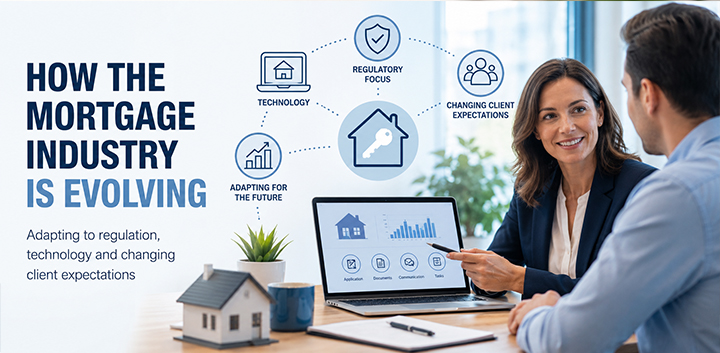
The mortgage industry is always changing, but not always in the dramatic ways headlines suggest. Rather than sudden shifts, most changes happen gradually as regulations develop, technology improves, and borrowers expect a different kind of service.
For anyone considering a career as a mortgage adviser, understanding these broad changes helps build realistic expectations. The core purpose of the profession remains the same: helping people find suitable mortgage solutions based on their circumstances. What evolves is how advisers deliver that advice, communicate with clients, and meet regulatory requirements.
If you’re wondering, “Is the mortgage industry changing?”, the answer is yes. The industry continues to adapt to new regulations, digital technology, and changing customer expectations, while maintaining its focus on delivering suitable, compliant mortgage advice.

Why Is the Mortgage Industry Always Evolving?
The mortgage market sits at the intersection of housing, finance, regulation and consumer protection. Changes in any of these areas naturally influence how mortgage advice is delivered.
Unlike some industries that experience rapid disruption, mortgage advice evolves steadily. New technology is introduced, regulatory expectations are refined, and consumer behaviours shift over time.
For advisers, this means developing professionally throughout their careers rather than learning one fixed way of working.
The underlying principles remain consistent:
- Understanding clients’ circumstances
- Recommending suitable mortgage products
- Explaining risks clearly
- Maintaining professional standards
- Following regulatory requirements
The methods used to achieve these goals continue to improve as the industry develops.
How Has Regulation Changed the Mortgage Advice Profession?
Regulation has become increasingly focused on ensuring good outcomes for consumers rather than simply checking whether processes have been followed.
Mortgage advisers work within rules set by the Financial Conduct Authority (FCA), which aims to protect consumers and promote confidence in financial services.
Rather than viewing regulation as an obstacle, many advisers see it as a framework that helps ensure advice remains consistent, transparent and in clients’ best interests.
In practical terms, this means advisers are expected to:
- Gather detailed information about clients’ circumstances
- Understand clients’ needs and objectives
- Explain recommendations clearly
- Keep appropriate records
- Continue developing their professional knowledge
These responsibilities have become more structured over time, helping create greater consistency across the profession.
What Is Consumer Duty and Why Does It Matter?
One of the most significant recent developments has been the introduction of Consumer Duty by the Financial Conduct Authority (FCA).
Consumer Duty places greater emphasis on delivering good outcomes for customers throughout the entire advice process. Rather than concentrating solely on compliance checklists, firms are encouraged to consider whether clients genuinely understand the advice they receive and whether products continue to meet their needs.
For mortgage advisers, Consumer Duty reinforces practices that many already regard as good professional standards, including:
- Using clear, understandable language
- Ensuring recommendations are appropriate
- Supporting informed decision-making
- Identifying potential vulnerabilities where relevant
- Providing suitable ongoing service where applicable
This reflects an increasing focus on the overall customer experience, not just the final mortgage recommendation.
How Is Technology Changing Mortgage Advice?
Technology has become an important tool within the mortgage industry, but it has not replaced professional advice.
Modern mortgage advisers often use digital systems to improve efficiency, reduce paperwork and manage client information securely. These tools help advisers spend more time discussing clients’ needs rather than completing administrative tasks.
Technology may assist with:
- Researching available mortgage products
- Comparing lending criteria
- Collecting client information
- Managing documentation
- Secure communication
- Appointment scheduling
- Electronic identity verification
These developments make many parts of the process quicker and more convenient for both advisers and clients.
However, technology supports the advice process rather than replacing the professional judgement needed when assessing complex financial circumstances.

Can Technology Replace Mortgage Advisers?
While technology continues to improve, mortgage advice remains a people-focused profession.
Online comparison tools and automated systems can provide useful information, but they cannot fully understand an individual’s personal circumstances, future plans or priorities in the way an experienced adviser can.
Many mortgage applications involve factors that require discussion and professional judgement, including:
- Self-employed income
- Changing employment
- Complex financial situations
- Credit history considerations
- Protection needs
- Long-term financial objectives
Technology helps advisers work more efficiently, but the conversations, explanations and recommendations remain central to the role.
How Are Clients' Expectations Changing?
Today’s borrowers often expect a different experience from previous generations.
Many clients are comfortable researching mortgages online before speaking to an adviser. They may arrive with questions, comparisons and a basic understanding of the market.
Rather than replacing advisers, this usually changes the nature of the conversation. Clients increasingly value advisers who can explain complex topics clearly, provide reassurance and help them understand the options available.
Modern clients also tend to expect:
- Faster communication
- Flexible appointment options
- Digital document sharing
- Clear explanations without jargon
- Regular updates throughout the application process
Meeting these expectations helps build trust while making the mortgage journey less stressful.
Does Face-to-Face Advice Still Matter?
Yes. Although remote appointments have become much more common, face-to-face advice continues to play an important role for many clients.
Some borrowers prefer meeting in person, particularly when discussing major financial decisions or complex circumstances.
Others appreciate the convenience of video calls or telephone appointments that fit around work and family commitments.
As a result, many advisers now work flexibly, offering multiple ways for clients to communicate.
The ability to build relationships remains just as important regardless of whether meetings take place in an office, online or over the phone.

Why Are Communication Skills Becoming More Important?
As mortgage products, regulations and client circumstances become more varied, the ability to communicate clearly becomes increasingly valuable.
Good mortgage advisers do more than understand lending criteria. They help clients make informed decisions by explaining information in straightforward language.
Strong communication includes:
- Listening carefully
- Asking relevant questions
- Explaining technical terms simply
- Checking client understanding
- Managing expectations realistically
These skills have always been valuable, but they continue to grow in importance as clients expect a more personalised service.
How Does Ongoing Learning Support Mortgage Advisers?
The mortgage industry does not stand still, so advisers continue learning throughout their careers.
Products change, lender criteria develop, regulations are updated and technology improves. Ongoing professional development helps advisers remain knowledgeable and confident when supporting clients.
Learning may include:
- Regulatory updates
- Product knowledge
- Market developments
- Technology training
- Communication skills
- Specialist lending areas
Continuous professional development is part of maintaining professional standards rather than responding to dramatic industry changes.
Should Future Mortgage Advisers Be Concerned About Industry Change?
Generally, no. Change is a normal part of working in financial services.
Most developments happen gradually, giving firms and advisers time to adapt. Training providers, employers and professional development programmes help advisers stay up to date throughout their careers.
For someone entering the profession, the most important focus is building strong foundations:
- Understanding mortgage principles
- Learning regulatory requirements
- Developing communication skills
- Building confidence with clients
- Maintaining professional knowledge
These core skills remain valuable regardless of how the wider industry evolves.
Is the Mortgage Industry Changing?
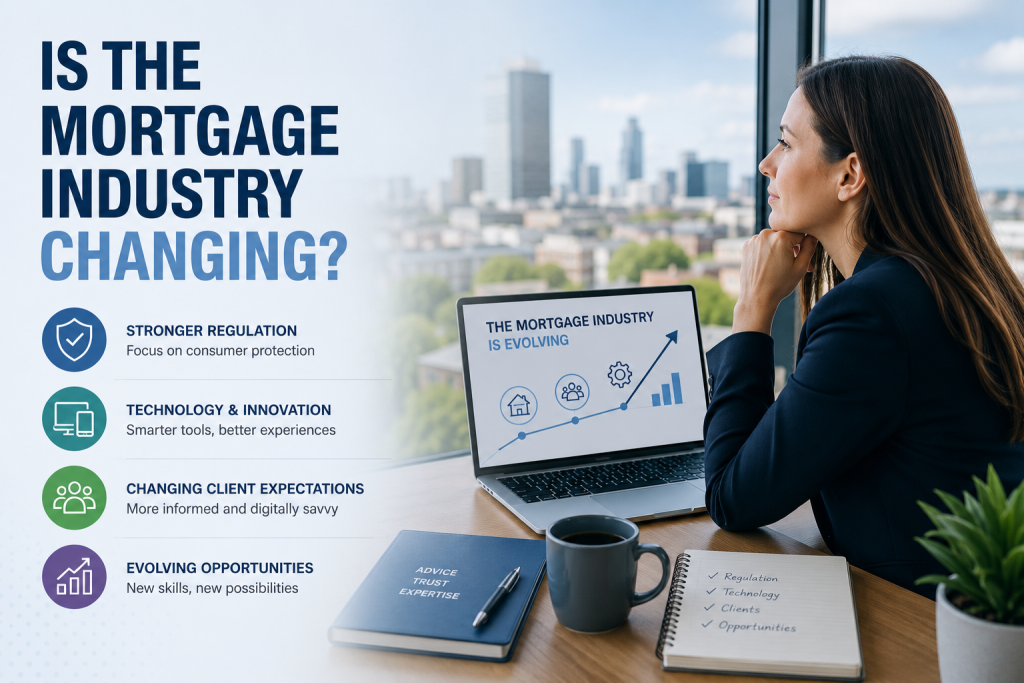
Yes, the mortgage industry is continually evolving, but its core purpose remains the same. Regulation increasingly focuses on good customer outcomes, technology helps advisers work more efficiently, and clients expect more flexible, transparent communication. Despite these developments, professional mortgage advice continues to centre on understanding individual circumstances and providing suitable recommendations.
For aspiring advisers, these changes should be viewed as part of a profession that values continuous improvement rather than constant disruption. Those who build strong technical knowledge, communicate clearly and remain committed to ongoing learning will be well placed to adapt as the industry continues to develop.
Final Thoughts
Continuing Professional Development (CPD) is the ongoing process of learning and professional improvement that takes place after an individual becomes qualified.
For mortgage advisers, CPD involves activities that help maintain and develop the knowledge, skills, and understanding needed to provide suitable advice to clients.
The mortgage market changes regularly. Lenders introduce new products, regulations evolve, technology develops, and customer circumstances become more complex. CPD helps advisers stay informed and continue delivering a professional service.
Rather than being a single course or qualification, CPD is an ongoing commitment to learning throughout a career.
Looking for training support?
We offer CeMAP training for learners working towards a career in mortgage advice. Our courses follow the London Institute of Banking & Finance syllabus and are designed to support understanding of mortgage regulation and advice requirements.
Explore our accredited CeMAP training courses
> Futuretrend Financial Training

