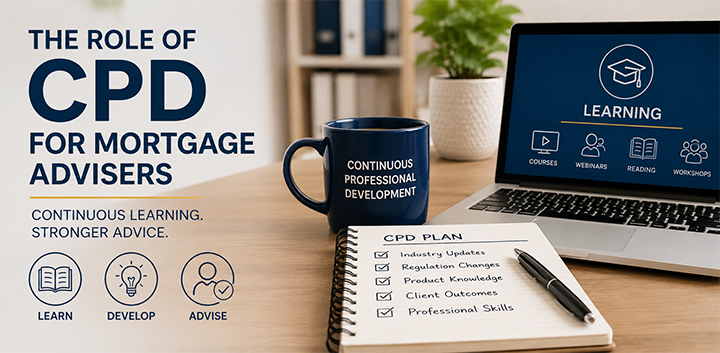
Many people focus on gaining their CeMAP qualification when starting a mortgage advice career, but learning does not stop once qualification is achieved. Mortgage advisers work in a regulated industry where products, lenders, regulations, and customer needs can change over time.
This is where Continuing Professional Development, commonly known as CPD, becomes an important part of professional life.
Understanding what CPD is, why it exists, and how advisers complete it can help prospective advisers build a realistic picture of the profession. CPD is not simply about meeting requirements. It is about maintaining knowledge, improving skills, and staying up to date throughout a career.
What Is CPD for Mortgage Advisers?
Continuing Professional Development (CPD) is the ongoing process of learning and professional improvement that takes place after an individual becomes qualified.
For mortgage advisers, CPD involves activities that help maintain and develop the knowledge, skills, and understanding needed to provide suitable advice to clients.
The mortgage market changes regularly. Lenders introduce new products, regulations evolve, technology develops, and customer circumstances become more complex. CPD helps advisers stay informed and continue delivering a professional service.
Rather than being a single course or qualification, CPD is an ongoing commitment to learning throughout a career.
Why Does CPD Exist?
CPD exists to support professional standards and ensure advisers remain competent in their role.
Mortgage advice can have a significant impact on a person’s financial future. Clients rely on advisers to explain products, assess affordability, understand lender criteria, and recommend suitable solutions. To do this effectively, advisers need current knowledge rather than relying solely on what they learned when they first qualified.
Continuing Professional Development helps advisers:
- Stay aware of industry developments
- Understand regulatory changes
- Keep product knowledge current
- Improve professional skills
- Enhance client communication
- Develop specialist knowledge in certain areas
The purpose of CPD is not to create additional pressure. It is designed to encourage continuous learning and professional growth throughout an adviser’s career.
Is CPD Required for Mortgage Advisers?
Mortgage advisers are generally expected to maintain their competence through ongoing learning and development.
Firms operating within the regulated mortgage market typically have processes in place to support adviser development and monitor competency. This often includes structured CPD activities alongside supervision, training, and performance reviews.
While the exact approach may differ between employers, networks, and firms, the principle remains the same. Advisers are responsible for maintaining the knowledge and skills needed to perform their role effectively.
CPD forms an important part of demonstrating that commitment to professional competence.

What Activities Count as CPD?
CPD can take many different forms. It is not limited to classroom training or formal courses.
Most advisers complete a mixture of learning activities throughout the year, depending on their role, experience, and development needs.
Common CPD activities include:
Attending Training Courses
Training courses remain one of the most recognised forms of CPD.
These may be delivered in person, online, or through virtual classrooms. Courses often focus on topics such as regulatory updates, lender criteria changes, specialist mortgage products, or broader financial services knowledge.
Formal training can provide structured learning and opportunities to ask questions and discuss real-world scenarios.
Completing Online Learning Modules
Many firms use online learning platforms that allow advisers to complete training at their own pace.
These modules may cover:
- Mortgage products
- Protection insurance
- Regulatory requirements
- Vulnerable customer considerations
- Consumer duty principles
- Market developments
Online learning is popular because it can be completed flexibly around daily workloads.
Reading Industry Publications
Keeping up with industry news is another common form of CPD.
Mortgage advisers often read:
- Industry magazines
- Regulatory updates
- Lender communications
- Market reports
- Professional publications
Regular reading helps advisers remain aware of developments that could affect clients or advice processes.
Attending Webinars and Industry Events
Webinars have become an increasingly common learning tool across financial services.
These events allow advisers to hear directly from lenders, industry experts, and professional bodies. Topics can range from market trends and specialist lending to regulatory developments and customer service improvements.
Industry conferences and networking events can also contribute to professional development by exposing advisers to new ideas and perspectives.
Learning Through Case Reviews
Not all CPD takes place in a classroom or training environment.
Reviewing complex cases, discussing scenarios with colleagues, and reflecting on client outcomes can also contribute to professional development.
Practical experience often helps advisers deepen their understanding of how knowledge applies in real-world situations.
Does CPD Only Cover Technical Knowledge?
No. Effective CPD usually includes both technical knowledge and professional skills.
Technical knowledge remains important because advisers need to understand products, regulations, affordability requirements, and lender criteria.
However, successful mortgage advisers also rely on skills such as:
- Communication
- Active listening
- Report writing
- Customer care
- Time management
- Problem solving
Professional development often involves improving these skills alongside technical expertise.
This balanced approach helps advisers provide a better overall experience for clients.
Who Is Responsible for Completing CPD?
The responsibility for CPD is shared between advisers and the organisations they work with.
Many employers, networks, and firms provide training resources, learning platforms, workshops, and structured development programmes. These resources help advisers access relevant learning opportunities throughout the year.
However, advisers also have a personal responsibility to engage with learning and maintain their professional knowledge.
Professional development tends to be most effective when advisers take an active interest in their own growth rather than viewing CPD as a simple administrative requirement.

How Does CPD Benefit Mortgage Advisers?
CPD benefits advisers in several ways beyond maintaining competence.
Ongoing learning can help advisers:
- Build confidence
- Expand specialist knowledge
- Improve client outcomes
- Adapt to industry changes
- Develop new skills
- Progress their careers
Mortgage advice is a profession where learning never truly stops. Advisers who regularly update their knowledge are often better prepared to handle changing client needs and market conditions.
Professional development can also make day-to-day work more rewarding by creating opportunities to learn new skills and explore specialist areas of advice.
How Does CPD Benefit Clients?
The ultimate purpose of CPD is to support better client outcomes.
Clients expect advisers to understand current products, lender requirements, and market developments. They also expect clear explanations and professional guidance throughout the mortgage process.
When advisers engage in ongoing learning, they are better equipped to:
- Explain options clearly
- Understand changing market conditions
- Recognise complex circumstances
- Stay aware of lender criteria
- Deliver a professional service
CPD helps ensure advisers continue developing the knowledge and skills needed to support clients effectively.
Does CPD Continue Throughout an Adviser's Career?
Yes. CPD is intended to be an ongoing part of professional life.
Whether an adviser has been qualified for one year or twenty years, the industry continues to evolve. New regulations, products, technologies, and consumer expectations mean there is always something new to learn.
Experienced advisers often undertake CPD just as regularly as those who are newly qualified. The focus may change over time, but the principle of continuous learning remains the same.
This commitment to development helps maintain professional standards across the
How Much CPD Do Mortgage Advisers Typically Complete?
Many mortgage advisers are expected by their employer, network, professional body or competency scheme to complete ongoing Continuing Professional Development throughout the year.
A commonly used benchmark within financial services is 35 hours of CPD annually, with at least 21 hours being structured learning. Structured CPD usually includes activities such as training courses, webinars, workshops, seminars and formal e-learning programmes that have defined learning objectives and outcomes. The remaining hours may be completed through less formal activities such as reading industry publications, lender updates, regulatory guidance and market research.
The exact requirements can vary depending on an adviser’s role, permissions, employer, network and any professional memberships they hold. For that reason, advisers should always follow the CPD requirements set by their firm and any relevant professional body.
Final Thoughts
CPD, or Continuing Professional Development, is the process of ongoing learning that helps mortgage advisers maintain and improve their professional knowledge and skills.
It exists because the mortgage industry changes continually, and advisers need current knowledge to support clients effectively. CPD can include training courses, online learning, industry reading, webinars, case reviews, and skills development activities.
For prospective advisers, understanding CPD provides a realistic picture of the profession. Achieving CeMAP is an important milestone, but it is only the beginning of a career built on continuous learning, professional growth, and staying up to date in a changing industry.
Looking for training support?
We offer CeMAP training for learners working towards a career in mortgage advice. Our courses follow the London Institute of Banking & Finance syllabus and are designed to support understanding of mortgage regulation and advice requirements.
Explore our accredited CeMAP training courses
> Futuretrend Financial Training

