Five things every CeMAP learner should know before starting

CeMAP learner studying with notebook and laptop showing five key things to know before starting CeMAP qualification

Starting CeMAP can feel like a big step, especially if you are new to financial services. Most learners focus on how to revise or which course to choose, but there are a few basics that matter just as much and are often missed at the start.

This guide answers a simple but important question: what should you know before starting CeMAP? Getting these foundations right can make your study smoother, more manageable, and far less frustrating.

CeMAP learner studying with notebook and laptop showing five key things to know before starting CeMAP qualification

What is CeMAP and why does it matter?

CeMAP is the industry standard qualification for mortgage advisers in the UK. It is awarded by the London Institute of Banking & Finance and meets the Financial Conduct Authority education requirements for giving mortgage advice.

It matters because without it, you cannot legally advise on mortgages in the UK. It is not just a course. It is the starting point for a regulated career.

That context is important. You are not just studying to pass exams. You are learning knowledge that underpins real financial decisions for clients.

1. CeMAP is manageable, but it is not “easy”

A lot of learners ask whether CeMAP is difficult. The honest answer is that it is very manageable with the right approach, but it is not something you can rush through without effort.

Why this matters

Some learners start thinking it will be straightforward because it is an entry-level qualification. Others go the opposite way and assume it will be overwhelming.

Both views can cause problems:

  • Underestimating it leads to poor preparation
  • Overestimating it leads to unnecessary stress

The reality sits in the middle. The content is clear and structured, but there is quite a lot of it.

CeMAP learner studying with books and laptop showing that CeMAP is manageable but not easy

What to expect

CeMAP is split into three modules:

  • CeMAP 1 focuses on regulation and core financial services knowledge
  • CeMAP 2 covers mortgage products and processes
  • CeMAP 3 applies your knowledge through case studies

Each builds on the last. If you take shortcuts early on, it tends to catch up with you later, especially in CeMAP 3.

A steady, consistent approach works far better than trying to cram.

2. How you study matters as much as what you study

There is no single “best” way to study CeMAP. Some learners prefer structured lessons, others prefer self-paced learning.

Why this matters

Many learners struggle not because the content is too hard, but because their study method does not suit them.

For example:

  • Reading alone may not work if you need explanation
  • Videos alone may not stick without practice questions
  • Intensive courses may feel too fast if you need time to absorb topics
CeMAP learner studying with notes and laptop showing that how you study matters as much as what you study

Practical advice

Before you start, think about:

  • How you usually learn best
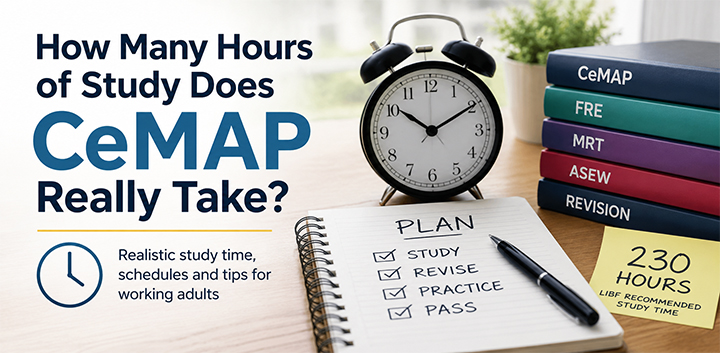
  • How much time you can realistically commit each week
  • Whether you need structure, flexibility, or a mix of both


Many learners benefit from combining resources. For example:

  • Study materials that break down the syllabus
  • Videos explaining each topic
  • Practice questions to check understanding
  • Mock exams to get used to the format

The key point is this: your study method should support your learning, not work against it.

3. Time management is one of the biggest challenges

One of the most common issues learners face is not difficulty with the content, but difficulty staying consistent.

Why this matters

CeMAP is often studied alongside:

  • Full-time work
  • Family commitments
  • Other responsibilities

Without a plan, it is easy to fall behind or lose momentum.

CeMAP learner struggling with time management while studying with notes, laptop and deadlines

What works in practice

You do not need a perfect timetable. You need a realistic one.

A simple approach:

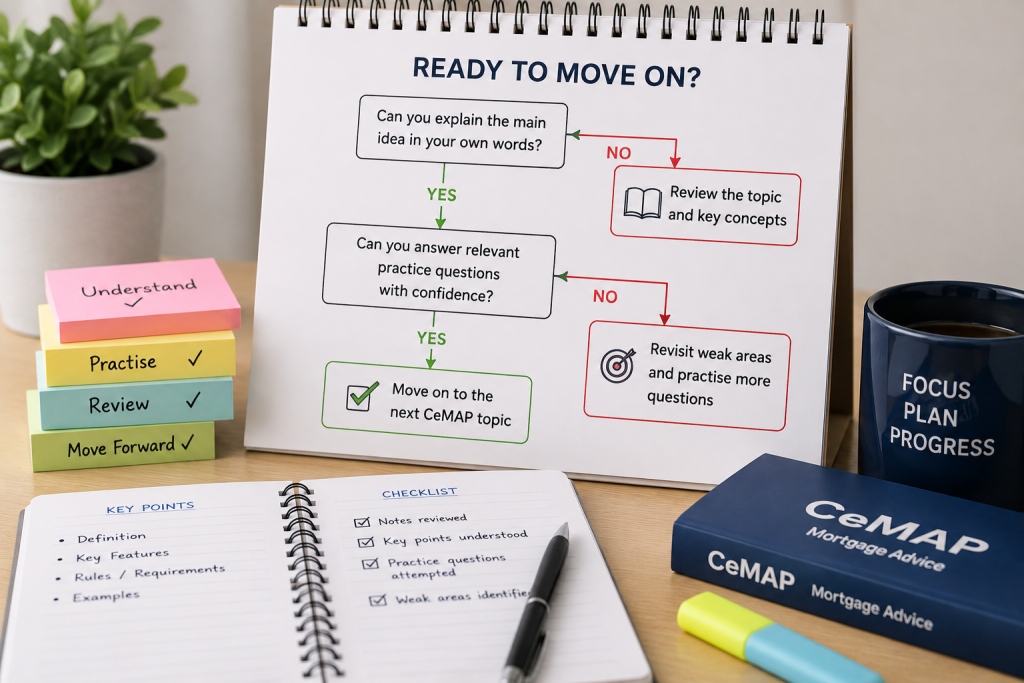
  • Break the syllabus into smaller sections
  • Set weekly goals rather than vague intentions
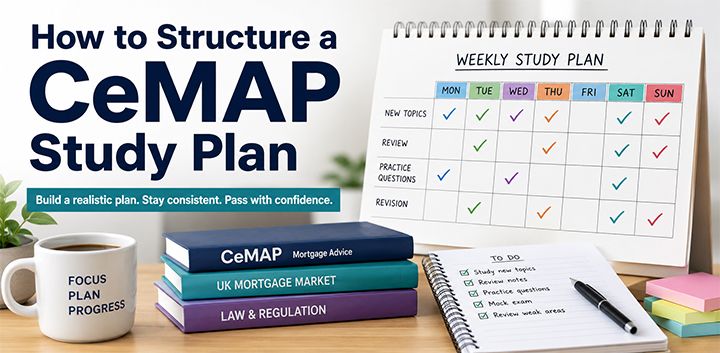
  • Build in time for revision and practice exams


It is also worth accepting that some weeks will not go to plan. That is normal. The important thing is to get back on track rather than stopping altogether.

Consistency over time matters far more than short bursts of heavy studying.

4. Passing the exam is not just about memorising facts

It is easy to assume that CeMAP is mainly about remembering information. In reality, understanding is just as important.

Why this matters

The exams, particularly later modules, test how well you can apply knowledge, not just recall it.

For example:

  • Understanding why a regulation exists
  • Knowing how a mortgage product fits a situation
  • Interpreting information in a case study
CeMAP learner studying showing that passing exams requires understanding and not just memorising facts

Common mistake

A common mistake is relying too heavily on reading or passive learning without testing yourself.

This often leads to a situation where:

  • The content feels familiar
  • But confidence drops in the exam

Better approach

Use a mix of:

  • Topic-based questions after each section
  • Regular recap of key areas
  • Full mock exams to simulate the real experience

Practising exam-style questions is one of the most effective ways to build confidence and identify gaps.

5. Support and structure can make a big difference

Not all learners need the same level of support, but having access to guidance can make the process smoother.

Why this matters

Studying alone can work well for some people, but others benefit from:

  • Being able to ask questions
  • Having topics explained in different ways
  • Staying accountable to a study plan

Without support, it is easier to feel stuck or lose direction.

CeMAP learner studying with tutor support showing how structure and guidance improve learning

What to look for

Effective support does not have to be complicated. It can include:

  • Clear study materials that simplify the syllabus
  • Access to tutors or learning support teams
  • Structured learning paths
  • Practice resources aligned with the exam format

Some learners prefer virtual classrooms for structure, while others prefer flexible home study with support available when needed.

There is no right or wrong choice. It depends on what helps you stay consistent and confident.

How do these five points fit together?

Each of these insights connects to the same idea:

Success in CeMAP is less about ability and more about preparation and approach.

If you:

  • Understand what the qualification involves
  • Choose a study method that suits you
  • Manage your time realistically
  • Focus on understanding, not just memorising
  • Use support where needed

You give yourself a much stronger starting point.

What should you know before starting CeMAP?

Before you begin, you should know that:

  • CeMAP is a structured but manageable qualification
  • Your study approach will shape your experience
  • Time management is key to staying on track
  • Exams test understanding as well as knowledge
  • The right level of support can make a real difference

These are not complicated ideas, but they are often overlooked. Getting them right early can save time, reduce stress, and improve your chances of progressing smoothly through the qualification.

Final thoughts

Starting CeMAP is a practical step towards a regulated career, not just an academic exercise. That is why it is worth approaching it with a clear plan rather than rushing in.

You do not need to have everything figured out from day one. Most learners adjust their approach as they go. What matters is starting with a realistic view of what is involved and giving yourself the structure to succeed.

If you go in with the right expectations and a steady approach, CeMAP becomes far more straightforward than many people expect.

Looking for training support?

We offer CeMAP training for learners working towards a career in mortgage advice. Our courses follow the London Institute of Banking & Finance syllabus and are designed to support understanding of mortgage regulation and advice requirements.

Explore our accredited CeMAP training courses

> Futuretrend Financial Training 
How Hard Are the CeMAP Exams Really and Which Module Feels Hardest?

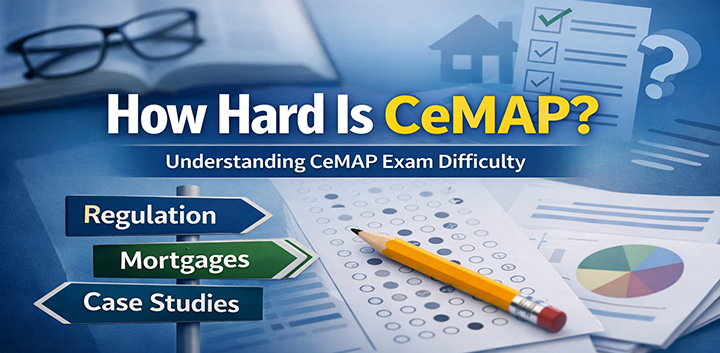
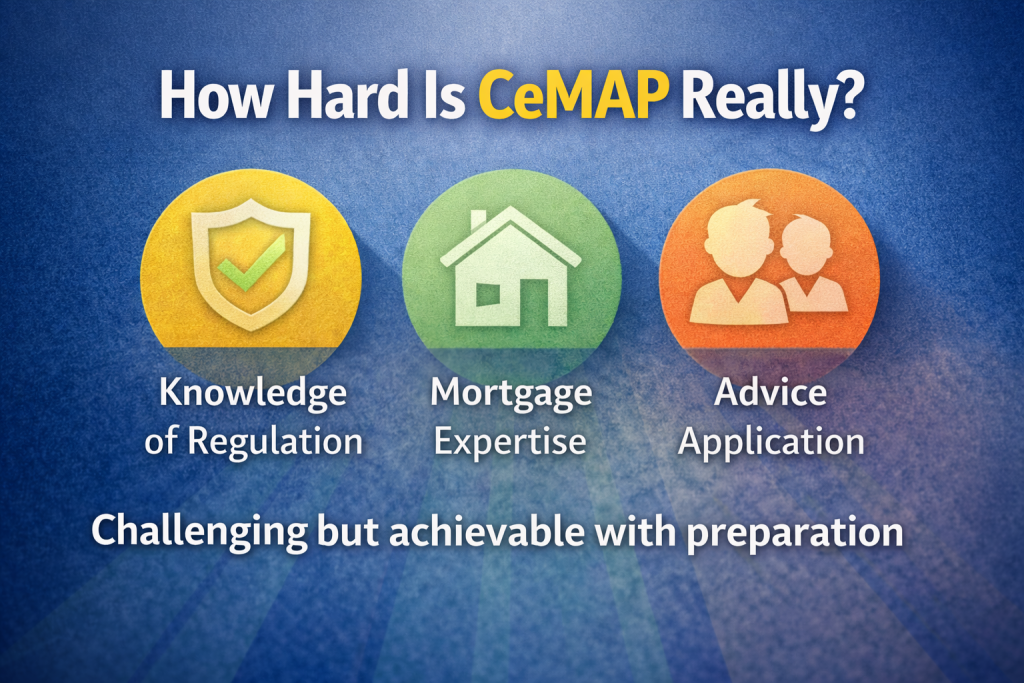
How hard is CeMAP exam graphic showing regulation, mortgages and case studies modules

Many learners ask a simple question before they begin: how hard is CeMAP?

Many learners ask a simple question before they begin: how hard is CeMAP?

The honest answer is that the CeMAP exams are academically manageable for most people, but they require structured preparation and consistent study. They are not designed to catch people out, yet they do test detailed knowledge, regulation, ethics, and the ability to apply what you have learned. For some, the exams feel straightforward. For others, they feel demanding. The difference usually comes down to preparation, familiarity with financial concepts, and confidence with multiple-choice exams.

CeMAP is the industry standard qualification for mortgage advisers in the UK. It is awarded by the London Institute of Banking & Finance and meets the Financial Conduct Authority’s education requirements for giving mortgage advice. Because it leads to a regulated profession, the exams must test knowledge and ethical understanding properly. That is why they feel serious.

This article explains why difficulty is subjective, how the modules differ under the current syllabus, and why preparation matters more than natural ability.

How hard is CeMAP exam graphic showing regulation, mortgages and case studies modules

Why Does CeMAP Feel Hard for Some People?

CeMAP often feels hard because it combines new terminology, regulation, ethics, and exam pressure.

For learners who have never worked in financial services, terms relating to regulatory frameworks, conduct rules, and ethical responsibilities can feel unfamiliar. Even core mortgage concepts such as loan-to-value ratios or different repayment structures may be new. That initial learning curve can create the impression that the qualification is harder than it actually is.

Does Previous Experience Make a Difference?

Yes, but not always in the way people expect.

Someone with experience in banking or estate agency may recognise certain mortgage concepts. That familiarity can reduce learning time in CeMAP 2. However, regulatory and ethical content in CeMAP 1 still needs to be learned carefully, regardless of background.

Learners from unrelated careers often succeed because they approach the material methodically. CeMAP does not require advanced mathematics or essay writing. It requires understanding and careful recall.

Is It an Academic Exam?

CeMAP is knowledge-based rather than essay-based. You are tested through multiple-choice questions and, in the final module, case-study style assessment. You are not required to write long answers. Instead, you must recognise the correct response from several options.

For many people, this format feels manageable. For others, multiple-choice exams create uncertainty because more than one answer can appear reasonable. That is where careful reading becomes essential.

What Makes One Module Feel Harder Than Another?

CeMAP is structured in three modules. Each feels challenging for different reasons.

The modules are designed to build on each other. They do not test identical skills, so difficulty can feel different at each stage.

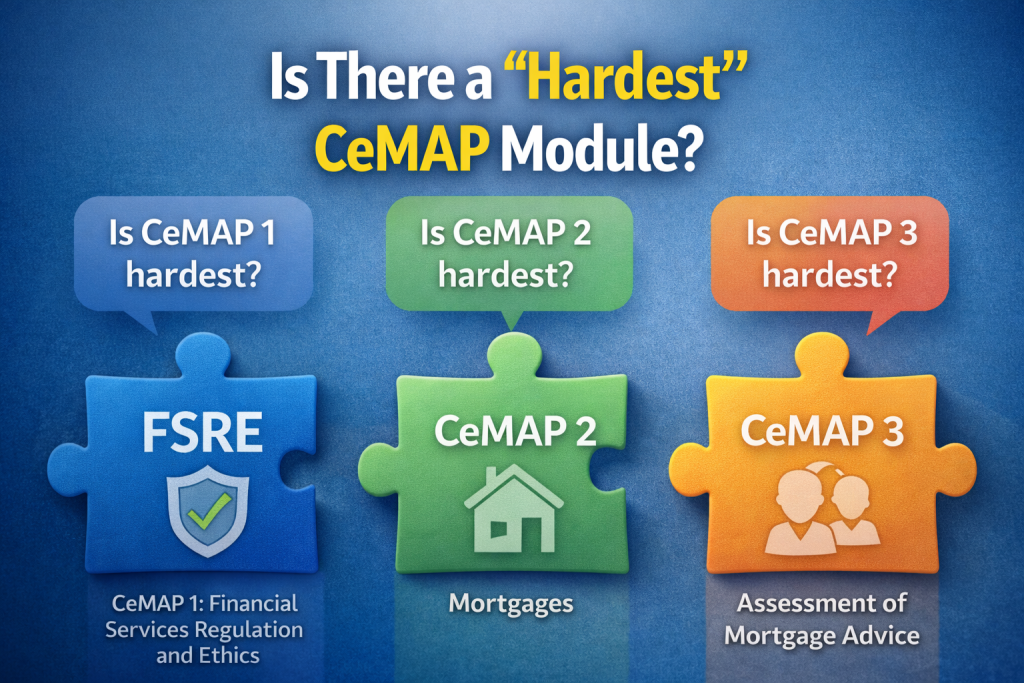
Under the updated 2025/26 syllabus, the modules are:

  • CeMAP 1: Financial Services Regulation and Ethics (FSRE)

  • CeMAP 2: Mortgages

  • CeMAP 3: Assessment of Mortgage Advice

The content focus has shifted slightly in CeMAP 1, and that affects how learners experience the difficulty.

CeMAP 1: Financial Services Regulation and Ethics (FSRE)

CeMAP 1 focuses on financial services regulation and ethical standards.

It covers the UK regulatory framework, the role of the Financial Conduct Authority, principles of conduct, consumer protection, and ethical responsibilities within financial services. Mortgage knowledge is still included, but the emphasis is on regulation and professional standards.

Many learners find this module challenging because of the volume of detailed definitions and the precision required in understanding regulatory language. The difficulty lies in accuracy rather than complexity.

For those new to financial services, this can feel abstract at first. Once the structure of regulation and ethical principles becomes clear, it tends to feel more logical.

CeMAP 2: Mortgages

CeMAP 2 concentrates on mortgage products and how they operate in practice.

This includes repayment methods, interest types, property considerations, underwriting factors, and different lending scenarios. The subject matter is more product-focused and practical.

Learners who prefer tangible examples sometimes find this module easier because they can visualise how mortgages work. Others find it demanding because of the range of product knowledge required.

The challenge is applying knowledge accurately rather than memorising rules alone.

CeMAP 3: Assessment of Mortgage Advice

CeMAP 3 assesses your ability to apply knowledge in realistic client situations.

It uses case-study style questions to test whether you can identify suitable advice within regulatory and ethical boundaries. It draws directly from content covered in both CeMAP 1 and CeMAP 2.

Some learners find this the hardest module because it requires judgement and careful interpretation of client information. Others find it more intuitive because it mirrors real mortgage advice scenarios.

The perception depends on whether you feel more comfortable recalling structured rules or applying them in context.

Is There a “Hardest” CeMAP Module?

There is no single hardest CeMAP module for everyone.

Some learners say CeMAP 1 feels hardest because of the regulatory and ethical detail. Others say CeMAP 3 feels hardest because of the case-study format. The perception usually reflects personal strengths and learning style.

If you prefer structured theory and definitions, CeMAP 1 may feel manageable.

If you prefer product knowledge, CeMAP 2 may feel more straightforward.

If you prefer applied scenarios, CeMAP 3 may feel more natural.

The qualification is designed to test competence across regulation, ethics, product knowledge, and advice skills. It is not structured so that one module is deliberately more difficult than another.

Is there a hardest CeMAP module graphic showing CeMAP 1 FSRE, CeMAP 2 Mortgages and CeMAP 3 Assessment of Mortgage Advice

How Hard Is CeMAP Compared to Other Qualifications?

CeMAP sits at Level 3 on the Regulated Qualifications Framework. This is broadly comparable to A-level standard in terms of academic level.

Most learners taking CeMAP are adults balancing work and other commitments. Time management and consistent study usually matter more than academic background.

CeMAP does not require advanced mathematics. Calculations are limited and practical. The main requirement is understanding regulation, ethics, and mortgage structures clearly.

Does the Pass Mark Mean It Is Difficult?

The pass mark reflects the standard required to meet regulatory expectations, not an attempt to make the exam difficult.

Because mortgage advice is a regulated activity, the Financial Conduct Authority expects advisers to demonstrate knowledge and ethical awareness before giving advice to clients. The exams are structured to confirm that standard.

They are not designed to reduce pass numbers. They are designed to confirm competence.

What Actually Makes CeMAP Manageable?

Preparation makes CeMAP manageable.

Most learners who initially feel that CeMAP is hard change their view once they understand the structure and style of questioning.

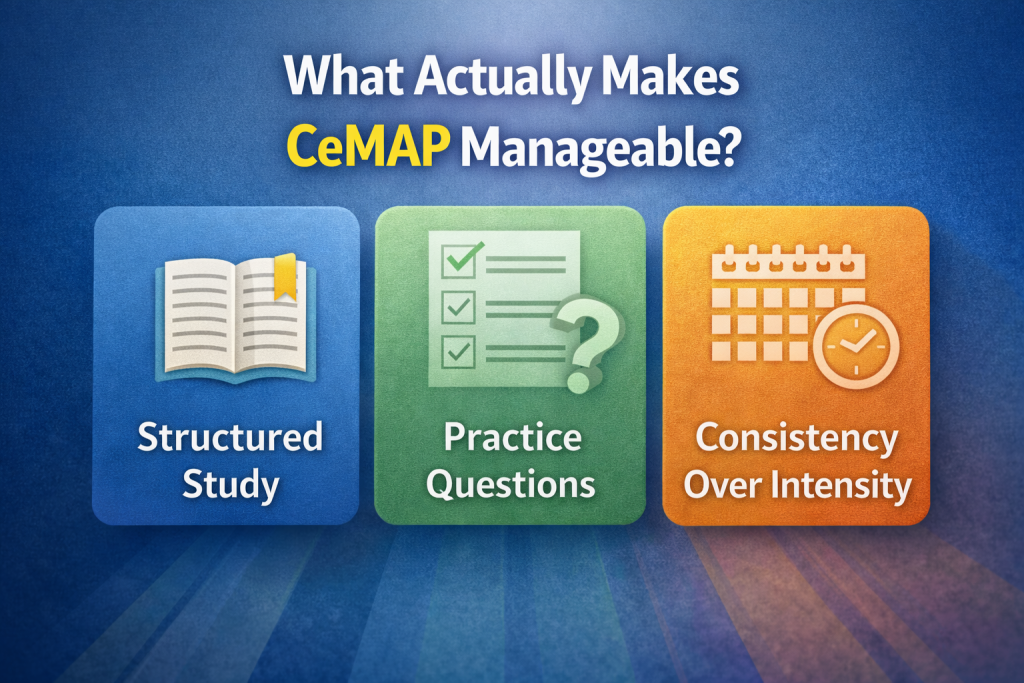
Structured Study

Breaking the syllabus into manageable sections prevents overwhelm. CeMAP content can appear large when viewed as a whole. Studied in stages, it becomes clearer.

Practice Questions

Becoming comfortable with multiple-choice questions changes how difficult the exam feels. Practice helps you recognise how questions are framed and how distractor answers are constructed.

Consistency Over Intensity

Short, regular study sessions are often more effective than occasional long sessions. The knowledge builds logically across the three modules.

What makes CeMAP manageable illustration showing structured study, practice questions and consistent revision

Does Intelligence Determine Success in CeMAP?

CeMAP does not require exceptional academic ability.

Success is usually linked to preparation, organisation, and attention to detail. Learners from a wide range of educational backgrounds complete the qualification each year.

The exams test understanding of regulation, ethics, and mortgage practice. Being methodical often matters more than being naturally academic.

Why Do Some Learners Feel Overwhelmed at the Start?

CeMAP introduces a regulated and ethically structured environment with precise terminology. That can feel unfamiliar.

Regulation and ethics require careful wording. Small differences in phrasing can change meaning. This can create early frustration, particularly in CeMAP 1.

Once learners adjust to that precision, confidence usually improves. What feels complex at first often becomes routine with repetition.

Is Exam Anxiety Making CeMAP Feel Harder?

In many cases, yes.

Anxiety can amplify perceived difficulty. Learners may know the content but doubt themselves during the exam. Multiple-choice formats can increase second-guessing.

Clear preparation and familiarity with the structure reduce this effect.

How Hard Is CeMAP Really?

CeMAP is challenging but achievable.

It is not designed to trick learners, nor is it effortless. It requires understanding financial services regulation, ethical standards, mortgage products, and the application of advice principles at a professional level.

Which module feels hardest depends on individual strengths. For most learners, CeMAP feels hardest at the beginning, when everything is new. As knowledge builds, confidence usually increases.

The key factor is not natural intelligence or prior background. It is preparation, consistency, and engagement with the material.

With realistic expectations and structured study, the CeMAP exams are demanding but manageable.

How hard is CeMAP really graphic showing regulation knowledge, mortgage expertise and advice application

Looking for training support?

We offer CeMAP training for learners working towards a career in mortgage advice. Our courses follow the London Institute of Banking & Finance syllabus and are designed to support understanding of mortgage regulation and advice requirements.

Explore our accredited CeMAP training courses

> Futuretrend Financial Training 
How CeMAP exams work from registration to results

CeMAP exam process illustration showing online registration, remote invigilation and exam results on screen

If you are preparing to sit a CeMAP exam for the first time, it is completely normal to feel unsure about the process. Many learners are confident with the content but uncertain about what actually happens on the day.

This guide explains exactly how CeMAP exams work, from booking your exam through to receiving your result. It reflects the current exam delivery model used by the London Institute of Banking & Finance (LIBF) and focuses only on CeMAP.

CeMAP exams are:

  • Delivered online through Brightspace
  • Remotely invigilated using Integrity Advocate
  • Taken on demand
  • Multiple-choice assessments

They are regulated professional exams, and the rules are strict. Understanding the process in advance helps remove unnecessary stress.

CeMAP exam process illustration showing online registration, remote invigilation and exam results on screen

How do you register and access a CeMAP exam?

CeMAP exams are booked on demand. There are no fixed national exam dates.

Booking your exam

Each CeMAP unit is booked separately. Once you have:

  • Registered for the unit
  • Paid the exam fee

your exam attempt becomes available within your Brightspace account.

You will see:

  • A content course site (where your learning materials are)
  • An associated exam course site

Within the content site, there is a section titled “Sit your examination here”. This link only appears if you have an unused exam attempt remaining.

You should not enter the exam area until you are ready to sit the exam. Once you proceed into the remote invigilation checks, you are entering exam conditions.

CeMAP exams are on demand, meaning you can start your exam when you are ready, rather than at a fixed national time.

Can I sit exams from home?

Yes. CeMAP exams are designed to be taken from home or another suitable private location, using remote invigilation.

Remote invigilation means your exam is monitored live and recorded using your device’s camera, microphone, and screen sharing software.

However, strict conditions apply.

What are the room and equipment requirements?

Before your exam begins, you must meet the testing space and system requirements set by LIBF.

Your testing space must be:

  • Enclosed
  • Private
  • Quiet
  • Well lit
  • Free from interruptions


Your desk must be completely clear. The only items permitted are:

  • Your computer or laptop
  • A beverage in a transparent, unlabelled container


You are not allowed:

  • Books or notes
  • Paper
  • Pens or pencils
  • Physical calculators
  • Mobile phones
  • Watches or smart watches
  • Headphones or headsets
  • Other electronic devices


Toilet breaks are not permitted during the exam.


You will be required to complete a full 360-degree room scan at the start of the exam. This includes showing:

  • The entire room
  • Above and below your desk
  • Your immediate surroundings


Your camera must remain in position for the entire exam.


If you leave the webcam view, lean off screen, stop screen sharing, or open additional tabs or applications, your exam may be revoked.

CeMAP remote exam room requirements showing clear desk, laptop with webcam, and prohibited items such as phones, books and paper

What technical checks must I complete?

Your device must meet minimum system requirements.

You must:

  • Use a computer or laptop (not a tablet or mobile phone)
  • Have a working webcam and microphone
  • Have a stable internet connection
  • Close all other applications and browser tabs

Your screen will be shared for the entire duration of the exam.

LIBF strongly recommends running the Integrity Advocate demo in advance using the same device and internet connection you plan to use on the day. This helps confirm your system works properly before your live sitting.

Support is available before the exam if you encounter system issues during checks.

What identification do I need?

You must present valid, original, government-issued photo identification.

Accepted forms include:

  • International passport
  • Full or provisional driving licence
  • National identity card
  • Visa or permanent residence card
  • UK Citizen Card (for UK candidates only)

Your ID must:

  • Be in date
  • Be an original document (not digital)
  • Match the first and last name used to register

You will be asked to show your ID clearly to the camera during the check-in process.

What happens when the CeMAP exam starts?

Once your identity and room checks are complete, you will enter the exam introduction screen.

You are under exam conditions from this point onwards.

CeMAP exam format

CeMAP exams are multiple-choice assessments.

Some units include standard multiple-choice questions. Others include case study-based multiple-choice questions. If you want a detailed breakdown of question structures, refer to the individual CeMAP 1, CeMAP 2 and CeMAP 3 guides.

During the exam:

  • Questions appear on screen
  • A navigation panel allows you to move between questions
  • A timer shows the remaining time
  • A progress indicator shows how many questions are left

If your time runs out, the exam will automatically submit.

You will have access to:

  • An on-screen scientific calculator
  • An on-screen notepad for rough work
  • A flag function to mark questions you want to return to
  • Accessibility tools if needed

You cannot use any physical calculator, paper, or external materials.

CeMAP exam start process showing identity checks, room scan and online multiple choice exam under remote invigilation

Can I leave the room during a CeMAP exam?

No.

Once your exam begins:

  • You must remain in view of your webcam
  • You cannot leave the room
  • Toilet breaks are not allowed
  • You cannot speak aloud
  • You cannot communicate with anyone

Audio and video are recorded, and your screen is monitored throughout.

If the system detects potential breaches of exam regulations, your session may be flagged for review.

What happens when I finish the exam?

At the end of the exam, you will see a review screen. This allows you to check which questions you have answered before final submission.

Once you confirm submission:

  • Your answers are sent automatically
  • Screen sharing ends


For CeMAP, which is multiple-choice only, your provisional result will normally appear on screen shortly after submission.

How do I receive my official CeMAP result?

Your official result is released through your MyLIBF account.

Results are not given by telephone or email.

If your exam session is flagged for potential regulation breaches, your result may be temporarily withheld while it is reviewed. Reviews typically take up to three working days. If no breach is confirmed, your result will then be released.

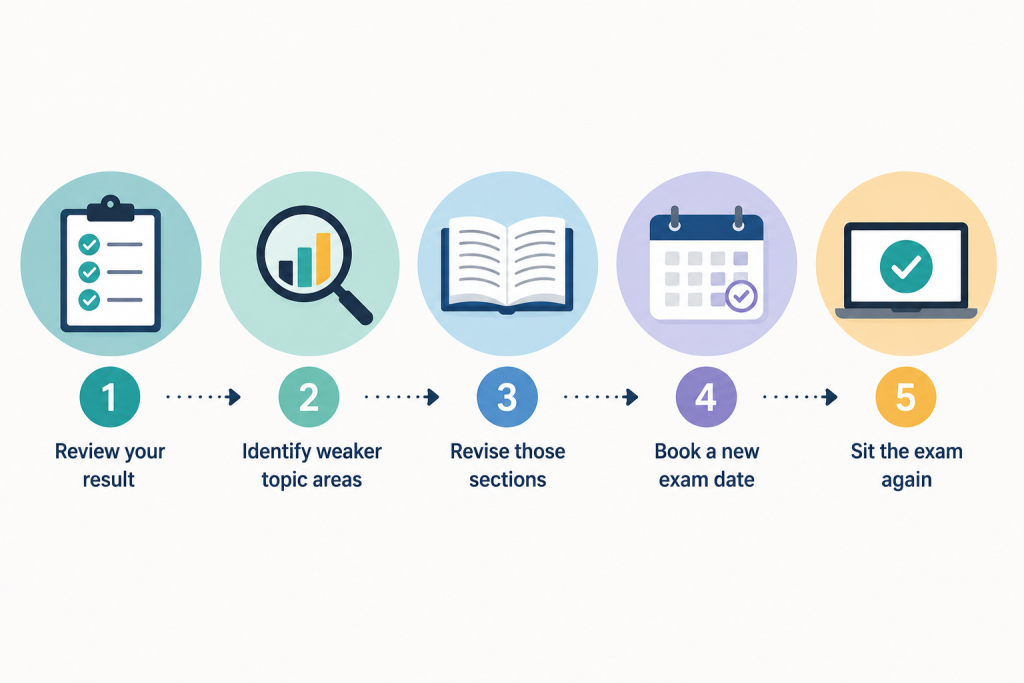
What happens if I fail a CeMAP exam?

If you do not achieve a pass, you can book a resit.

Resits are:

  • Booked in the same way as your first attempt
  • Subject to a further exam fee

CeMAP must be completed within the registration period set by LIBF. If you do not complete all required units within that timeframe, you may need to re-register.

What is Special Consideration?

Special Consideration applies if an unforeseen circumstance beyond your control affects your performance.

Examples may include:

  • Sudden illness
  • Injury
  • Significant unexpected events

Important rules apply:

  • You must notify LIBF within 48 hours of the exam date
  • By sitting the exam, you are declaring yourself “fit to sit”
  • Applications require supporting evidence
  • Avoidable circumstances, such as holidays or lack of preparation, are not accepted

If you believe Special Consideration applies, you should contact LIBF customer services promptly and review their policy before booking further exams.

CeMAP Special Consideration process showing 48-hour rule, supporting evidence requirement and examples such as sudden illness or injury

What should I understand before sitting CeMAP?

CeMAP exams are structured, secure, and professionally monitored assessments.

Before sitting your exam, you should clearly understand:

  • It is taken online through Brightspace
  • It is remotely invigilated
  • The room must be completely clear
  • You cannot leave the room
  • You cannot use paper or a physical calculator
  • Screen sharing runs for the entire exam
  • Results appear on screen and on MyLIBF
  • Sitting the exam means you declare yourself fit to sit

Once you understand the process, the experience becomes predictable. The structure is firm, but it is consistent for every candidate.

Knowing exactly what to expect removes uncertainty and allows you to focus on what matters — completing your CeMAP exam properly and professionally.

Looking for training support?

We offer CeMAP training for learners working towards a career in mortgage advice. Our courses follow the London Institute of Banking & Finance syllabus and are designed to support understanding of mortgage regulation and advice requirements.

Explore our accredited CeMAP training courses

> Futuretrend Financial Training 
How the CeMAP qualification is structured (modules, exams and outcomes)

Diagram showing the CeMAP qualification structure with CeMAP 1, CeMAP 2 and CeMAP 3, including units, exams and time limits.

The Certificate in Mortgage Advice and Practice (CeMAP) is the standard qualification required to meet the education requirements for mortgage advisers in the UK. It is awarded by the London Institute of Banking & Finance (LIBF) and is recognised by the Financial Conduct Authority (FCA) for mortgage advice purposes.

Under the 2025/26 syllabus, CeMAP is made up of five mandatory units, assessed through five separate exams, grouped into three stages commonly referred to as CeMAP 1, CeMAP 2 and CeMAP 3.

All units must be passed to achieve the full CeMAP qualification.

Diagram showing the CeMAP qualification structure with CeMAP 1, CeMAP 2 and CeMAP 3, including units, exams and time limits.

What is the structure of the CeMAP qualification?

CeMAP is a unit-based qualification. Each unit:

  • Has a defined syllabus and learning outcomes
  • Is assessed by a formal exam
  • Can be taken individually
  • Contributes to the full CeMAP award


The qualification structure is:

  • CeMAP 1 – Financial services, regulation and ethics
  • CeMAP 2 – Mortgages
  • CeMAP 3 – Assessment of mortgage advice knowledge

CeMAP structure at a glance

CeMAP 1: Financial Services, Regulations and Ethics

  • FRE1 – Regulation, legislation and key parties
  • FRE2 – Skills, principles and ethical behaviours


CeMAP 2: Mortgages

  • MRT1 – Mortgage law, practice and application
  • MRT2 – Mortgage products and post completion


CeMAP 3

  • ASEW – Assessment of Mortgage Advice Knowledge
Infographic showing the CeMAP structure at a glance, with CeMAP 1, CeMAP 2 and CeMAP 3 and their units.

What does FRE1 cover in CeMAP 1?

FRE1 – Regulation, legislation and key parties


FRE1 introduces the structure and purpose of the UK financial services industry.

This unit covers:

  • How the UK financial services market operates
  • The role of government, the economy, and state benefits
  • Key legal principles that underpin financial advice
  • The development of financial regulation in the UK
  • The responsibilities of the FCA and the Prudential Regulation Authority (PRA)


FRE1 provides the regulatory foundation needed to understand why financial services, including mortgage advice, are regulated.

What does FRE2 cover in CeMAP 1?

FRE2 – Skills, principles and ethical behaviours


FRE2 focuses on how advisers operate, rather than on products or markets.

This unit covers:

  • The financial advice process
  • Adviser responsibilities to consumers
  • Consumer rights and protections
  • Professional standards and ethical behaviour
  • Regulatory expectations around conduct and competence


FRE2 is about behaviour, professionalism, and suitability, not mortgages. It applies across financial services and builds on the regulatory knowledge introduced in FRE1

What does MRT1 cover in CeMAP 2?

MRT1 – Mortgage law, practice and application


MRT1 introduces the regulatory and legal framework that governs mortgage advice and lending in the UK.

This unit covers:

  • Mortgage-specific regulation
  • Key mortgage legislation
  • Roles of lenders, borrowers, and intermediaries
  • Types of mortgage products
  • Mortgage application processes


MRT1 establishes how the UK mortgage market operates within legal and regulatory boundaries.

What does MRT2 cover in CeMAP 2?

MRT2 – Mortgage products and post completion


MRT2 builds on MRT1 and follows the mortgage journey beyond initial application.

This unit covers:

  • Mortgage arrangements and completion
  • Repayment methods and interest structures
  • Arrears, payment difficulties, and lender actions
  • Second charges and bridging finance
  • Mortgage redemption and post-completion issues


MRT2 focuses on applying mortgage knowledge to practical, real-world situations.

What does ASEW cover in CeMAP 3?

ASEW – Assessment of Mortgage Advice Knowledge

CeMAP 3 assesses a learner’s ability to apply mortgage advice knowledge in practice.

This unit focuses on:

  • Analysing client circumstances
  • Assessing suitable mortgage solutions
  • Applying ethical and regulatory judgement
  • Demonstrating appropriate adviser decision-making


ASEW is designed to test application and suitability, rather than technical recall.

How are CeMAP exams structured?

Each CeMAP unit is assessed by one formal exam set by LIBF.

At a high level:

  • One exam per unit
  • Exams are taken individually
  • Units can be passed in any order
  • Results are issued per unit

Exam formats vary by unit but are designed to assess knowledge, understanding, and application appropriate to that stage of CeMAP.

Infographic explaining how CeMAP exams are structured, showing one exam per unit and separate results for each unit.

How do CeMAP registration periods and time limits work?

CeMAP operates under defined registration periods.

Key points learners need to understand:

  • Learners must be registered before sitting exams
  • Registration is time-limited
  • All required exams must be passed within the registration window
  • Registration periods are set and administered by LIBF

If a registration period expires before all units are passed, outstanding units must be re-registered.

What learning order options are available?

LIBF allows flexibility in how CeMAP units are studied and taken.

Learners may:

  • Complete CeMAP 1 before CeMAP 2
  • Spread units over time
  • Sit exams in different sequences

All approaches are acceptable provided registration rules are met.

What is the preferred learner-focused order?

A commonly used learner-focused order is:

FRE1 → FRE2 → MRT1 → MRT2 → ASEW

This progression moves logically from regulation and ethics, into mortgage knowledge, then application and assessment.

What is the outcome of completing CeMAP?

To achieve the full CeMAP qualification:

  • All five units must be passed
  • All exams must be completed within time limits
  • Results are awarded by LIBF

CeMAP confirms that the learner has met the FCA-recognised education requirements for mortgage advice. It does not provide authorisation to give advice, which is a separate regulatory process.

Looking for training support?

We offer CeMAP training for learners working towards a career in mortgage advice. Our courses follow the London Institute of Banking & Finance syllabus and are designed to support understanding of mortgage regulation and advice requirements.

Explore our accredited CeMAP training courses

> Futuretrend Financial Training 

The Importance of Using Mock Exam Questions for Your CeMAP Qualification

The Importance of Using Mock Exam Questions for Your CeMAP Qualification

The Importance of Using Mock Exam Questions for Your CeMAP Qualification

Studying for your CeMAP (Certificate in Mortgage Advice and Practice) qualification is a significant step towards becoming a qualified mortgage adviser. With the stakes so high, using the right resources during your preparation is critical. Among the most valuable tools at your disposal are mock exam questions. However, not all mock exam questions are created equal, and understanding the difference between official LIBF (London Institute of Banking & Finance) resources and third-party materials can make a big difference in your success.

Why Mock Exam Questions Matter

Mock exam questions are an excellent way to test your knowledge, identify areas of weakness, and get a feel for the structure and style of the actual exams. By simulating exam conditions, they also help build your confidence and improve your time management skills. However, for these benefits to be fully realized, the mock questions you use must align closely with the actual CeMAP syllabus and exam style.

Official LIBF Specimen Papers and Topic Questions

The LIBF provides official specimen papers and topic-specific questions that are directly aligned with the current CeMAP syllabus. These questions are invaluable for several reasons:

  1. Accurate Representation of Exam Style: The official questions are written in the same style and format as the actual exams. This ensures you are familiar with the way questions are phrased, which reduces surprises on exam day.
  2. Relevance to the Current Syllabus: The LIBF regularly updates its syllabus to reflect changes in the mortgage industry and regulatory environment. Official materials are guaranteed to be up-to-date and relevant, ensuring you focus on the right content.
  3. Appropriate Level of Difficulty: Official questions are designed to match the level of difficulty of the actual exams, giving you a realistic understanding of what to expect.
CeMAP Study Resources

Most of the official accredited LIBF Learning Support Providers, such as Futuretrend Financial Training, supply these as part of there study material.

The Risks of Using unaccredited Third-Party Questions

While there are many third-party providers offering mock exam questions, not all of them meet the same standards as the official LIBF resources. Third-party questions can present several risks:

Outdated Content: Many third-party providers fail to update their materials in line with the latest syllabus changes, leading to questions on topics no longer covered in the exam.

Irrelevant Topics: Some questions may focus on areas that are not part of the current CeMAP syllabus, wasting your valuable study time.

Inconsistent Quality: Questions from unofficial sources may not accurately reflect the style, structure, or difficulty level of the actual exams, which can lead to a false sense of preparedness.

There is a reason that these unofficial providers are not accredited by the LIBF as approved learning support providers.

The Value of Accredited Training Providers

To ensure you’re using the best possible resources, it’s worth considering an LIBF-accredited training provider, such as Futuretrend. Accredited providers have access to official LIBF questions and incorporate them into their study materials. This stamp of approval ensures that:

  • You’re working with high-quality resources that are aligned with the current syllabus.
  • The questions you practice are directly relevant to what you will encounter in the final exams.
  • You benefit from the expertise of trainers who understand the CeMAP qualification inside and out.
LIBF Accredited Learning Support Provider

How to Maximize the Benefits of Mock Questions

To make the most of your mock exam practice, follow these tips:

Use Official Resources First: Start with LIBF specimen papers and topic-specific questions to build a solid foundation.

Identify Weak Areas: Analyse your performance to pinpoint topics that need more attention.

Simulate Exam Conditions: Practice under timed conditions to improve your time management and reduce exam-day anxiety.

Supplement Wisely: If you choose to use third-party materials, ensure they come from a reputable source and complement your official resources.

Conclusion

Mock exam questions are a cornerstone of effective CeMAP preparation, but the quality and relevance of the questions you use are critical. By prioritising official LIBF resources and working with accredited training providers like Futuretrend, you can be confident that your study materials are aligned with the latest syllabus and designed to prepare you for success.

Don’t leave your qualification to chance—choose the best resources to support your journey to becoming a qualified mortgage adviser.

Are you considering becoming a mortgage adviser?  We’re here to help!

Why not try out our Sample Question Papers and other resources on our Free CeMAP Resources Page