What the CeMAP Study Hub actually includes (and how to use it properly)

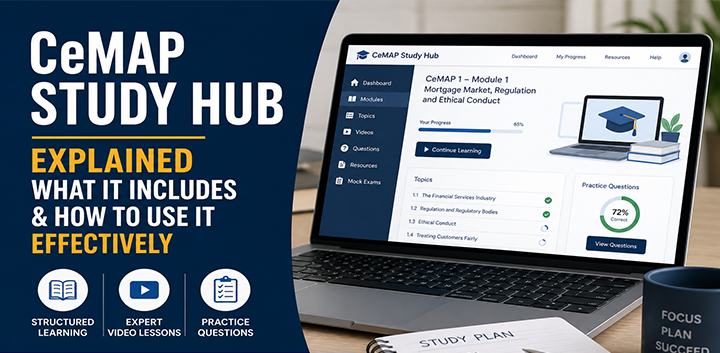
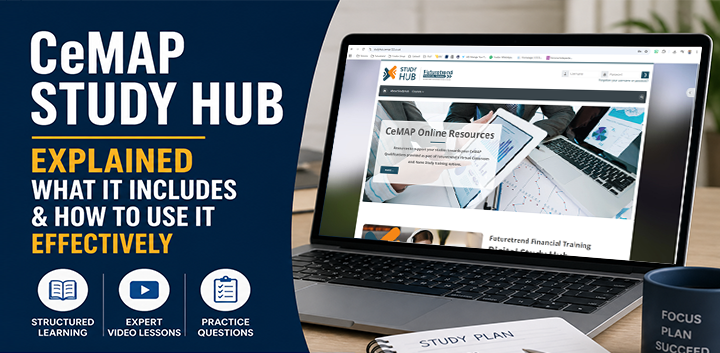
CeMAP Study Hub online learning platform showing structured modules, video lessons and practice questions

What is a CeMAP Study Hub?

A CeMAP Study Hub is an online learning platform designed to organise and deliver structured study for the CeMAP qualification.

It brings together learning materials, topics, and practice tools in one place, arranged in a logical order so learners can progress step by step rather than trying to piece everything together themselves.

Most Study Hubs are built around the official syllabus set by the London Institute of Banking & Finance, which means the content follows the same structure as the actual exams.

In simple terms, a Study Hub is not just a collection of resources. It is a guided framework that shows you:

  • What to study
  • In what order
  • How to check your understanding
  • When you are ready to move on
CeMAP Study Hub online learning platform displayed on laptop with study notes and workspace

What does a CeMAP Study Hub typically include?

A good Study Hub is made up of several core elements. These work together to support both learning and revision.

Structured topic content

At the heart of any Study Hub are the syllabus topics.

Each CeMAP module is broken down into smaller sections, covering areas such as:

  • Regulation
  • Mortgage law
  • Products and processes
  • Ethics and conduct

These are not random chunks of content. They follow the same order you would see in the official syllabus, which helps avoid gaps in knowledge.

Video lessons

Most Study Hubs include video presentation lessons or walkthroughs.

These are used to:

  • Explain complex topics in plain language
  • Add context to written material
  • Highlight key points that often come up in exams

Video content can be especially useful for topics that feel dry or technical when read on their own.

Revision resources

Alongside learning content, most Study Hubs include supporting materials such as:

  • Summary notes
  • Key fact sheets
  • Revision guides
  • Audio guides
  • Exam tips

These are designed to help with revision rather than first-time learning.

Practice questions

CeMAP Practice questions are a key part of structured learning.

They allow you to:

  • Check your understanding as you go
  • Get used to the way exam questions are written
  • Identify weak areas early

Some platforms include topic-based questions, while others also provide mock exams that reflect the real assessment format.

Progress tracking

Many platforms include a way to track your progress through the course.

This might show:

  • Which topics you have completed
  • Your scores on practice questions
  • Areas that need more attention

While not essential, this can help keep your study organised and consistent.

How is a Study Hub structured?

One of the main strengths of a CeMAP Study Hub is how clearly everything is organised.

Most platforms follow a simple hierarchy:

Module → Topic → Resource

This structure is what makes the platform effective.

Module level

CeMAP is split into separate modules (for example, CeMAP 1, 2, and 3).

Each module covers a broad area of knowledge and is assessed separately.

CeMAP Study Hub structure shown on laptop with module topic and resource layout

Topic level

Within each module, the content is broken down into smaller topics.

For example:

  • A module might include regulation
  • Regulation might be split into specific rules, bodies, and principles

This makes large sections of content easier to manage.

Resource level

Within each topic, you will find the actual learning materials:

  • Videos
  • Written explanations
  • Audio explanation
  • Practice questions
  • Downloads

This is where the learning happens day to day.

How should you use a Study Hub effectively?

Knowing what is inside a Study Hub is one thing. Using it properly is what actually makes a difference.

Here is a simple way to approach it.

1. Follow the structure from start to finish

The biggest advantage of a Study Hub is the order it provides.

It is tempting to jump straight into areas that feel easier or more interesting, but this often leads to gaps later on.

Working through topics in sequence helps build understanding step by step.

2. Engage actively with each topic

Passive learning does not work well for CeMAP.

Instead of just watching videos or reading notes:

  • Pause and think about what you have learned
  • Make short notes in your own words
  • Try to explain the topic out loud

This helps move information from short-term to long-term memory.

3. Use practice questions early and often

Do not wait until the end to start testing yourself.

After each topic:

  • Complete the related questions
  • Review both correct and incorrect answers
  • Go back to the content if something is unclear

This approach reinforces learning and highlights problems early.

4. Revisit weak areas

A Study Hub makes it easy to go back to specific topics.

If you struggle with something:

  • Rewatch the video
  • Reread the notes
  • Attempt the questions again

Progress is not about getting everything right first time. It is about improving understanding over time.

5. Use revision resources closer to the exam

Summary materials are useful, but they are not a replacement for learning.

Use them:

  • After completing the full module
  • When preparing for mock exams
  • In the final stages before the real exam

They are best used for reinforcement, not first exposure.

Common mistakes when using online learning platforms

Even with a well-structured Study Hub, it is easy to fall into habits that slow progress.

Jumping between topics

Skipping around the platform might feel productive, but it often leads to:

  • Missing key foundations
  • Confusion between related topics
  • Weaker overall understanding

Structure only works if you follow it.

Passive consumption

Watching videos without thinking or taking notes can give a false sense of progress.

It may feel like you understand the material, but this often disappears when you try to answer questions.

Avoiding difficult areas

Everyone has topics they find harder.

Avoiding them does not make them go away. In fact, these are often the areas that matter most for exam performance.

Leaving practice too late

Some learners focus only on learning content and delay testing themselves.

This can lead to:

  • Poor exam technique
  • Lack of familiarity with question style
  • Surprises in the actual exam

Practice is part of learning, not something separate from it.

How structure improves understanding

A structured platform is not just about organisation. It directly affects how well you learn.

It builds knowledge in layers

Each topic builds on the previous one.

For example:

  • Understanding regulation helps make sense of mortgage advice rules
  • Knowing products helps with case study questions

Without this order, learning can feel disconnected.

It reduces overwhelm

CeMAP covers a wide range of content.

Breaking it into smaller, manageable sections makes it easier to:

  • Stay focused
  • Track progress
  • Maintain motivation
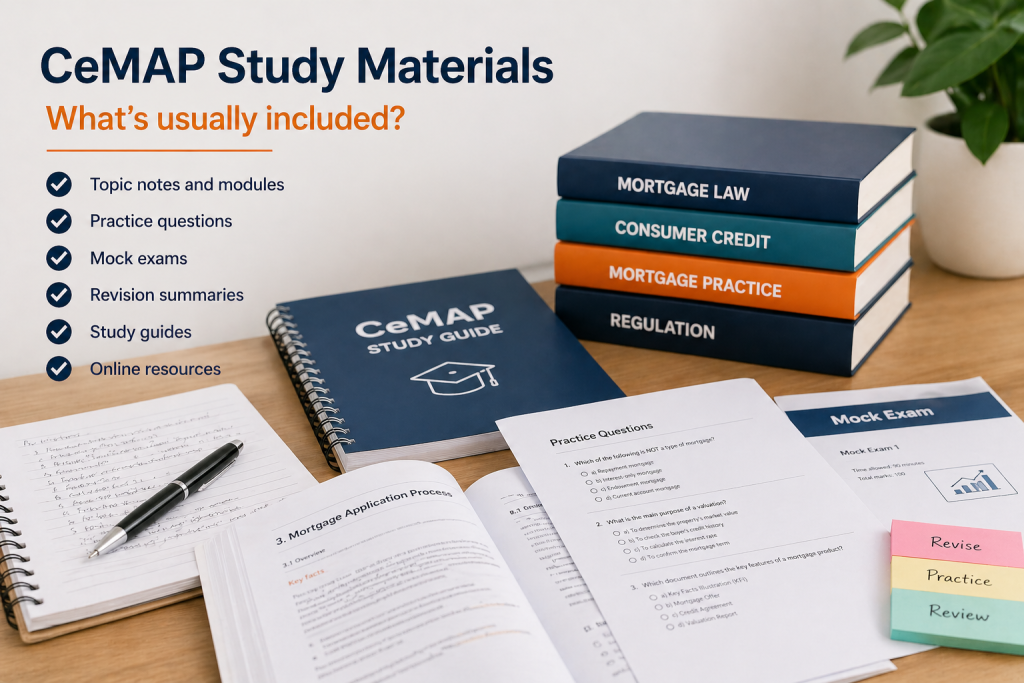
CeMAP study materials including notes practice questions mock exams and study guides

It supports consistent study

A clear structure removes the need to decide what to study next.

This helps build a routine, which is often more important than study intensity.

It mirrors the exam structure

Because Study Hubs are based on the official syllabus, they align closely with how exams are written.

This means:

  • You are less likely to encounter unfamiliar topics
  • Your preparation is more targeted
  • Your confidence improves over time

How to use online learning platforms effectively

Using a Study Hub well comes down to a few simple principles:

  • Follow the intended order
  • Stay actively engaged
  • Test yourself regularly
  • Review and revisit weak areas
  • Use summaries for revision, not learning

These apply to most online learning platforms, not just CeMAP.

The platform provides the structure, but the results depend on how you use it.

Final thoughts

A CeMAP Study Hub is best understood as a structured guide rather than just a collection of materials.

It brings together:

  • Clear topic organisation
  • Multiple ways to learn
  • Opportunities to test understanding

When used properly, it helps turn a large and sometimes complex syllabus into something manageable and logical.

It does not replace effort or guarantee outcomes, but it does remove a lot of the uncertainty around what to study and how to approach it.

That clarity is often what learners need most.

Looking for training support?

We offer CeMAP training for learners working towards a career in mortgage advice. Our courses follow the London Institute of Banking & Finance syllabus and are designed to support understanding of mortgage regulation and advice requirements.

Explore our accredited CeMAP training courses

> Futuretrend Financial Training 
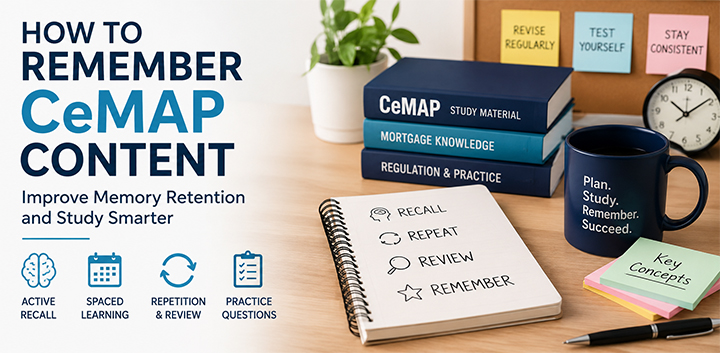
How long should you realistically study each week for CeMAP?

How many hours a week to study for CeMAP shown with study plan, books and clock

If you’ve been looking into CeMAP, you’ve probably asked the obvious question: how many hours a week should I study?

The honest answer is not a neat number. And that’s actually a good thing. It means you can shape your study around your life, rather than forcing your life around a fixed timetable.

What matters more is consistency, focus, and using your time well.

How many hours a week to study for CeMAP shown with study plan, books and clock

How many hours a week is CeMAP?

There isn’t a single weekly hour requirement for CeMAP.

Most learners study alongside work, family, and other commitments, so the time you need depends on how quickly you absorb information and how regularly you can study.

A realistic way to think about it is this:
you need steady, repeatable study time each week, rather than bursts of intense effort followed by long gaps.

Trying to pin it down to a fixed number can actually be misleading. Two people could spend the same amount of time studying and get very different results depending on how they use that time.

Why study time varies so much

CeMAP is awarded by the London Institute of Banking & Finance and covers mortgage law, regulation, products, and advice. That means it blends theory with practical understanding.

Because of that, study time varies for a few key reasons:

Your starting point

If you already work in financial services, some topics may feel familiar. You might move faster through areas like regulation or terminology.

If you’re completely new, you’ll likely need more time to build that foundation.

Neither is better or worse. It just changes the pace.

Your learning style

Some people learn quickly from reading. Others need to hear explanations, watch examples, or revisit topics a few times before it sticks.

If you need repetition, your study time will naturally be longer. That’s not a weakness. It’s how learning works.

Your schedule

A learner studying a little each day will usually progress more smoothly than someone trying to fit everything into one or two large sessions.

Short, regular sessions tend to reduce stress and improve memory.

How confident you want to feel

Some learners aim to pass as soon as possible. Others want to feel completely comfortable with the material before sitting the exam.

Both approaches are valid, but they affect how much time you spend each week.

Tutor-led study vs self-study

One of the biggest differences in weekly study time comes down to how you learn.

Tutor-led virtual CeMAP classroom

A structured course gives you a clear schedule. You attend sessions, follow a guided plan, and build knowledge step by step.

This usually means:

  • You study at set times each week
  • You’re less likely to fall behind
  • You spend less time figuring out what to study

Because of the structure, your weekly study time often feels more focused and efficient. You’re not wasting time deciding where to start.

You also benefit from explanation. If something doesn’t make sense, it gets clarified straight away instead of slowing you down later.

CeMAP Self-study

Self-study gives you flexibility, but it also puts more responsibility on you.

You need to:

  • Plan your own study schedule
  • Decide what to cover each session
  • Stay disciplined without external deadlines

Some learners thrive with this. Others find it harder to stay consistent.

In practice, self-study can sometimes take longer overall, not because the content is harder, but because:

  • Progress can be uneven
  • Motivation can dip
  • Topics may need revisiting more often

That said, if you’re organised and consistent, self-study can work very well.

Why long gaps slow you down

One of the most common mistakes is leaving large gaps between study sessions.

It feels harmless at the time. Life gets busy, you miss a few days, then a week, then suddenly you’re trying to remember where you left off.

The problem is not just lost time. It’s lost understanding.

When you take long breaks:

  • You forget key concepts
  • You lose momentum
  • You spend your next session recapping instead of progressing

Over time, this adds up. You end up studying more hours overall because you’re repeating work.

Steady, consistent study reduces the need for constant revision.

Even shorter sessions, done regularly, tend to be far more effective than occasional long ones.

Quality matters more than quantity

It’s easy to assume more hours equals better results. In reality, that’s not always true.

A focused, distraction-free study session can achieve far more than a long session where your attention drifts.

Good quality study usually includes:

  • Clear goals for each session
  • Active learning, not just reading
  • Testing your understanding as you go
  • Revisiting difficult areas intentionally

Poor quality study often looks like:

  • Reading without absorbing
  • Highlighting everything but understanding little
  • Multitasking while studying
  • Skimming instead of engaging

If you finish a session and can explain what you’ve learned in simple terms, that’s a strong sign your time was well spent.

CeMAP study example showing quality study methods like practice and review instead of long unfocused study hours

What does a realistic study week look like?

Instead of focusing on a fixed number of hours, think in terms of rhythm.

A realistic CeMAP study week usually includes:

  • Regular sessions spaced across the week
  • Time to review previous topics
  • Time to learn new material
  • Occasional practice questions

The key is balance. You want to move forward without forgetting what you’ve already covered.

Trying to rush everything into a short period often leads to overload. Spreading it out makes it manageable.

Setting realistic expectations

CeMAP is not designed to be rushed in a few days, but it’s also not something that needs to take over your life.

A realistic mindset is:

  • You will need consistent effort
  • Some topics will take longer than others
  • You won’t understand everything immediately
  • Progress may feel slow at times

That’s all normal.

What matters is staying consistent and not getting discouraged by difficult sections.

Many learners find that once the early concepts click, later topics start to feel easier.

Choosing the right study resources

The quality of your CeMAP resources has a direct impact on how long you need to study.

Clear, well-structured materials can save a huge amount of time.

Look for resources that:

  • Explain concepts plainly
  • Follow the CeMAP syllabus closely
  • Include examples and practice questions
  • Break topics into manageable sections

Poor resources often lead to:

  • Confusion
  • Re-reading the same content multiple times
  • Needing to find extra explanations elsewhere

That extra effort increases your weekly study time without improving results.

A simple way to approach your study time

Instead of asking, “How many hours should I study?”, a better question is:

“Can I study consistently every week without burning out?”

If the answer is yes, you’re on the right track.

Start with what fits your life now. Then adjust as you go.

If you feel overwhelmed, reduce session length but increase consistency.
If you feel comfortable, you can gradually increase your study time.

Flexibility is more sustainable than rigid targets.

Final thoughts

CeMAP study time isn’t about hitting a perfect weekly number. It’s about building a routine that works for you and sticking to it.

Consistency beats intensity.
Understanding beats rushing.
Quality beats quantity.

If you approach your study in a steady, practical way, you’ll make progress without it taking over your life.

And that’s exactly what most learners need.

Looking for training support?

We offer CeMAP training for learners working towards a career in mortgage advice. Our courses follow the London Institute of Banking & Finance syllabus and are designed to support understanding of mortgage regulation and advice requirements.

Explore our accredited CeMAP training courses

> Futuretrend Financial Training 

How do I prepare for my CeMAP exam in the final weeks?

Study setup with CeMAP mock exam paper and notes showing final weeks preparation for a CeMAP exam

Preparing for a CeMAP exam in the final weeks is less about learning new content and more about strengthening what you already understand. The focus shifts from covering ground to consolidating knowledge, building confidence, and managing expectations.

CeMAP, awarded by the London Institute of Banking & Finance (LIBF), is the industry standard qualification for mortgage advisers in the UK. It meets the Financial Conduct Authority (FCA) education requirements for giving mortgage advice. That means the exams are designed to test applied understanding, not just memory.

In the final stretch, preparation becomes more about clarity than effort.

Study setup with CeMAP mock exam paper and notes showing final weeks preparation for a CeMAP exam

Why do the final weeks before a CeMAP exam feel different?

The final weeks often feel more intense, even if you are studying less new material. This shift happens because your role as a learner changes.

Earlier in your studies, the focus is on exposure. You are encountering topics for the first time, building familiarity, and trying to understand how everything fits together. In the final weeks, that changes. You are no longer asking “What is this?” but instead “Do I really understand this?”

That difference matters.

You may notice:

  • Gaps in knowledge that were not obvious before
  • Topics that felt clear now feel less certain
  • A stronger awareness of the exam itself

This is normal. It is a sign that you are moving from learning to refining.

Many learners assume this feeling means they are not ready. In reality, it often means the opposite. You are becoming more aware of the detail, which is exactly what the exam requires.

Should you still be learning new content in the final weeks?

In most cases, the final weeks are not the time to introduce large amounts of new material.

CeMAP exams assess how well you understand the full syllabus. Trying to add new topics late can dilute your focus and create confusion. Instead, the priority is consolidation.

Consolidation means:

  • Strengthening your understanding of core concepts
  • Revisiting topics you have already studied
  • Connecting different areas of the syllabus together

That does not mean avoiding new content completely. If there are small gaps or areas you have not covered at all, it is reasonable to address them. The key is proportion.

The majority of your time should be spent improving what you already know.

A useful way to think about it is this: it is better to have a solid grasp of most topics than a shallow understanding of everything.

What does consolidation actually involve?

Consolidation is often misunderstood. It is not just re-reading notes or going over the same material again.

It is about making your understanding more reliable.

This includes:

Recognising patterns

Many CeMAP topics are linked. For example, regulation, products, and client circumstances all interact. Consolidation helps you see these connections more clearly.

Clarifying definitions

Some areas rely on precise wording. Being able to explain key terms in your own words is a strong sign of understanding.

Reducing uncertainty

You are not aiming for perfection, but you are aiming to reduce hesitation. If a topic feels unclear, it is worth revisiting.

Building confidence in application

The exam is not just about recalling facts. It is about applying knowledge in context. Consolidation helps you feel more comfortable doing that.

This stage is quieter than earlier study phases, but it is where a lot of progress happens.

How useful are mock papers and study materials in the final weeks?

Mock papers and structured study materials can play an important role in the final stage of CeMAP preparation, but their value comes from how they are used rather than how many you complete.

In the final weeks, these resources support consolidation rather than new learning.

Mock papers help bring the syllabus together. They expose how different topics appear in exam-style questions and highlight where your understanding feels solid and where it does not. This is less about scoring highly and more about recognising patterns and identifying areas that still feel uncertain.

CeMAP mock exam paper and study materials on desk showing how learners revise in the final weeks before the exam

Reviewing your existing study materials is equally important. By this stage, you are not looking for new explanations, but clearer ones. Revisiting well-structured content can help reinforce key ideas and make connections between topics easier to see.

This is where the quality and structure of your CeMAP training materials can make a difference. Learning resources that are organised into clear topics and sub-topics allow you to return to specific areas without losing context. Materials that include a mix of formats, such as written explanations alongside supported learning content, can also help strengthen understanding from different angles.

Some learners also find value in using training providers that offer access to mock papers and revision support as part of a wider programme. When these resources are aligned with the structure of the syllabus, they can make the final preparation phase feel more focused and manageable.

The key point is that both mock exams and study materials are tools for clarity. They help you confirm what you know, not chase what you don’t.

How should your focus change in the final weeks?

Your focus should move from quantity to quality.

Earlier on, progress might have been measured by how much of the syllabus you covered. In the final weeks, progress is measured by how well you understand what you have already studied.

This shift can feel uncomfortable, especially if you are used to structured learning plans. There is less of a sense of “completing” something and more emphasis on judgement.

That judgement includes:

  • Knowing which topics need more attention
  • Deciding when something is “good enough”
  • Accepting that not everything will feel perfect

This is where well-structured learning materials can make a difference. Content that is clearly organised into topics and sub-topics can help you revisit areas more effectively, rather than feeling lost in a large syllabus.

How big is the CeMAP syllabus and why does that matter now?

The CeMAP syllabus is broad because it covers the full knowledge required for mortgage advice. It includes regulation, mortgage products, client needs, and the wider financial environment.

In the final weeks, the size of the syllabus matters less than how you relate to it.

At this stage, you are not trying to “cover” the syllabus again. You are trying to:

  • Feel familiar with the structure
  • Understand how topics link together
  • Recognise where your weaker areas are

When the syllabus feels large close to the exam, it is often because you are looking at it as a whole again. The key is to bring it back into smaller, manageable sections.

This is where breaking content into topics and sub-topics remains useful, even at the end.

How do you deal with anxiety before a CeMAP exam?

Feeling anxious before a CeMAP exam is common. It is a professional qualification with real implications, so some level of pressure is expected.

The important thing is how that anxiety is understood.

In many cases, anxiety comes from uncertainty, not lack of ability.

You might be asking:

  • “What if I get something unexpected?”
  • “What if I forget something I know?”
  • “What if I am not ready?”

These questions are normal, but they are not always helpful.

CeMAP study setup with notes and mock exam paper showing learner anxiety before exam and preparation environment

A more useful way to approach this stage is to focus on what you can control:

  • Your understanding of the material
  • Your familiarity with the structure of the syllabus
  • Your ability to stay calm and think clearly

It is also worth recognising that no learner feels completely ready. Waiting for that feeling is not a reliable indicator.

Confidence tends to build through engagement with the material, not by avoiding uncertainty.

What expectations should you have going into the exam?

A realistic expectation is that you will not know everything perfectly.

CeMAP exams are designed to test overall understanding, not flawless recall. You are expected to make informed decisions based on your knowledge, not to remember every detail without hesitation.

In practical terms, this means:

  • You may encounter questions that feel unfamiliar
  • You may need to think through answers rather than recognise them instantly
  • You may not feel confident about every response

That does not mean you are underprepared.

It means you are engaging with the exam at the right level.

Setting balanced expectations helps reduce unnecessary pressure. The goal is not perfection. It is competence.

How important is mindset in the final weeks?

Mindset plays a larger role than many learners expect.

By this stage, most of the learning has already happened. What changes now is how you approach what you know.

A steady, realistic mindset can help you:

  • Stay focused on consolidation rather than panic
  • Avoid overloading yourself with new material
  • Maintain a clearer sense of progress

On the other hand, a reactive mindset can lead to:

  • Jumping between topics without depth
  • Doubting areas you already understand
  • Increasing stress without improving performance

This is why the final weeks are often described as a transition. You are moving from learning to trusting your preparation.

Can training structure affect final exam preparation?

The structure of your training can have a noticeable impact in the final weeks.

If your learning materials are clearly organised, it becomes easier to:

  • Revisit specific topics quickly
  • Identify weaker areas
  • Reinforce understanding without starting from scratch

For example, CeMAP training that breaks the syllabus into clear topics and sub-topics allows you to focus your attention more precisely. This can make consolidation more efficient and less overwhelming.

Well-developed training programmes also tend to present information in multiple formats, which can help reinforce understanding in different ways.

This does not change the content of the syllabus, but it can influence how manageable it feels at this stage.

What skills are you really using in the final preparation phase?

In the final weeks, preparation is less about effort and more about judgement.

You are using skills such as:

  • Awareness – recognising what you understand and what you do not
  • Organisation – focusing your time where it matters most
  • Resilience – staying steady even when confidence dips
  • Clarity – being able to explain concepts simply

These are the same types of skills that support success in mortgage advice itself. The ability to process information, stay calm, and make informed decisions is central to both the exam and the role.

What does effective final preparation for a CeMAP exam look like overall?

Effective preparation in the final weeks is focused, calm, and realistic.

It involves:

  • Consolidating existing knowledge rather than chasing new topics
  • Strengthening understanding across the full syllabus
  • Managing expectations about what “ready” feels like
  • Maintaining a steady mindset approaching the exam

The question “How do I prepare for my CeMAP exam?” does not have a single method or formula. Instead, it comes down to using this phase in the right way.

The final weeks are not about doing more. They are about making what you already know more reliable.

When that happens, the exam becomes less about pressure and more about demonstrating understanding.

Looking for training support?

We offer CeMAP training for learners working towards a career in mortgage advice. Our courses follow the London Institute of Banking & Finance syllabus and are designed to support understanding of mortgage regulation and advice requirements.

Explore our accredited CeMAP training courses

> Futuretrend Financial Training 

Five things every CeMAP learner should know before starting

CeMAP learner studying with notebook and laptop showing five key things to know before starting CeMAP qualification

Starting CeMAP can feel like a big step, especially if you are new to financial services. Most learners focus on how to revise or which course to choose, but there are a few basics that matter just as much and are often missed at the start.

This guide answers a simple but important question: what should you know before starting CeMAP? Getting these foundations right can make your study smoother, more manageable, and far less frustrating.

CeMAP learner studying with notebook and laptop showing five key things to know before starting CeMAP qualification

What is CeMAP and why does it matter?

CeMAP is the industry standard qualification for mortgage advisers in the UK. It is awarded by the London Institute of Banking & Finance and meets the Financial Conduct Authority education requirements for giving mortgage advice.

It matters because without it, you cannot legally advise on mortgages in the UK. It is not just a course. It is the starting point for a regulated career.

That context is important. You are not just studying to pass exams. You are learning knowledge that underpins real financial decisions for clients.

1. CeMAP is manageable, but it is not “easy”

A lot of learners ask whether CeMAP is difficult. The honest answer is that it is very manageable with the right approach, but it is not something you can rush through without effort.

Why this matters

Some learners start thinking it will be straightforward because it is an entry-level qualification. Others go the opposite way and assume it will be overwhelming.

Both views can cause problems:

  • Underestimating it leads to poor preparation
  • Overestimating it leads to unnecessary stress

The reality sits in the middle. The content is clear and structured, but there is quite a lot of it.

CeMAP learner studying with books and laptop showing that CeMAP is manageable but not easy

What to expect

CeMAP is split into three modules:

  • CeMAP 1 focuses on regulation and core financial services knowledge
  • CeMAP 2 covers mortgage products and processes
  • CeMAP 3 applies your knowledge through case studies

Each builds on the last. If you take shortcuts early on, it tends to catch up with you later, especially in CeMAP 3.

A steady, consistent approach works far better than trying to cram.

2. How you study matters as much as what you study

There is no single “best” way to study CeMAP. Some learners prefer structured lessons, others prefer self-paced learning.

Why this matters

Many learners struggle not because the content is too hard, but because their study method does not suit them.

For example:

  • Reading alone may not work if you need explanation
  • Videos alone may not stick without practice questions
  • Intensive courses may feel too fast if you need time to absorb topics
CeMAP learner studying with notes and laptop showing that how you study matters as much as what you study

Practical advice

Before you start, think about:

  • How you usually learn best
  • How much time you can realistically commit each week
  • Whether you need structure, flexibility, or a mix of both


Many learners benefit from combining resources. For example:

  • Study materials that break down the syllabus
  • Videos explaining each topic
  • Practice questions to check understanding
  • Mock exams to get used to the format

The key point is this: your study method should support your learning, not work against it.

3. Time management is one of the biggest challenges

One of the most common issues learners face is not difficulty with the content, but difficulty staying consistent.

Why this matters

CeMAP is often studied alongside:

  • Full-time work
  • Family commitments
  • Other responsibilities

Without a plan, it is easy to fall behind or lose momentum.

CeMAP learner struggling with time management while studying with notes, laptop and deadlines

What works in practice

You do not need a perfect timetable. You need a realistic one.

A simple approach:

  • Break the syllabus into smaller sections
  • Set weekly goals rather than vague intentions
  • Build in time for revision and practice exams


It is also worth accepting that some weeks will not go to plan. That is normal. The important thing is to get back on track rather than stopping altogether.

Consistency over time matters far more than short bursts of heavy studying.

4. Passing the exam is not just about memorising facts

It is easy to assume that CeMAP is mainly about remembering information. In reality, understanding is just as important.

Why this matters

The exams, particularly later modules, test how well you can apply knowledge, not just recall it.

For example:

  • Understanding why a regulation exists
  • Knowing how a mortgage product fits a situation
  • Interpreting information in a case study
CeMAP learner studying showing that passing exams requires understanding and not just memorising facts

Common mistake

A common mistake is relying too heavily on reading or passive learning without testing yourself.

This often leads to a situation where:

  • The content feels familiar
  • But confidence drops in the exam

Better approach

Use a mix of:

  • Topic-based questions after each section
  • Regular recap of key areas
  • Full mock exams to simulate the real experience

Practising exam-style questions is one of the most effective ways to build confidence and identify gaps.

5. Support and structure can make a big difference

Not all learners need the same level of support, but having access to guidance can make the process smoother.

Why this matters

Studying alone can work well for some people, but others benefit from:

  • Being able to ask questions
  • Having topics explained in different ways
  • Staying accountable to a study plan

Without support, it is easier to feel stuck or lose direction.

CeMAP learner studying with tutor support showing how structure and guidance improve learning

What to look for

Effective support does not have to be complicated. It can include:

  • Clear study materials that simplify the syllabus
  • Access to tutors or learning support teams
  • Structured learning paths
  • Practice resources aligned with the exam format

Some learners prefer virtual classrooms for structure, while others prefer flexible home study with support available when needed.

There is no right or wrong choice. It depends on what helps you stay consistent and confident.

How do these five points fit together?

Each of these insights connects to the same idea:

Success in CeMAP is less about ability and more about preparation and approach.

If you:

  • Understand what the qualification involves
  • Choose a study method that suits you
  • Manage your time realistically
  • Focus on understanding, not just memorising
  • Use support where needed

You give yourself a much stronger starting point.

What should you know before starting CeMAP?

Before you begin, you should know that:

  • CeMAP is a structured but manageable qualification
  • Your study approach will shape your experience
  • Time management is key to staying on track
  • Exams test understanding as well as knowledge
  • The right level of support can make a real difference

These are not complicated ideas, but they are often overlooked. Getting them right early can save time, reduce stress, and improve your chances of progressing smoothly through the qualification.

Final thoughts

Starting CeMAP is a practical step towards a regulated career, not just an academic exercise. That is why it is worth approaching it with a clear plan rather than rushing in.

You do not need to have everything figured out from day one. Most learners adjust their approach as they go. What matters is starting with a realistic view of what is involved and giving yourself the structure to succeed.

If you go in with the right expectations and a steady approach, CeMAP becomes far more straightforward than many people expect.

Looking for training support?

We offer CeMAP training for learners working towards a career in mortgage advice. Our courses follow the London Institute of Banking & Finance syllabus and are designed to support understanding of mortgage regulation and advice requirements.

Explore our accredited CeMAP training courses

> Futuretrend Financial Training 

Last Chance to Complete the Current CeMAP Syllabus: How Futuretrend’s Home Study Training Can Help You Succeed

Last Chance to Complete the Current CeMAP Syllabus

The CeMAP syllabus is changing in September 2025, but if you’re already studying or just starting, there’s still time to complete the current structure.

At Futuretrend, we want learners to feel reassured: you still have clear options, and whichever path you choose, we’ll provide the resources and guidance to help you succeed.

In this article, we’ll explain:

  • The exam deadlines for CeMAP 1, 2, and 3 under the current syllabus.
  • How our Home Study Packages can support you through to completion.
  • Study strategies to help you pass before the deadlines.
  • Flexible options for those just starting their CeMAP journey.
  • How switching to the new syllabus works — and how we’ll continue to support you.
Last Chance to Complete the Current CeMAP Syllabus

Key Deadlines for Current CeMAP Exams

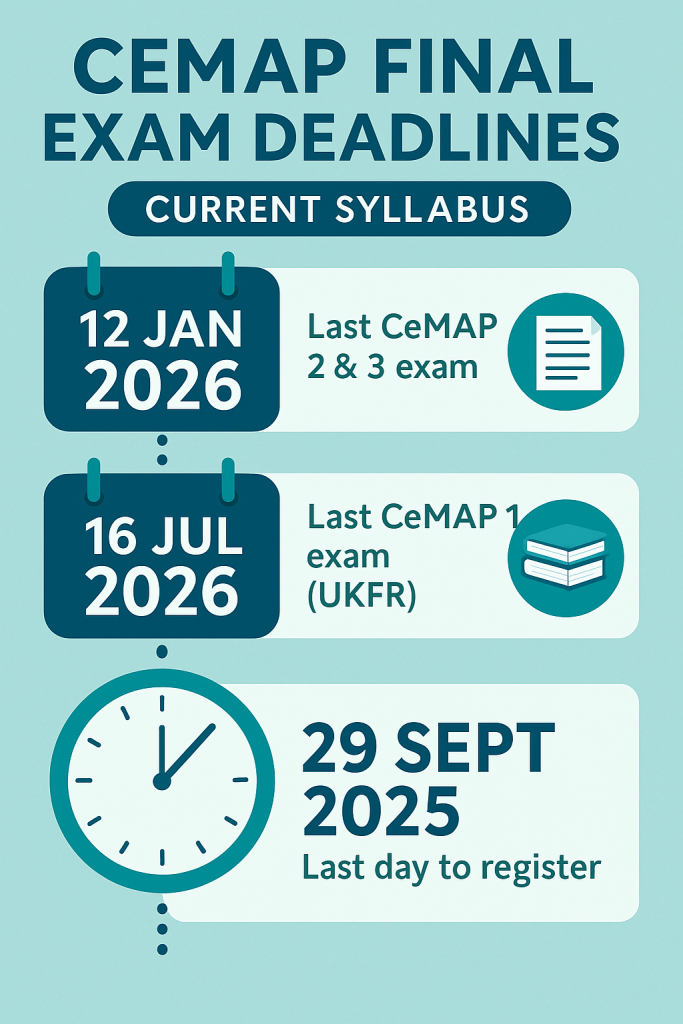
If you’re studying under the current syllabus, here are the last exam dates you need to know:

CeMAP 2 & CeMAP 3

Last exam date: 12 January 2026

This includes any resits. 

From 13th January 2026 anyone who has not passed current exam will automatically be switch the the new structure

CeMAP 1 (UKFR)

Last exam date: 12 July 2026 (brought forward from 16th July)

This includes any resits

From 17th July 2026 anyone who has not passed current exam will automatically be switch the the new structure.

LIBF Registration Deadline

To be able to continue with the current syllabus towards these exam dates, you must have registered with the LIBF for the modules by the 29th September 2025

From 30 September 2025, learners will also have the option to transfer to the new syllabus, and and new registrations will automatically be on the new syllabus.

👉 If you decide to switch with Futuretrend after starting on current syllabus, we’ll add 3 extra months’ access to your Study Hub to give you extra support during the transition. (Please note: once switched, you’ll only access the new syllabus resources to keep your studies focused.)

Key Deadlines for Current CeMAP Exams

How Futuretrend Supports Current Syllabus Learners

We will continue to support learners studying the current 2024/25 syllabus though our Home Study Packages that are designed to give you everything you need to complete the current syllabus:

  • Study Hub access – topic-by-topic learning with digital presentation videos (slides with audio narration).
  • Made Easy Revision Notes – concise, structured learning guides.
  • Topic quizzes and unit reviews – check your progress as you study.
  • Official LIBF specimen papers – practise under exam conditions, with feedback on incorrect answers.
  • Case study preparation – for CeMAP 3, where exam questions require analysis.

Learners can choose between:

  • Digital-only Study Hub
  • Home Study Package with printed guides and specimen papers

This flexibility means you can study the way that suits you best.

CeMAP study hub learning support

Study Tips to Beat the Deadline

Our tutors have helped thousands of learners pass CeMAP — here are their top strategies for success:

  1. Plan your revision early. Work backwards from your chosen exam date and schedule study time for each topic.

  2. Use specimen papers as soon as possible. Don’t wait until the end — practise regularly to build familiarity with LIBF’s exam style.

  3. Simulate exam conditions. Sit mock exams under timed conditions to build confidence.

  4. Study little and often. Short, regular sessions are more effective than last-minute cramming.

  5. Prioritise smartly. If you have already started you studies and currently in middle of CeMAP 1 you may decided to prioritise the CeMAP 1 first, as this module will be changing to Level 4 with a new case study exam format under the new syllabus. Then look at switching for the CeMAP 2 & 3 that will have the less impact on your studies.

Advice: 

Everyone’s situation is different — we encourage learners to choose the path that works best for their goals and timeframe. Futuretrend is here to help you decide on the right strategy, please get in contact and our Learning and Development team will be happy to support you.

Options for New Learners Starting Now

If you’re just beginning your CeMAP studies, you have two main paths:

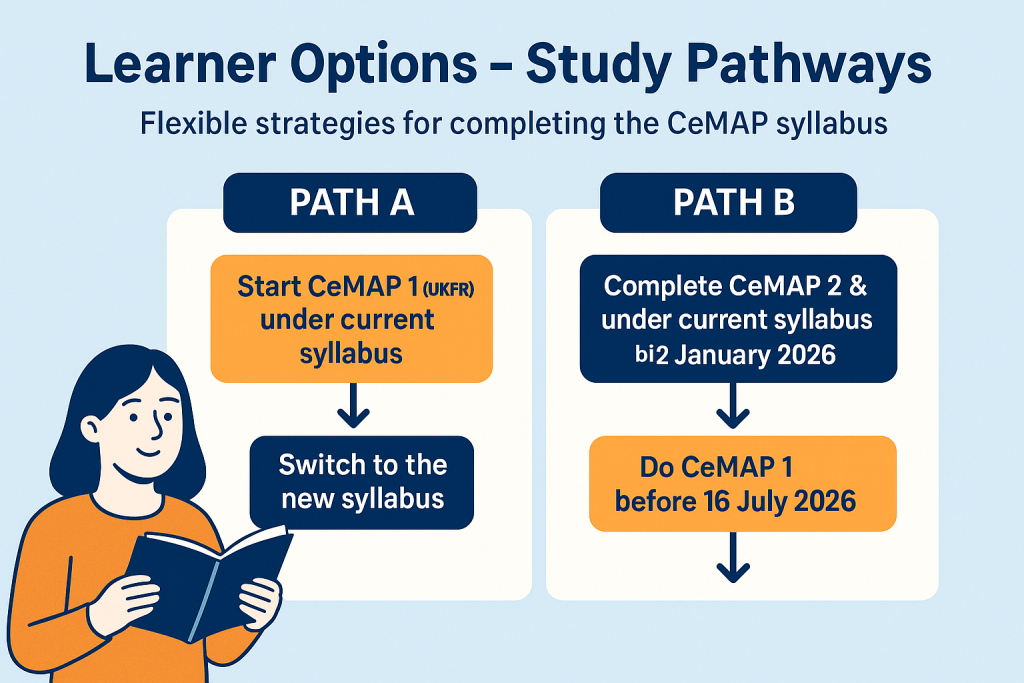
  • Option A: Start with CeMAP 1 (UKFR) under the current syllabus. You’ll benefit from Level 3 content and still have until July 2026 to complete it, before moving on to CeMAP 2 and 3 under the new syllabus.

  • Option B: Focus on completing CeMAP 2 and 3 under the current syllabus before January 2026, then take CeMAP 1 (UKFR) before July 2026.


👉 Both routes are valid. The right choice depends on your current progress, available study time, and career goals. Our tutors can provide personalised advice to help you decide.

Options for New Learners Starting Now

Frequently Asked Questions

What are the final exam dates for the current CeMAP syllabus?

The last date for CeMAP 2 and 3 exams is 12 January 2026. For CeMAP 1 (UKFR), the final exam date is now 12 July 2026. After these deadlines, all learners will need to move to the new syllabus.

Can I switch from the current syllabus to the new syllabus later?

Yes. From 30 September 2025, you can switch at any time. If you switch with Futuretrend, we’ll extend your Study Hub access by an additional 3 months to help you adjust.

What support does Futuretrend provide for learners still studying the current syllabus?

Our Home Study Package includes presentation videos, revision guides, quizzes, specimen papers, and tutor forum access. Learners can choose between digital-only or printed study materials.

I’m just starting, should I study the current syllabus or wait for the new one?

Both options are possible. Some learners prefer to complete CeMAP 2 and 3 quickly under the current syllabus before January 2026. Others start with CeMAP 1, knowing they have until July 2026 to finish it. Futuretrend tutors can help you choose the best path for your circumstances.

Does the Home Study Package cover exam preparation?

Yes. We include specimen exam papers, feedback on answers, and case study practice for CeMAP 1 and 3. This ensures you’re ready for the exam style and confident on exam day.

Will I still have access to my Study Hub if I switch to the new syllabus?

Once you switch, you’ll only access the new syllabus resources to avoid confusion. However, you’ll benefit from 3 extra months of Study Hub access to support the transition.

Conclusion and Next Steps

The CeMAP syllabus is changing in 2025, but there’s still plenty of time to complete the current version. Whether you’re aiming to finish all three modules or just starting out, Futuretrend’s Home Study Packages and tutor support provide everything you need to succeed.

👉 Don’t feel pressured, you still have time. With the right plan and resources, you can complete CeMAP before the deadlines and move confidently into your new career as a mortgage adviser.

Ready for more exam-support?

Book our CeMAP Home Study course or visit our website for full training resources:
https://cemap123.co.uk/home-study-training/

Explore our accredited CeMAP training courses

Images Designed by AI

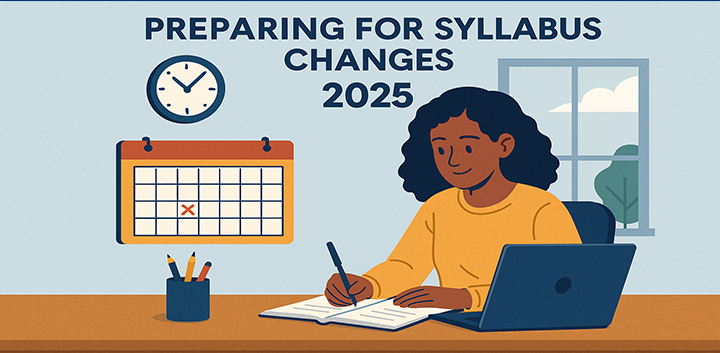
How Current CeMAP Learners Can Prepare for the 2025 Syllabus Changes

Find out what current learners must know about exam deadlines, study tips and support options.

If you’re already studying CeMAP, the recent announcement from the London Institute of Banking & Finance (LIBF) about the 2025 syllabus restructure may feel overwhelming.

The good news is: you have options. Whether you’re close to finishing or still working through modules, you can choose to complete under the current syllabus or transition into the new structure when it launches.

In this blog, we’ll break down:

  • The key deadlines every current learner must know
  • Whether it’s better to finish now or switch later
  • Study strategies to help you stay on track
  • How to get the right support during the transition
Find out what current learners must know about exam deadlines, study tips and support options.

👉 By the end, you’ll know exactly how to plan your next steps with confidence.

Key Exam Deadlines You Must Know

If you’re already studying CeMAP, you have three options:

  1. Complete your exams under the current syllabus:
    • CeMAP 2 & 3 must be finished by 12 January 2026.
    • CeMAP 1 (UKFR) is available until 12 July 2026 (Previously 16th July).
  2. Transfer to the new syllabus early (from 30 September 2025).
  3. Do nothing and be transferred automatically on 13 January 2026.

📌 Tip: If you want to finish under the current format, book your exams early — Pearson VUE slots will be in high demand leading up to the deadlines.

Should You Complete Now or Switch to the New Syllabus?

Completing Now – The Benefits

  • Familiar study materials and exam style.
  • Certainty — you know what’s on the test.
  • If you’ve already invested time and effort, it’s quicker to finish.

Switching to the New Syllabus – The Benefits

  • Smaller, unit-based exams (less overwhelming than full modules).
  • Updated learning resources (case studies, videos, interactive tools).
  • FSRE replaces UKFR, giving credits towards DipFA if you want to progress further.

Our Recommendation

  • If you’re already part-way through, it often makes sense to complete now.

  • If you’re just starting, you may prefer to wait for the new structure.


👉 Either way, you won’t lose progress — exemptions and credits carry over between full syllabuses modules.

Study Strategies to Stay on Track

If you’ve decided to finish under the current syllabus, here’s how to maximise your chances of passing before the deadlines:

  • Plan backwards from the exam date. Create a revision timetable that ensures all topics are covered in time.

  • Use mock exams. Practise under exam conditions to boost confidence.

  • Focus on weak areas first. Allocate more study time to the topics you find challenging.

  • Study little and often. Short, focused sessions are proven to be more effective than long cramming.

  • Stay updated. Keep an eye on LIBF announcements and resources.
Study Strategies to Stay on Track

Support Options Available

At CeMAP123, we understand that change can feel stressful. That’s why we’ve tailored our support to guide you through either route:

For current syllabus learners:

  • Home study packs
  • Revision sessions
  • Tutor guidance and mock exams

For learners moving to the new syllabus:

  • Updated resources aligned with FSRE and new Mortgage units
  • Flexible online and home study training
  • Case-study support to match the new exam style

Frequently Asked Questions

What happens if I don’t finish my CeMAP exams by the deadline?

If you don’t complete CeMAP 2 or CeMAP 3 by 12 January 2026, or CeMAP 1 (UKFR) by 12 July 2026, LIBF will automatically transfer you to the new syllabus. Any modules you’ve already passed will carry over as exemptions.

Can I switch to the new CeMAP syllabus before January 2026?

Yes. From 30 September 2025, current learners can request to transfer to the new syllabus. Exams under the new structure will be available from 10 November 2025 through Brightspace.

Is the new CeMAP syllabus harder than the current one?

Not necessarily. The new syllabus introduces smaller unit-based exams, which many learners find easier to manage than full-module exams.

Does passing CeMAP 1 (UKFR) still count after the changes?

Yes. If you complete CeMAP 1 (UKFR) before 12 July 2026, your pass will be recognised and mapped into the new structure. After this date, CeMAP 1 will be withdrawn and replaced with FSRE.

Will my existing CeMAP study materials still be valid?

Yes — study materials remain valid for exams sat under the current syllabus before the final deadlines. After this, you’ll need updated materials for the new FSRE and Mortgage modules.

Conclusion

The CeMAP syllabus changes in 2025 don’t have to disrupt your studies — but you do need to act strategically.

If you’re close to completing, focus on finishing under the current syllabus before the deadlines. If you’re only just beginning, consider waiting for the new structure with its refreshed content and flexible exams.

👉 No matter which path you take, CeMAP123 is here to support you every step of the way. From home study packs to tutor-led support, we’ll make sure you’re fully prepared.

Looking for support

Book our CeMAP Home Study course or visit our website for full training resources:
https://cemap123.co.uk/home-study-training/

Explore our accredited CeMAP training courses

Images Designed by AI

LIBF Accredited CeMAP: Why It Matters for Your Study Success

Blog-LIBF Accredited Learning

If you’re considering CeMAP training, you’ve likely come across the phrase LIBF accredited. But what does it actually mean – and why should it matter to you?

CeMAP (Certificate in Mortgage Advice and Practice) is awarded by the London Institute of Banking & Finance (LIBF). The LIBF is the official body that oversees the qualification. When a training provider is LIBF-accredited, it means they’ve met certain quality standards set by the awarding body itself.

In this article, we’ll explain what LIBF accreditation involves, how it affects your learning, and why choosing an accredited provider like Futuretrend can improve your chances of success.

Blog-LIBF Accredited Learning

What Is LIBF Accreditation?

What does ‘LIBF-accredited’ mean?

LIBF accreditation is a formal recognition that a training provider meets the standards required to deliver CeMAP study support in line with the qualification’s aims. It shows that the provider offers up-to-date materials, qualified tutors, and appropriate support for learners preparing for CeMAP.

To be accredited, providers must submit their content, learning structure, and tutor qualifications to LIBF for review. It’s not a one-off tick-box – accredited status is monitored and reviewed regularly.

How does a provider get accredited?

Accreditation involves a detailed application process. LIBF looks at:

  • The structure and content of the course
  • Tutor qualifications and experience
  • Support offered to learners
  • Quality assurance processes

Once approved, the provider must maintain these standards to keep their accreditation. Any changes in delivery or tutors must be reported to LIBF.

View our LIBF Accreditation

Why LIBF Accreditation Matters for CeMAP Students

Confidence in your study materials

Accredited providers follow the official CeMAP syllabus. This ensures that your course content matches what you’ll be tested on in the real exams.

This reduces the risk of outdated material or incorrect exam preparation. You can focus on studying with confidence, knowing your materials are up to standard.

Structured, quality learning experience

An LIBF-accredited provider offers a clear and supportive study path. You’ll get:

  • A well-structured study plan
  • Learning outcomes clearly mapped to the exam units
  • Resources designed to help you stay on track

You’re not just handed a set of notes and left to it. Accredited training providers are expected to help you stay focused and supported.

Recognition and trust in the industry

Training with an accredited provider shows that you’ve taken a professional route to gaining your CeMAP. Many employers trust and recognise names like Futuretrend because of our long-term accreditation and proven success.

See our CeMAP course overview

Tutor Tip: 

LIBF accreditation isn’t just a nice extra, it’s your quality check. It shows the provider is up-to-date, approved, and working to the same standards LIBF uses to assess the exams.

How Futuretrend Supports Your LIBF-Accredited CeMAP Journey

25 years of training experience

Futuretrend has been delivering mortgage training since the late 90s. Over the years, we’ve helped thousands of students prepare for CeMAP, from absolute beginners to advisers looking to refresh or resit.

Read our student success stories

Tailored support and resources

Our courses are designed for flexibility. Whether you’re studying alongside work or full time, we offer:

  • Tutor Q&A support
  • Mock exams
  • Made Easy Revision Guides
  • Regular updates and syllabus changes

We know the CeMAP structure well and build our courses to guide you through every unit.

Flexibility without cutting corners

Online learning doesn’t have to mean second-rate training. With an accredited structure, you get all the benefits of convenience while still working within a recognised framework.

Frequently Asked Questions

What is the difference between LIBF-accredited and non-accredited CeMAP training?

Accredited providers are formally recognised by LIBF and follow strict content and delivery standards. Non-accredited courses may not be updated or structured correctly, and there’s no quality assurance process.

Do I need an accredited provider to sit the CeMAP exam?

No, you can register and take the exam on your own. But working with an accredited provider gives you the structured learning and support that can make a big difference, especially if you’re new to the subject.

How can I check if a provider is accredited by LIBF?

You can check the LIBF website or ask the provider directly. Accredited providers should be happy to show their status and tell you what it means. Futuretrend’s status is detailed here.

Next Steps

If you’re aiming to qualify as a mortgage adviser, your choice of training provider matters. Going with an LIBF-accredited CeMAP provider gives you structure, confidence, and trusted support.

It doesn’t guarantee you’ll pass, but it does mean you’re learning in a way that’s been checked and approved by the awarding body itself.
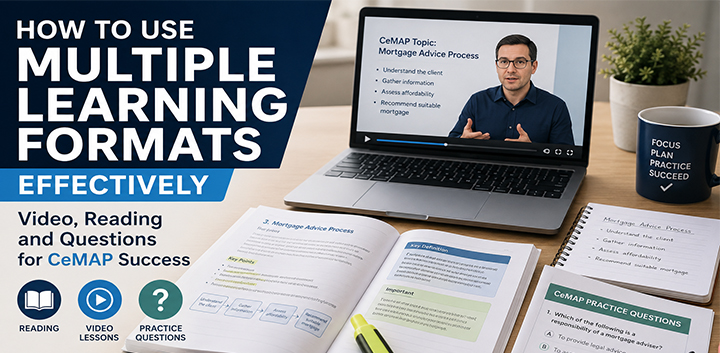

Ready for more exam-style examples?

Book our CeMAP Home Study course or visit our website for full training resources:
https://cemap123.co.uk/home-study-training/

Explore our accredited CeMAP training courses

What Are the Best CeMAP Maths Tricks to Save Exam Time?

What Are the Best CeMAP Maths Tricks to Save Exam Time?

Ever felt the clock ticking during those tricky CeMAP calculation questions? Time pressure can dent your confidence and slow you down. Yet, a few simple techniques can help you work faster and stay accurate. In this article, we share five practical CeMAP maths tricks to shave off precious minutes

Each tip comes with a clear example and a short Tutor Tip to keep you on track. By the end, you will feel more confident tackling mortgage maths. Ready to move at pace? Let’s begin.

What Are the Best CeMAP Maths Tricks to Save Exam Time?

Memorise Key Formulas with Mnemonics

Why It Works

Relying on memory rather than searching through notes saves seconds. Mnemonic devices turn complex formulas into catchy phrases.

How to Apply

  • Loan-to-Value (LTV): “Loan Over Value X 100.”
  • APR Conversion: “Annual Rate ÷ 12 times 100.”
  • Interest Rate Swap: “Fixed minus Floating.”

Tutor Tip:
Create small flash-cards and review them for five minutes each day. Keep them by your desk or on your phone.

Simplify Percentages Using the “10% Rule”

The 10% Shortcut

Dividing by 10 gives you 10%. Halve that to find 5%, or double to find 20%. You can then adjust for other rates.

Step-by-Step Example

To find 3.75% of £200,000:

  • 10% is £20,000.
  • 5% is half of that, £10,000.
  • 1% is one-fifth of 5%, £2,000.
  • 75% is 3 × £2,000 + 0.75 × £2,000 = £6,000 + £1,500 = £7,500.

Round Numbers Strategically

Quick Rounding Techniques

Rounding to the nearest ten or hundred can cut calculation time. You only need the final answer within a small margin of error.

Practice Scenario

Compare exact versus rounded calculations:

  • Exact: £198,642 × 3.68% = £7,315.47
  • Rounded: £199,000 × 3.7% ≈ £7,363

Time saved on the second method can be up to 30 seconds.

Tutor Tip:
Decide your acceptable error (for example, ±£50) before you begin.

Use a Consistent Calculation Framework

Framework Steps

  1. Identify the data.
  2. Choose the formula.
  3. Plug in the numbers.
  4. Check your answer.

Benefits

Having a routine reduces hesitation. You won’t waste time deciding what to do next.

Candidate using Pearson VUE OnVUE digital whiteboard and on-screen calculator during the CeMAP 3 exam

Tutor Tip:
Write your four-step framework at the top of your scratch pad as soon as the exam starts.

Practice Under Timed Conditions

Why Timing Matters

Timed drills build speed and accuracy. You learn to judge how long each question takes.

How to Structure Practice

  • Set a 30-minute timer.
  • Work through 10 mixed mortgage questions.
  • Note which steps take longest.

Tutor Tip:
Use a simple kitchen timer. It mimics exam stress better than a phone.

Frequently Asked Questions

How many marks are allocated to maths in CeMAP?

Maths questions account for about 25% of the exam. Every minute you save can boost your overall score.

Can I use a calculator in the CeMAP exam?

Yes. You must use the on-screen financial calculator. These tricks still apply when entering numbers.

What’s the best way to remember mortgage formulas?

Combine flash-cards with short mnemonic rhymes. Repeat the cards daily and test yourself.

Conclusion

These five CeMAP maths tricks are simple to learn and quick to apply. By using mnemonics, the 10% rule, smart rounding, a clear framework and timed practice, you can cut exam time and reduce stress. Ready to explore more support? Find out about our CeMAP training courses for guided learning and expert tutor feedback.

Ready for more exam-style examples?

Book our CeMAP Home Study course or visit our website for full training resources:
https://cemap123.co.uk/home-study-training/

Images Designed by Freepik (www.freepik.com) and AI